

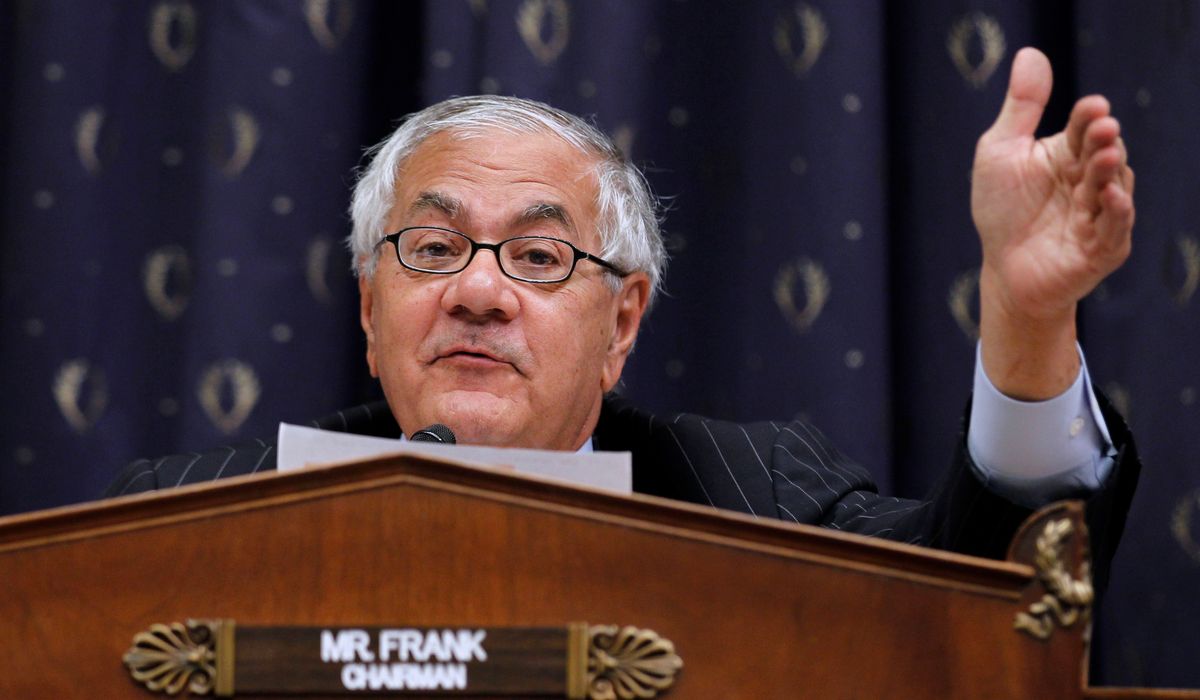
Barney Frank’s long-running refusal to deal with one conservative paper is a small detail that opens up bigger questions about politician-media relations, selective access and public accountability.
For more than two decades, former Rep. Barney Frank refused to speak to reporters from The Washington Times. That simple fact keeps showing up because it says a lot about how some elected officials choose their audiences. When a public servant shuts a door on an entire newsroom, it matters to voters who expect openness and straightforward answers.
Frank spent decades in Washington as a high-profile Democrat and as chairman of the House Financial Services Committee, a role that put him at the center of big policy fights. Conservatives have long criticized his approach to financial regulation, arguing that his priorities favored certain constituencies over taxpayers. Whether you agree with his policies or not, refusing to engage with a sizable conservative outlet looks like picking friendly audiences.
There are reasonable reasons why politicians limit interviews: time, spin control and media bias. But refusing an entire paper for years tips from selective engagement into avoidance. In a two-party system, refusing to talk to conservative media breeds distrust and fuels the narrative that Washington insiders only talk to those who already agree with them.
Accountability is a two-way street, and the public deserves to hear answers across the aisle of opinion. A politician who won power on public trust should have a thicker skin for tough questions. Republicans argue that open access helps expose weak spots in policy and forces clearer explanations, which ultimately benefits voters.
On policy, Frank helped shape major financial legislation that still affects markets and households today. Republicans point to unintended consequences and regulatory overreach as ongoing concerns tied to that era of reform. Those criticisms gain traction when the architects behind big rules avoid certain journalistic inquiries instead of confronting critiques directly.
Media outlets also bear responsibility for fair coverage, but refusing to engage removes any chance for correction or context. Conversations that start in one corner of the media ecosystem often move into the mainstream; shutting out a specific outlet lets false impressions harden without rebuttal. For Republicans focused on accountability, that dynamic is both frustrating and politically useful.
There is a broader cultural angle too: when influential figures curate their press lists, they shape the incentives of reporters. Outlets that struggle for access may avoid hard questions to stay in good graces, while those shut out become adversarial. That game weakens public dialogue and reinforces echo chambers on both sides.
At the end of the day, voters decide whether they prefer a politician who speaks only to comfortable audiences or one who faces tough questions everywhere. For Republicans, the ideal is clear: accountability requires exposure to scrutiny, and that scrutiny should not be bottled up or channeled only through sympathetic platforms. The story of a long-standing refusal to engage with one paper is small, but it points to bigger problems with how power and media interact in Washington.

