

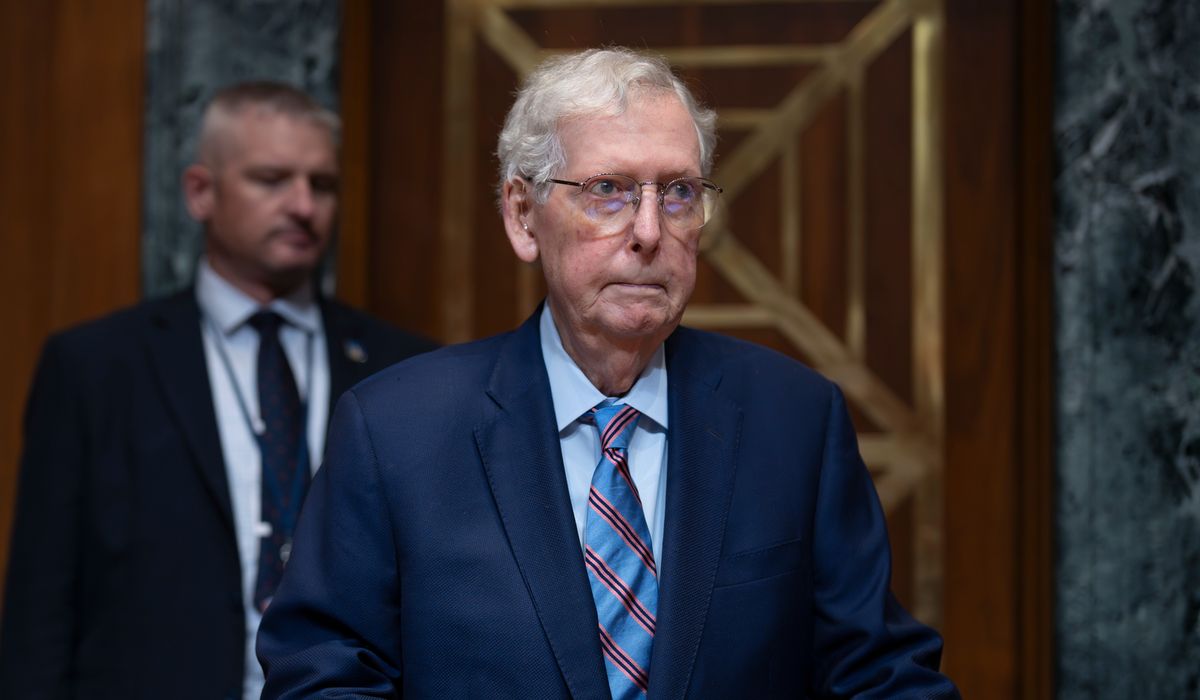
Sen. Mitch McConnell has said a fall led to his recent hospitalization, breaking weeks of silence and speculation about the Kentucky Republican’s condition.
Sen. Mitch McConnell spoke publicly on Sunday to explain that a fall was the immediate cause of his hospitalization, the first direct acknowledgement from him about the episode. That statement ended a period of intense media conjecture about his health and his ability to serve.
The Senate Republican leader has been a central figure in Washington for years, so any unexplained absence invites questions and debate. Conversations about his status quickly moved from routine updates to speculation about leadership continuity and the Senate calendar.
From a Republican perspective, the immediate priority is straightforward: respect for McConnell and careful handling of his recovery while keeping Senate business moving. Party members want clear facts, minimal rumor, and a steady approach that protects both his privacy and the institution.
Staff and colleagues have described measured steps to ensure operations continue without disruption, with committee schedules and floor work adjusted as needed. That pragmatic approach reflects how Republicans in the Senate typically balance leadership concerns with legislative responsibilities.
Critics and commentators filled the silence with conjecture, but silence does not mean incapacity or abandonment of duty. Republicans argue the better response is to await verified information from trusted sources rather than amplify speculative narratives that distract from governance.
McConnell’s candid admission about a fall counters the notion that there was some other hidden medical crisis, and it gives the public a clearer starting point for understanding his absence. Still, the episode highlights how vulnerable public figures are to relentless attention once details are scarce.
The party’s focus now is on continuity: keeping Republican priorities on track while ensuring McConnell has time to recover. That balance requires firm communication from leadership and disciplined messaging from rank-and-file members to prevent needless disruption.
Health incidents like this also raise questions about succession planning and the mechanics of leadership coverage, but Republicans emphasize that the Senate is built to function through such moments. Temporary adjustments and trusted deputies have long been part of the system for handling unexpected absences.
For supporters, the response has been to rally around McConnell and his family, urging restraint from political theater. For the broader public, the episode is a reminder that elected officials are people first, and that responsible reporting should prioritize verified facts over sensational conjecture.
Looking ahead, the tone from Republican circles will likely remain pragmatic and protective: encourage a full recovery, maintain institutional stability, and resist the urge to turn a health matter into a partisan spectacle. That posture aims to keep the focus on governance rather than gossip.

