

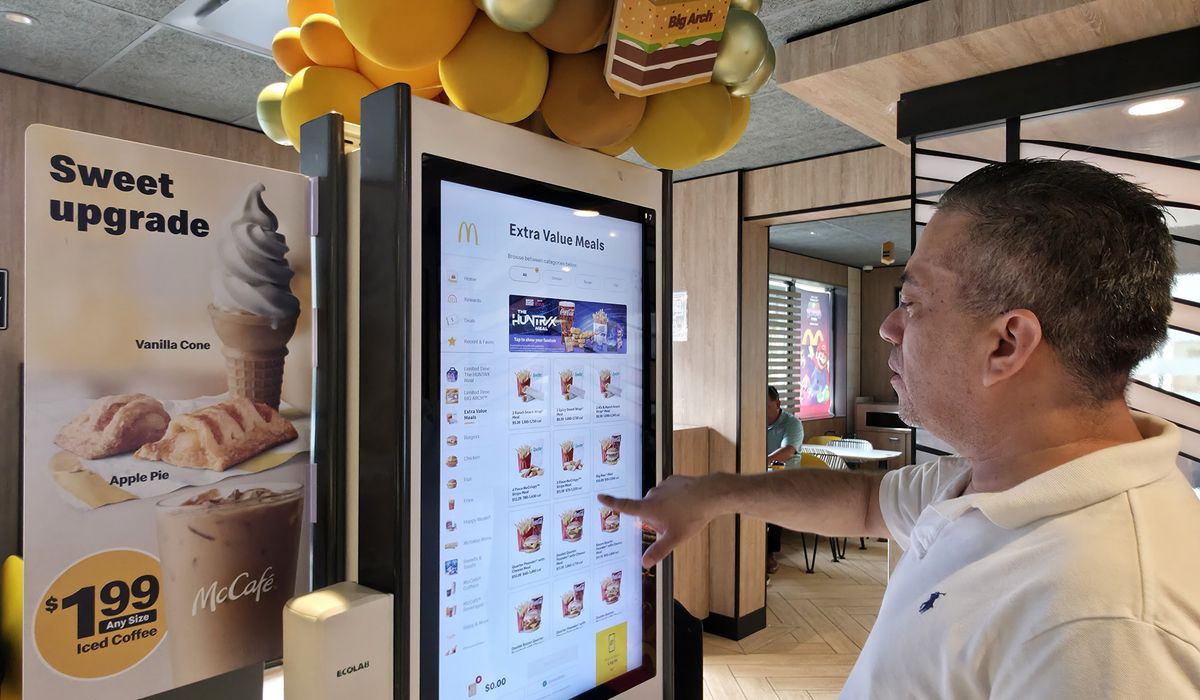
This week, McDonald’s announced it is piloting a new artificial intelligence-powered operating system called ArchIQ, including a voice-based drive-thru assistant, as part of a broader business initiative.
McDonald’s move to test ArchIQ is a clear signal that the chain wants technology to handle more of the routine work in restaurants. The pilot will focus on the drive-thru assistant but sits inside a larger operating system meant to coordinate digital orders, kitchen timing, and in-store flow. For customers it promises smoother service; for operators it promises tighter control and clearer data on what happens every minute of the day.
ArchIQ is described as an AI-powered operating system, which suggests it will do more than answer calls—it will prioritize orders, predict busy moments, and potentially adjust staffing or prep automatically. Those capabilities can cut friction between ordering screens, the kitchen, and pickup lanes, letting stores respond faster to changing demand. The system’s backbone is likely a mix of speech recognition, queue management, and predictive analytics working together.
A voice-based drive-thru assistant could speed throughput by taking orders and upsells without tying up a human crew member. If the assistant gets accurate at handling accents, noise, and menu variations, lane time could improve and crew can focus on cooking and customer touchpoints. That said, the assistant must hit a high bar for accuracy before it replaces key steps that customers count on, like confirming orders and handling substitutions.
For crew members and franchisees, ArchIQ will be a mixed bag. On one hand, automation can remove repetitive tasks and reduce stress during peak hours by smoothing order flow. On the other hand, owners worry about upfront costs, integration with legacy systems, and how technology changes job roles on the floor. The pilot phase is critical to show real operational savings and to address whether the system helps teams or simply shifts work around.
Voice systems face well-known hurdles in noisy, outdoor environments. Drive-thru lanes are unpredictable: wind, rain, double orders, and customers speaking while traffic noise roars can all confuse an AI. Effective testing will need to include diverse accents, quiet and loud scenarios, and unusual requests so the assistant learns to ask clarifying questions rather than guessing. Human fallback has to be seamless when the AI can’t confidently capture an order.
Data responsibility matters whenever audio and ordering details are involved. A voice-driven assistant will collect recordings and metadata that raise privacy issues, from what customers say to how long they spend ordering. Transparency about what is recorded, how long it’s kept, and how it’s used for training models is important for customer trust. McDonald’s will need clear policies and probably technical safeguards so data isn’t a risk vector for customers or franchisees.
The pilot approach makes sense: test in a handful of restaurants, gather performance signals, then iterate before a broader rollout. Pilots allow engineers to tune speech models, menu flows, and integration points with point-of-sale systems without disrupting the whole chain. Feedback from crew and customers will shape whether ArchIQ becomes a standard operating tool or an experiment shelved for a future attempt.
Customer experience will ultimately decide ArchIQ’s fate. Faster lanes and fewer mistakes will win loyalty, but clumsy interactions or bad upsells will repel repeat visits. The best outcome is a system that quietly reduces friction while keeping easy access to a human when needed. That balance—efficiency without losing the human touch—will determine if ArchIQ is a genuine upgrade for the fast-food business or just another gadget that looks smart on paper.

