

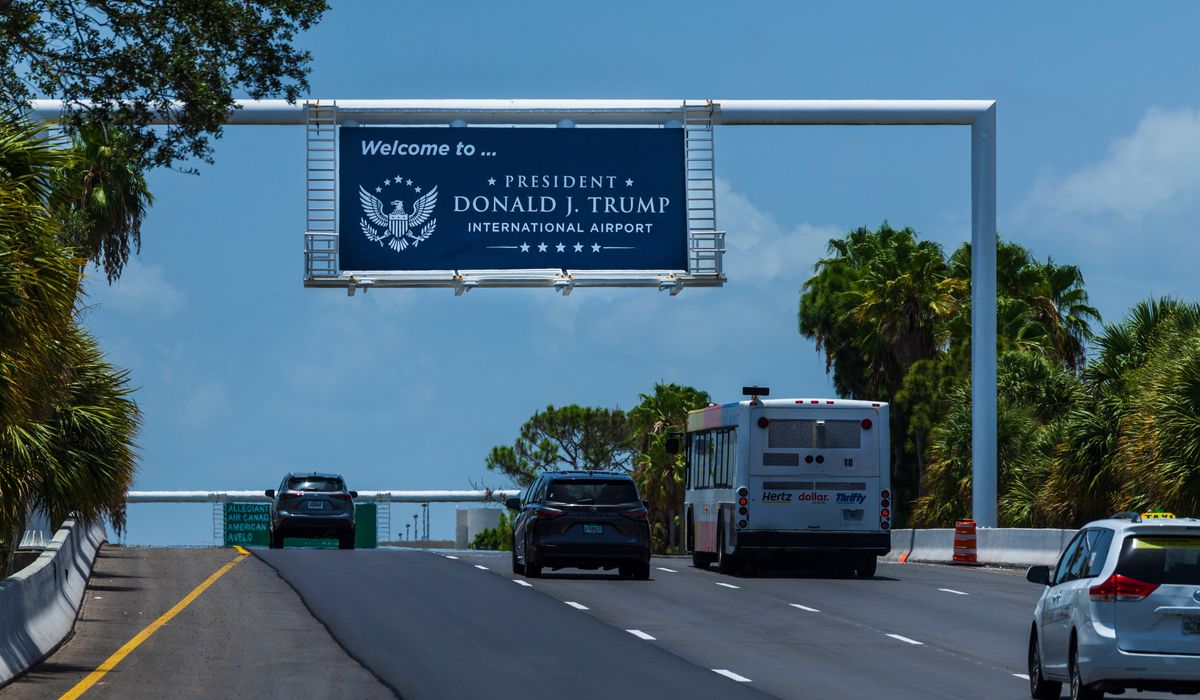
The airport in Palm Beach County officially changed its name to President Donald J. Trump International Airport on Thursday, marking a formal recognition of his ties to the area and a symbolic win for his supporters.
Local leaders announced the name change on Thursday, and the decision immediately became a talking point across political and business circles. For many in the community it’s a clear signal that the region embraces the legacy of a president who lived and worked there. The renaming is straightforward: the airport now carries his full presidential name.
The move reflects more than a new sign over departures and arrivals; it’s about identity and who the county chooses to honor. Supporters see it as correcting a historical oversight and giving credit where they believe it is due. That perspective colors how the change is being discussed at restaurants, on local radio, and among frequent travelers.
Operationally, airports routinely update their branding when names change, and this one will do the same in time. That includes new signage, updated wayfinding inside terminals, and adjustments in staff communications. Travelers shouldn’t expect immediate chaos, just gradual updates as contractors and administrators roll through the necessary work.
There’s a practical side to naming too: it affects perception for airlines and passengers who choose routes and connections. A recognizable name can attract attention and sometimes business, especially when tied to a national figure with strong name recognition. County officials will have to balance branding with budgets as they implement the change.
Politically, the announcement lands differently depending on where you sit. From a conservative viewpoint, it’s a deserved honor that acknowledges a president’s connection to the community and the economic activity tied to his name. To others, it will always be a partisan choice; that’s an expected reality when public spaces bear the names of contemporary political figures.
Reaction from residents has been varied but passionate on both sides, and that energy matters in a county that draws attention far beyond its population. Supporters say the rename affirms values and local pride while critics view it as politicizing public infrastructure. Either way, the county has made a definitive choice and now owns the conversation that comes with it.
Cultural and economic implications follow in the weeks and months after such a change. Local businesses may lean into the new branding for marketing, and tourism messaging will reflect the updated airport identity. The long-term effect depends on how business leaders and elected officials align their strategies with the new name.
Behind the scenes, municipal staff will be dealing with contracts, vendor timelines, and phased rollouts to keep air travel running smoothly. These are technical problems, not political ones, and they get solved by scheduling and budgeting. The public-facing moment is symbolic, but the logistical work is steady and routine.
At the end of the day, the renaming of the airport is a clear example of how local decisions can resonate nationally. It will sit on maps and tickets and in headlines, and for supporters it will stand as a lasting tribute. For critics, it will remain a talking point in future debates; either way, Palm Beach County has set a new course for its air gateway.

