

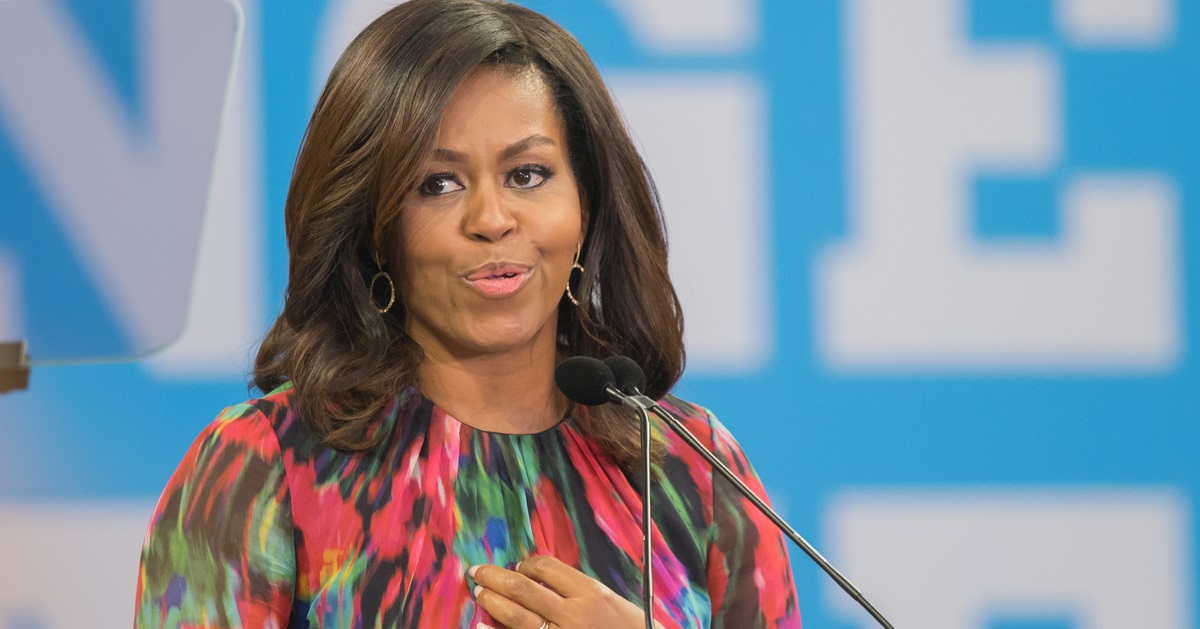
Michelle Obama has rejected the idea of her husband seeking a third presidential term, while public debate over term limits and political ambitions has intensified amid mixed signals from former President Donald Trump and moves by lawmakers to clarify ballot eligibility.
Michelle Obama has made a clear, public rejection of the notion that Barack Obama should return to the White House for another term, even if rules were changed. Her stance was delivered in a recent interview and landed quickly in political conversations across the country. The idea has stirred fresh debate about term limits and the future of party leadership.
In a recent interview on the “Call Her Daddy” podcast uploaded on January 21, Michelle Obama addressed speculation about Barack Obama returning to the presidential race if President Donald Trump pursued a third term. ” Her comments come amid ongoing discussions sparked by Trump’s ambiguous remarks and merchandise from early 2025 promoting “Trump 2028 (Rewrite the Rules).”
Michelle framed her view plainly: “I hope not,” she said about the possibility of Barack running again, and added, “I would actively work against that,” Newsweek reported. That level of certainty from a former first lady is rare, and it signals a preference for fresh faces over political reruns. She argued that eight years in the presidency should be the cap for anyone.
Trump’s own rhetoric has kept the conversation alive and messy. He gave an interview in March 2025 where he said he was “not joking” about a third run and hinted at “methods” that could make it possible, but then clarified in May 2025 that he’d be satisfied as a “two-term president.” Those flip-flops keep supporters and critics guessing while the legal reality remains fixed by the Constitution.
The 22nd Amendment presents a clear boundary: no one can serve more than two terms. That fact hasn’t stopped talk of changing rules or testing procedures, and it’s why politicians and activists are already maneuvering. Conversations about rewriting the rules are less about policy and more about political theater, but they still push elected officials to respond to public concern.
On the policy front, California State Senator Tom Umberg introduced a bill in January 2026 aimed at preventing an ineligible candidate from appearing on state ballots by giving the secretary of state authority to demand proof of eligibility. That move is a preemptive attempt to lock down the practical mechanics of elections if someone tried to sidestep constitutional limits. It’s likely to face legal pushback, but it also signals how seriously some lawmakers take the prospect of a rules rewrite.
Trump’s mixed messaging has an upside for his opponents: it keeps the conversation focused on him rather than on successors. If he voluntarily steps aside after his current term, potential 2028 names like Vice President JD Vance and Secretary of State Marco Rubio are already in play. For Republicans who want continuity, the question is who will carry the torch without turning the party into a personality cult.
Michelle’s call for new leadership is framed as practical, not just a political talking point. She argues that a nation changing fast needs fresh perspectives and younger leaders ready to tackle modern challenges. That’s a reasonable point: recycling the same figures limits innovation and discourages rising talent from stepping forward.
At its core, the exchange between a former first lady’s plea and a former president’s musings highlights a bigger argument about institutions and norms. The Constitution set term limits with purpose, and most voters expect elected officials to respect those guardrails. The debate being played out right now tests whether political passions will outpace legal structures or whether the rule of law will hold steady as designed.

