

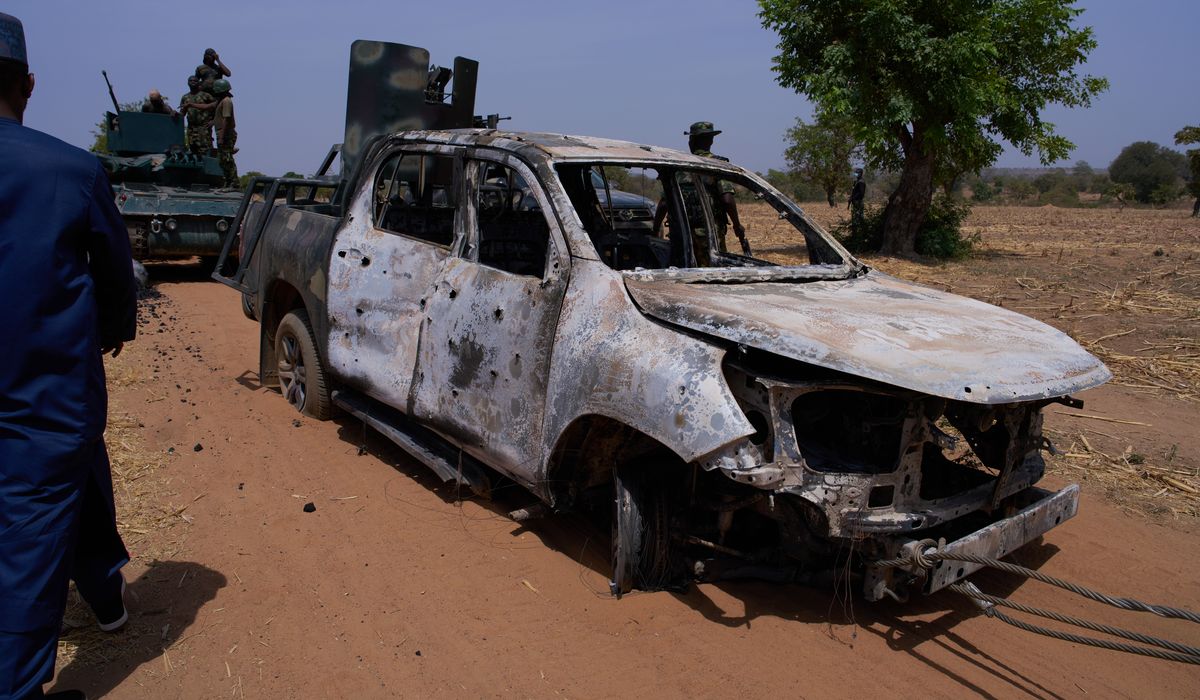
Armed militants ambushed Nigerian security forces responding to a distress call in Kebbi state, killing nine soldiers, a police officer and one civilian, and exposing persistent gaps in local security and response capabilities.
In a deadly strike in the northwestern state of Kebbi, armed attackers hit security personnel who had rushed to a distress call, leaving nine soldiers, a police officer and one resident dead. The ambush unfolded quickly and shows how small, coordinated bands can overwhelm patrols and convoys. Local officials have confirmed the casualty numbers and described the scene as chaotic, with families and responders left scrambling.
The attackers used surprise and mobility to inflict heavy losses before slipping away, according to security briefings. This kind of hit-and-run tactic has become a grim pattern across several regions, where criminals and militant groups exploit thinly stretched forces. Responders in remote areas often arrive with limited intelligence and resources, making them vulnerable to well-timed assaults.
Communities near the attack site reported panic and displacement as residents fled toward towns and checkpoints. Markets and schools temporarily shut down while residents waited for clearer security assessments, and some families began moving household goods to safer locations. Humanitarian needs grow after such incidents, and local authorities face pressure to secure supply lines and restore basic services.
Military and police commanders say investigations are underway to identify the assailants and trace their routes and bases of operation. Officers are collecting ballistics, witness statements and other on-the-ground evidence to reconstruct the ambush. Officials also said they would review patrol patterns and response protocols to prevent similar losses, though implementing changes in remote districts can be slow and costly.
Analysts point out that the attackers benefit from terrain, local knowledge and sometimes community silence, which hampers timely intelligence. Roads that connect villages to larger towns are often poorly monitored, and communications blackspots delay requests for backup. Improving information sharing and investing in surveillance and rapid-reaction units are long-term strategies officials discuss but have not fully executed.
Families of the fallen soldiers and the deceased police officer are demanding clearer accountability and support for survivors. Military tradition calls for honors and benefits, but bureaucratic delays and uneven support programs leave many relatives waiting. Local leaders are pressing for emergency relief and faster processing of compensation, while security chiefs promise to follow through on assistance measures.
Beyond immediate responses, the ambush highlights broader security dilemmas for authorities balancing counterinsurgency, crime prevention and civic protection. Deploying more troops can reduce vulnerability but also strains logistics and local relations if not paired with community engagement. For now, Kebbi residents and security personnel alike are bracing for further operations as investigators pursue leads and command structures assess next steps.

