

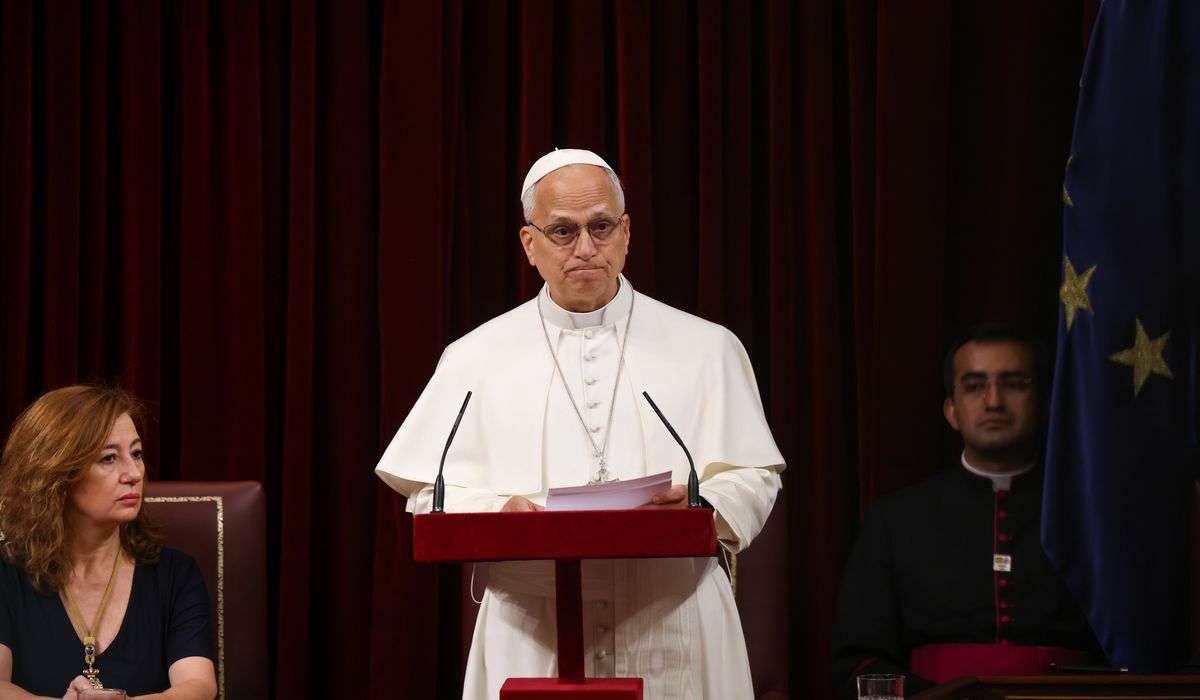
Pope Leo XIV addressed Spain’s parliament in a rare and charged speech, centering on migrant rights, a call for moral renewal, and concerns about ethical artificial intelligence in warfare, and the visit drew a prolonged standing ovation. The remarks touched on human dignity, security, and the future of military technology while prompting broad public discussion. His arrival in Madrid and reception put pressure on political leaders to reconcile compassion with practical policy.
Pope Leo XIV’s visit to Spain is notable for the way it mixed moral language with concrete policy themes, and it landed in a high-profile political forum. The speech to the national legislature is one of those events that forces a national conversation about values and strategy. In a country still managing immigration flows and technological shifts, the timing guaranteed headlines and debate.
Pope Leo XIV made history addressing Spain’s parliament — calling for migrant rights, moral renewal and ethical artificial intelligence in warfare — and received a 7-minute standing ovation in
The call for migrant rights will resonate with many who view migration through a humanitarian lens, but it also challenges governments to balance compassion with order. From a Republican perspective, any appeal to protect migrants must be paired with secure borders and clear legal processes. The argument is simple: respecting human dignity does not mean abandoning enforcement or national sovereignty.
The moral renewal the pontiff urged hits a nerve in a Europe grappling with cultural shifts and political fragmentation. Conservatives welcome a focus on values that strengthen families and communities, but they also expect an emphasis on personal responsibility and the rule of law. When religious leaders speak to lawmakers, Republican audiences often hear an invitation to restore common-sense civic virtues alongside policy reforms.
The reference to ethical artificial intelligence in warfare raises practical questions about oversight, accountability, and deterrence. Technology moves faster than legislation, and conservative thinkers worry that strict ethical constraints could hamstring defensive capabilities. At the same time, there’s agreement that autonomous weapons need clear rules to prevent misuse and unintended escalation.
Spain’s parliament provided a stage where symbolism met policy, and the long ovation reflected broad respect for the office even among political rivals. Yet applause does not settle policy choices. Republican-minded critics point out that standing ovations are easy; designing workable immigration systems, fixing asylum procedures, and securing borders are hard and require political courage.
The pope’s comments will almost certainly feed into ongoing discussions about how Europe handles migration and defense modernization. For Republicans, the conversation should not default to open borders or one-size-fits-all solutions. Practical approaches include streamlined legal pathways, stronger enforcement of existing laws, and international cooperation to reduce pressure on border states.
International reaction is a mixed bag: many leaders welcomed moral clarity, while others questioned the feasibility of the proposals. Conservatives emphasize that moral messaging must be matched by policy detail that protects citizens and preserves national decision-making. That tension between principle and practice is where actual governing gets tested.
As Madrid digests the visit, the big questions remain: how to merge compassion with national security, how to govern new military technologies, and how to revive civic values without eroding public institutions. The answers will come from legislatures and voters, and they will shape how Europe balances human dignity with practical governance. The debate sparked by the speech is likely to play out across parliaments and ballot boxes in the months ahead.

