

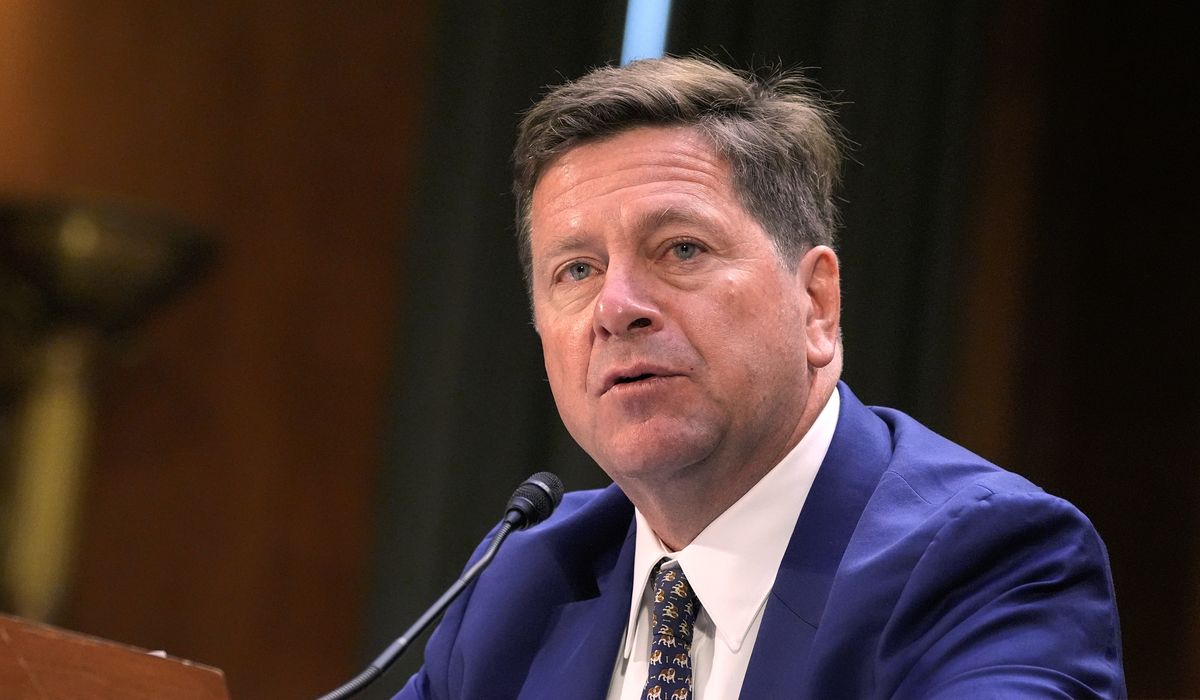
The Senate moved forward Monday evening on the nomination of Jay Clayton to be Director of National Intelligence, advancing him closer to confirmation while drawing attention to his private sector background and expected approach to oversight.
Senators advanced Jay Clayton’s nomination after debate, sending the process toward a final confirmation vote. The move marks a significant step for someone with a long history in finance and government. Republicans argue his blend of private and public experience suits the DNI role in a complex era.
Clayton’s résumé includes leadership at the Securities and Exchange Commission and decades as a Wall Street lawyer, experience Republicans say matters for intelligence priorities tied to economic and cyber threats. That background gives him familiarity with markets, risk assessment, and regulatory frameworks. Supporters say those perspectives help translate raw intelligence into actionable policy for both the White House and Congress.
From a conservative standpoint, the DNI should focus on practical threats and clear accountability, not Washington theater. Clayton’s private-sector record suggests he understands how bureaucracy can slow decision making and how to push for results. Republicans point to his industry experience as an asset when dealing with complex threats like economic coercion, intellectual property theft, and cyber intrusions.
At the same time, questions about revolving door dynamics and corporate ties have come up during floor debate. GOP supporters counter that private experience does not disqualify someone from public service, and that oversight mechanisms exist to manage conflicts. Republicans have emphasized robust confirmation hearings and strict adherence to recusal rules where appropriate.
The role of Director of National Intelligence is to coordinate agencies, prioritize threats, and make sure intelligence reaches policymakers and military leaders promptly. Republicans see the job as one that requires clarity, decisiveness, and a willingness to hold agencies accountable. By advancing Clayton, the Senate signaled it wants someone who can bridge technical expertise with management discipline.
Republican senators have framed their support around two themes: national security effectiveness and institutional accountability. They argue that a DNI with private-sector management experience can streamline information flow and sharpen intelligence priorities. That approach aligns with conservative calls for a leaner, mission-focused national security apparatus.
Democrats raised concerns on the floor about access to corporate networks and potential conflicts, and those points shaped the debate in predictable ways. Republicans responded by highlighting Clayton’s prior public service and saying his record shows he can balance public interest with practical know-how. The exchange underscores how confirmation fights remain a test of both competence and trust.
Procedurally, the advancement means the Senate is closer to a confirmation vote that will decide whether Clayton takes the helm of the intelligence community. If confirmed, he would inherit challenges ranging from state-sponsored cyber operations to transnational terrorism and strategic competition with major powers. Republicans argue his background makes him well-suited to face those threats with pragmatic, results-oriented leadership.
For conservatives, the conversation is over how best to protect Americans while preserving liberties and promoting accountability across agencies. Jay Clayton’s nomination has become a focal point for that debate because he embodies both private sector savvy and prior government experience. The coming votes will reveal how much weight senators give to managerial competence versus concerns about corporate affiliations.
Beyond politics, the DNI needs to ensure intelligence is timely, accurate, and useful for elected leaders and commanders. Republicans pressing for Clayton emphasize clarity of mission and measurable results rather than bureaucratic expansion. The Senate’s action Monday evening brought that debate into sharper relief as lawmakers prepare for the final decision on his confirmation.

