

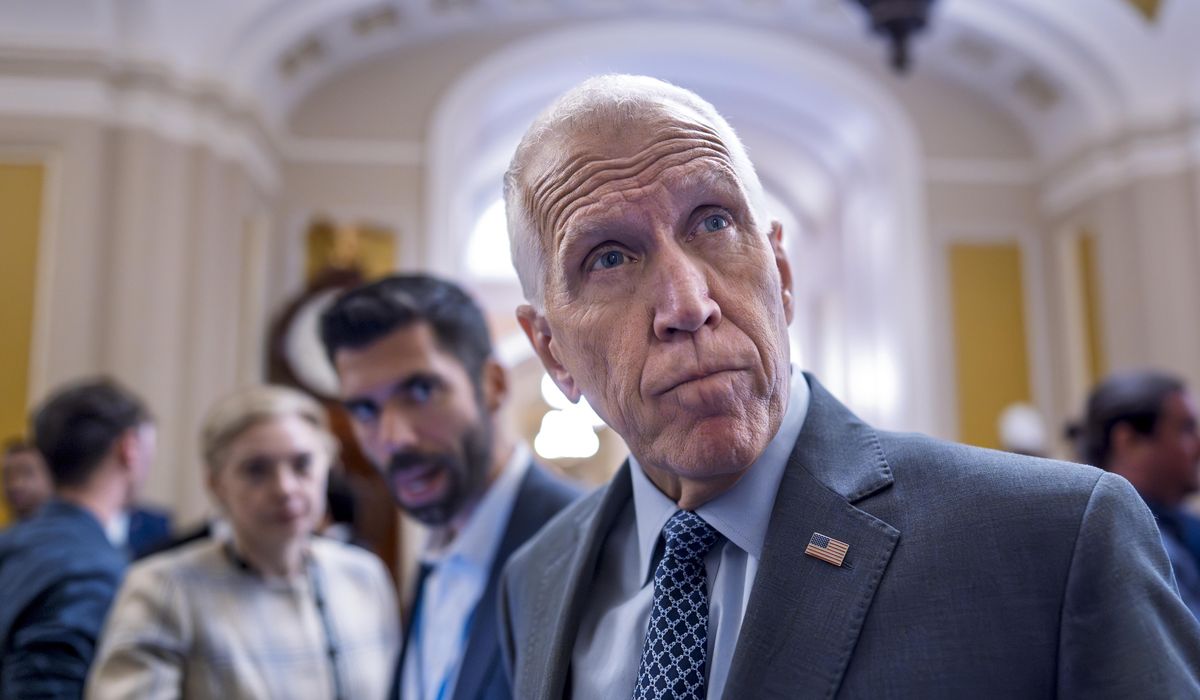
Sen. Thom Tillis has announced he will hold up any Federal Reserve nominees from President Trump while a legal case involving Fed Chair Jerome Powell is ongoing, creating a standoff that raises questions about accountability, Senate prerogatives, and the Fed’s leadership during a sensitive economic moment.
Sen. Thom Tillis says he will block any nomination President Trump makes to the Federal Reserve until a legal case against Chair Jerome Powell is resolved. That moves a Republican senator into the middle of a fight that touches the Federal Reserve’s independence and the Senate’s role in confirming key economic officials. Tillis frames his stance as about following the law and preserving the integrity of the confirmation process.
From a Republican perspective, this is about enforcing rules and ensuring transparency, not about sabotage for its own sake. Senators have a constitutional duty to vet nominees, and when credible legal questions hang over a chair of the central bank, pausing confirmations is a straightforward application of that duty. Party loyalty matters, but upholding institutional checks can be more important than rushing approvals.
The practical effect of a blockade could be significant. The Fed operates with a small roster of voting governors, and delays in filling seats can limit policy flexibility; markets notice uncertainty in leadership and direction. Republicans who worry about runaway monetary policy, inflation, or overreach see value in making sure nominees face full scrutiny before being empowered to shape economic policy.
There is also a political calculation behind the move. Holding nominations gives senators leverage to insist on answers and documents that might otherwise stay private. When legal disputes are unresolved, issuing consent for new members can look like ignoring or undermining the judicial process, which would be a hard sell to voters who demand accountability from institutions.
That said, blocking nominations is not a neutral act; it sends a message to the White House about priorities and red lines. Republicans supporting the blockade can underline their commitment to the rule of law while reminding the administration that confirmations depend on cooperative transparency. At the same time, the party risks criticism if the delay appears to be partisan theater rather than principled oversight.
The Fed’s credibility rests on independence plus competence, and senators must balance those elements. Republicans often champion markets, low inflation, and a predictable regulatory environment, so any step that adds drama to Fed staffing will be judged against those priorities. Tillis’s move signals that, for some GOP lawmakers, process and legal clarity come before quick confirmations.
Expect the fight to play out publicly and in closed-door negotiations alike. The Senate GOP will have to weigh the benefits of forcing answers against the costs of prolonged vacancies on the Fed’s board. For now, Tillis has drawn a clear line: confirm nothing at the Fed until the court resolves the case involving Chair Powell, and let the legal outcome guide the next steps.

