

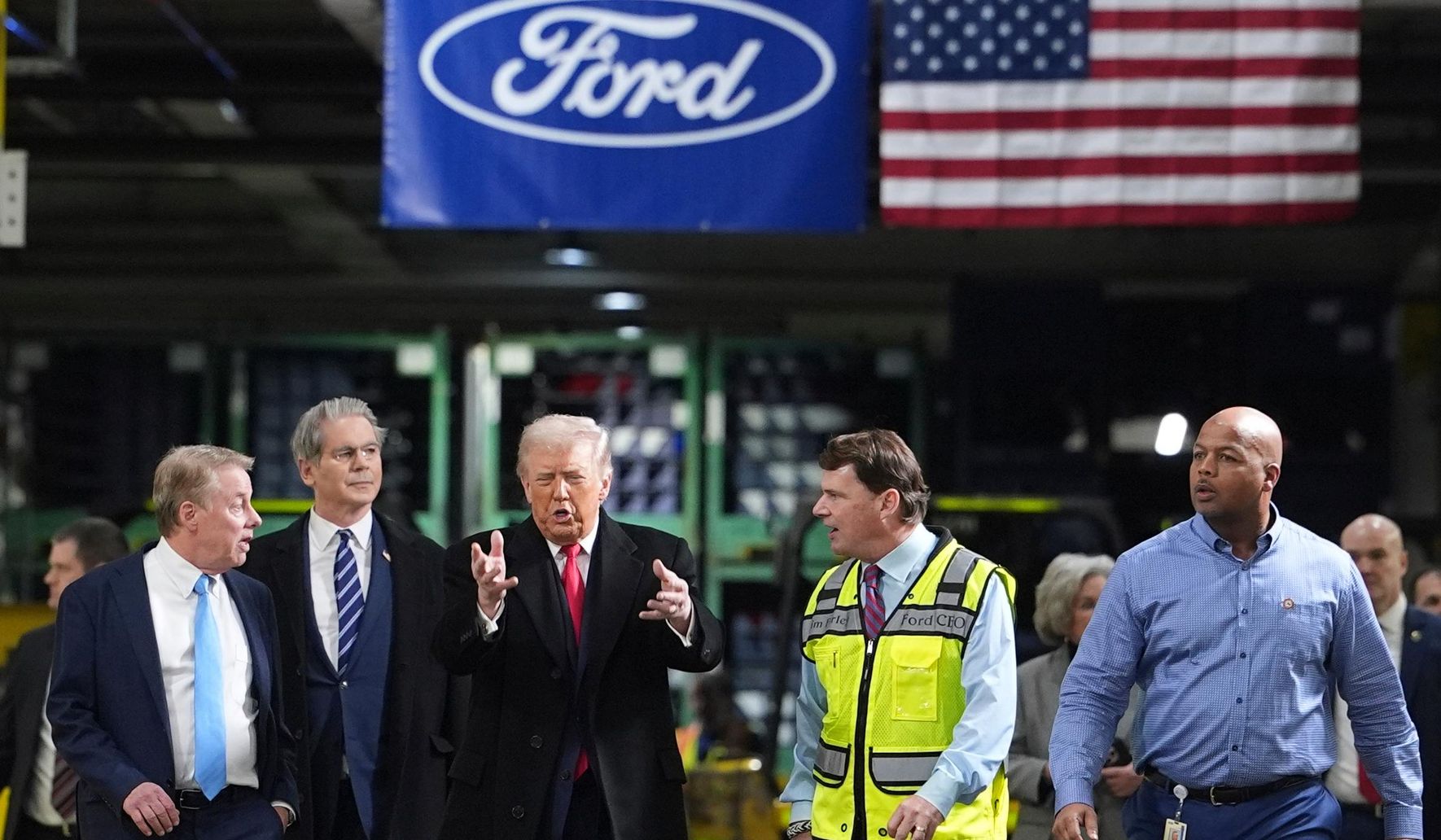
President Trump visited a Ford assembly plant in Michigan where a brief, widely circulated clip showed him making a hand gesture during an interaction with an autoworker, drawing immediate attention and debate. The short video sparked differing reactions on social media and among commentators, with one side treating it as evidence of disrespect and the other calling it a misread or distraction. The episode unfolded against the larger backdrop of the visit, which focused on manufacturing and job creation in a key swing state.
The visit itself was framed around jobs, supply chains, and domestic manufacturing, topics that matter to voters and to the plant workers on site. For Republicans, the emphasis was on policy wins and the administration’s push to bring industry back to American soil. Supporters argued that a single clip should not erase the substance of the trip, which included tours, workers’ questions, and promises about American manufacturing.
At the center of the uproar is this line: “President Trump appeared to give the middle finger to an autoworker during his tour of a Ford plant in Michigan on Tuesday, according to a video obtained by TMZ.” That exact phrasing has been repeated across outlets and social feeds, and the quote has worked as the kernel around which a broader narrative has formed. Whether one reads it as confirmation or as a tease, the line shaped immediate headlines and heated responses.
Video clips in crowded, fast-moving situations are notoriously ambiguous, and this moment was no different. People in the crowd were shifting, microphones and cameras were moving, and a lot of motion can look like intention. Many Republicans and conservative commentators pointed out that media outlets rush to label gestures without context, often turning a confusing instant into a scandal.
Critics on the left treated the footage as further proof of disrespect or contempt, using it to reinforce broader political arguments. Conservatives responded by questioning motives and calling for a fuller account of what actually happened during the visit. The back-and-forth underlines how quickly a single moment can be weaponized, rather than considered as part of a longer event.
Those defending the president emphasized policy outcomes and job announcements at the plant rather than gestures captured in a short clip. They argued these visits are about real economic impact for workers and communities, and that the coverage should prioritize tangible results over viral moments. This perspective drew a clear line between substance and sensationalism.
Plant workers themselves offered a variety of takes, with some focusing on wages and working conditions and others reacting to the spectacle of the footage. Conversations on the line, during tool talks, or in break rooms are where daily realities show up, and many workers said those issues mattered more than a fleeting hand motion. That contrast between everyday concerns and viral outrage highlights a disconnect that often defines political coverage.
Political operatives on both sides seized the moment for messaging, using clips to rally bases or to score quick points in the news cycle. For Republicans, the imperative was to steer attention back to policies that support industry and to question the media’s eagerness to sensationalize. The strategic response was as much about spin control as it was about defending a public figure.
The episode at the Ford plant is a reminder that short-form footage can amplify uncertainty and sharpen political divides. What remains clear is that the visit brought attention to American manufacturing at a time when voters are focused on jobs, inflation, and economic stability. For many conservatives, the lasting measure of a trip like this is whether it yields real benefits for workers, not how it plays on a 15-second loop online.

