

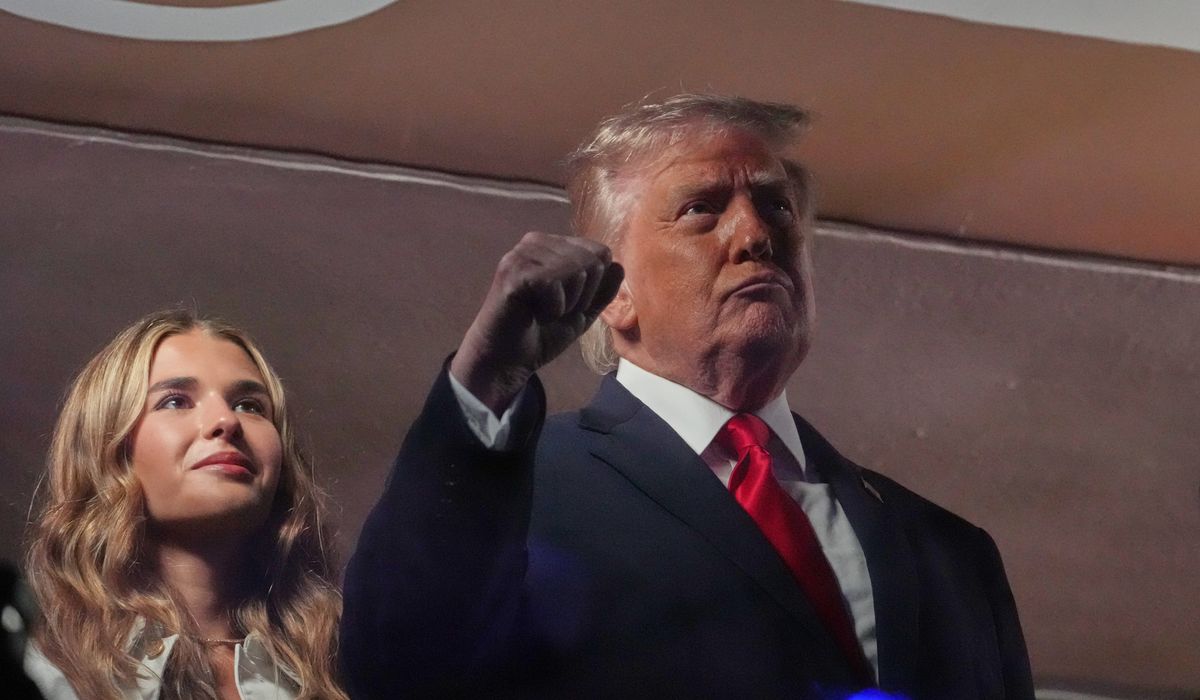
Former President Donald Trump weighed in on the NBA, calling it left-leaning but acknowledging it as top-tier entertainment, a stance that reflects broader Republican views on politics in sports and the cultural role of professional leagues.
When public figures talk about sports they are really talking about culture, and that is where this conversation belongs. Donald Trump observed bluntly that “It tends to be a little left-wing, but it’s great entertainment. It’s great.” That line captures a common Republican take: the politics are separate from the product people pay to see.
The NBA has become a cultural powerhouse beyond basketball, shaping fashion, music, and global branding in ways few leagues have. Conservatives often point out that while league offices and many players have liberal views, fans span the political spectrum and come for the competition, the drama, and the stars. Recognizing the league’s entertainment value does not mean endorsing every political position taken by individuals within it.
Skeptics on the right complain when institutions mix political messaging with their business, and the NBA is an easy target because its players are visible and outspoken. Yet dismissing the league outright ignores the craftsmanship and athletic performance that drive ratings and revenue. From buzzer beaters to playoff intensity, the game itself remains compelling regardless of off-court commentary.
There is also a practical angle that appeals to conservative voters: market choice. Fans decide with their attention and dollars, rewarding leagues that offer excitement and penalizing those that alienate viewers. In that sense, Trump’s comment reads like plain economics—if the NBA keeps delivering great entertainment, it will retain an audience even as political debates swirl around it.
Republicans who follow this debate often emphasize free speech and the freedom to spend money how you like, both as fans and as brands. Players and league officials have the right to express beliefs, but audiences also have the right to respond by tuning in or turning away. That push and pull is part of a healthy marketplace of ideas and preferences.
At the same time, the intersection of politics and sports raises questions about authenticity and priorities for a generation of athletes turned influencers. Critics on the right argue that some gestures are performative and that fans want honesty, not virtue signaling. Supporters of the players counter that athletes are citizens with platforms who can highlight real issues, but the Republican line remains skeptical of institutional politics invading entertainment spaces.
Still, the popularity of the NBA is undeniable, and even those who disagree with its politics can admit the product is compelling. For many conservatives the solution is straightforward: enjoy what you like, call out what you disagree with, and let the free market and public opinion sort the rest. That perspective keeps the focus on preserving choice and protecting the space where sports provide escape, excitement, and community without being reduced to a political script.

