

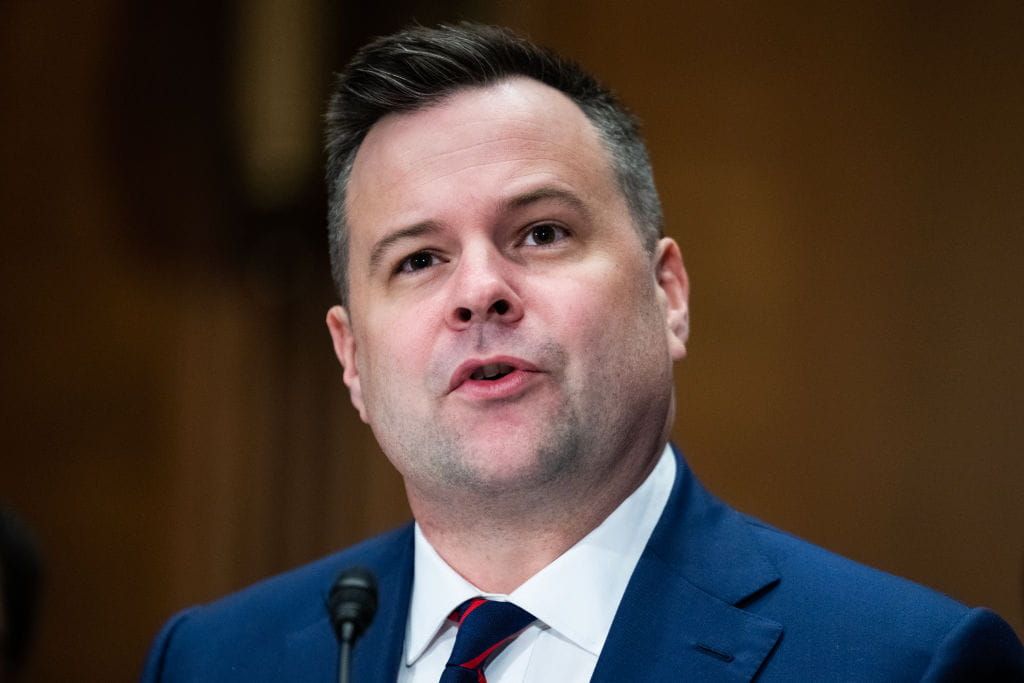
President Trump has tapped Bill Pulte to serve as acting Director of National Intelligence, a move that has drawn fierce reactions from both parties over his background, prior prosecutions referrals, and whether loyalty and disruption outweigh the statute’s experience requirements.
President Trump announced Bill Pulte as his choice to replace Tulsi Gabbard as acting director of national intelligence, and the reaction has been immediate and heated. Pulte currently leads the Federal Housing Finance Agency and chairs Fannie Mae and Freddie Mac, a post that put him in the middle of high-profile referrals and scrutiny. Supporters point to his loyalty and willingness to shake up bureaucracy, while critics warn about a lack of traditional intelligence experience.
“William has deep experience managing the most sensitive matters in America, the safety and soundness of the Markets, and over 10 Trillion Dollars at Fannie Mae/Freddie Mac, a substantial increase from where it was just 12 months ago. During this period, he will remain Director of the Federal Housing Finance Agency, and Chairman of Fannie Mae/Freddie Mac.”
The announcement comes as Tulsi Gabbard plans to step down at the end of the month to care for her husband, who was recently diagnosed with an extremely rare form of bone cancer. That personal situation sets a tight timetable for any transition and gives the White House a window to install an acting lead under the Federal Vacancies Reform Act of 1998. Trump appears to have chosen someone he trusts to push changes quickly, at least for the limited period allowed.
Pulte has already drawn attention for referring several of the president’s critics to prosecutors over alleged mortgage fraud, a move that produced only one indictment that was later dismissed for procedural reasons. Those referrals included prominent names in politics and finance, and they prompted the Government Accountability Office to open an inquiry. The GAO accepted a request from seven Senate Democrats to investigate whether Pulte misused his authority for personal or partisan reasons in those referrals.
The nomination—or appointment to acting status—has not been embraced across the aisle, and not uniformly accepted within the GOP. Senate Minority Leader Chuck Schumer blasted the choice on social platforms, calling Pulte a partisan operator and arguing he lacks intelligence experience. Several Republican senators also signaled they would withhold support if Pulte were formally nominated to be the Senate-confirmable Director of National Intelligence.
“Bill Pulte is a partisan thug with no experience in intelligence. He is another unqualified Trump appointee that will make our country less safe. And you won’t hear a word from the Republicans who claim to care about national security.”
Senate leaders noted the legal bar for the DNI post. Some Republicans stressed that the statute requires “extensive national security expertise” for anyone nominated to serve as DNI, and that the Senate’s advice and consent role remains a check on any permanent appointment. That sentiment was echoed publicly, with proponents of the rule of law saying confirmation would demand credentials beyond management chops at finance agencies.
“We don’t need a weaponized DNI. We need professionals there. So, again, I’ve just heard about it. I’ll try and get more information about the current state of their thinking about that position. And again, if he’s somebody they want in that position permanently, he’s got, as you all know, a lengthy road ahead of him.”
Concerns are not limited to procedure. Intelligence officials and lawmakers warned that picking someone seen as politically aligned risks politicizing intelligence products. The vice chairman of the Senate intelligence panel issued a particularly sharp critique, saying the pick could prioritize message over facts and leave Americans more vulnerable to threats if oversight and independence are compromised.
“It is that he appears to have been selected precisely because the White House believes he will provide the narrative it wants, not the intelligence we need. Americans have every reason to worry about what happens when the official charged with overseeing everything from counterterrorism to foreign election threats is chosen for his willingness to advance the president’s political agenda rather than his experience. That is how intelligence becomes politicized, how inconvenient facts disappear, how agencies charged with protecting our democracy instead become tools to manipulate it, and how Americans are left more vulnerable to a terrorist attack.”
Trump defended his choice in private comments, calling Pulte a “very talented guy” and valuing his loyalty. Pulte’s reputation inside and outside government is as a disruptor: critics describe him as confrontational, while allies celebrate his willingness to challenge entrenched actors. He pushed for aggressive reforms in finance, publicly sparred with officials like former Fed Chair Jerome Powell, and clashed with figures in the Treasury, shaping a profile that appeals to a White House seeking rapid change.
If Pulte serves only in acting capacity, he has up to 210 days to wield the DNI office without Senate confirmation, a timespan the White House may use to push transparency measures or declassifications. But any permanent elevation would require formal nomination and Senate approval, and that process is likely to be contentious given the legal requirements, the GAO probe, and the bipartisan doubts already voiced.

