

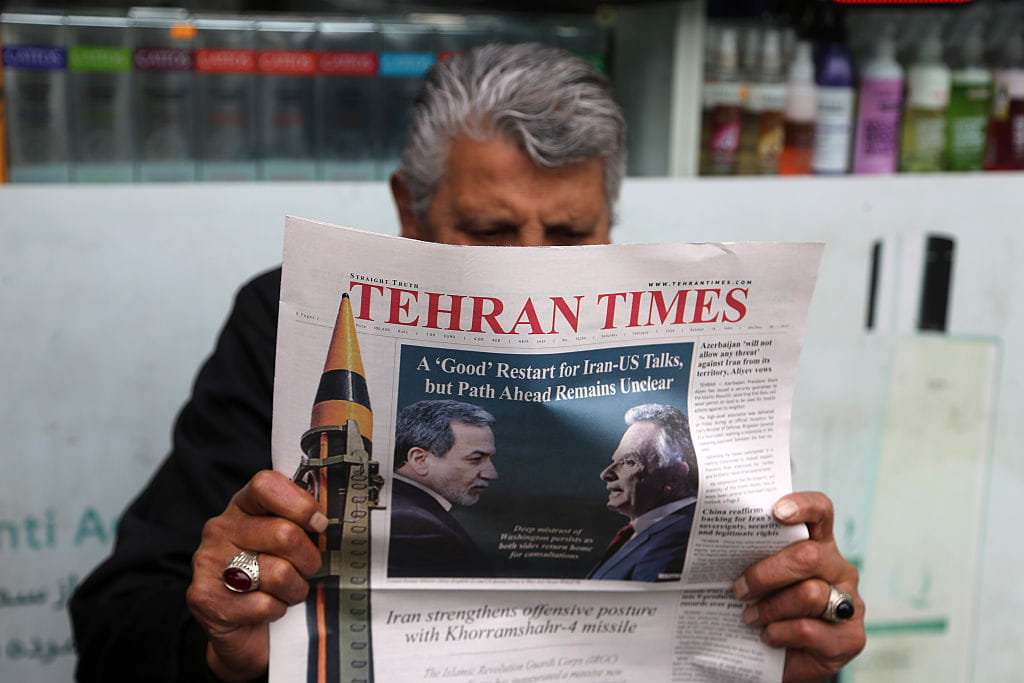
The United States and Iran held their second round of nuclear weapons talks on Feb. 17, and the session produced some early, limited signals of progress amid deep skepticism about Tehran’s intentions.
Washington and Tehran met again for nuclear weapons talks on Feb. 17, a follow-up to an already cautious first meeting. Reports say the second round was short but offered a few tentative positives, mostly procedural and aimed at reducing immediate confusion. In diplomacy, those first moves are often about setting a clearer baseline for what each side actually wants.
When adversaries meet to reach common ground, the first steps are confidence-building measures to create an atmosphere in which there is no confusion about each side’s position. That phrase is familiar in arms control circles, and it reflects the theory that small, verifiable steps can open a path to bigger agreements. Republicans should welcome clarity, but not confuse gestures with guarantees or permanent solutions.
From a Republican perspective, the key question is verification. Any talk that does not include intrusive inspections, real-time monitoring, and unfettered access to suspected sites is incomplete. Iran has a long record of deception and concealment when it suits its goals, so strong verification language and immediate inspection protocols must be nonnegotiable.
Second, enforcement matters. If Tehran backslides, there must be snap-back mechanisms that trigger significant consequences without delay. That means keeping sanctions snap-ready and ensuring the legal and political will to reapply them quickly. Without credible enforcement, any concessions become mere pauses for Iran to advance its capabilities.
Third, this should be a whole-of-government negotiation, not an exercise only for diplomats. Congress has a constitutional role and should be briefed and involved, because any deal that reduces U.S. leverage or changes sanctions needs legislative scrutiny. Republicans will insist on oversight to prevent the executive branch from trading away long-term security for short-term political theater.
Fourth, regional security must be central to the talks. Israel, Gulf partners, and other allies face real threats from Iran’s missile and proxy programs, which a narrow nuclear framework can ignore at great peril. A robust American approach links nuclear limits to broader steps that curb ballistic missile work and the funding of militias across the region.
Fifth, timelines and thresholds are everything. Vague commitments with distant review dates allow Iran to game the system. Clear caps on enrichment, centrifuge numbers, and uranium stockpiles, with specific, enforceable timelines, are required. Any agreement should reduce Iran’s breakout window, not extend it.
Public messaging also matters. Republicans believe the U.S. should speak plainly about risks and consequences, avoiding euphemisms that lull the public into complacency. Negotiations can be pursued quietly, but the criteria for success must be spelled out clearly so the American people and partners know exactly what is at stake.
Military deterrence remains a necessary backdrop. Diplomacy works best when it is backed by credible defense capabilities and alliances. Demonstrating that the U.S. and partners can impose costs if Iran violates commitments keeps pressure on Tehran to choose restraint over provocation.
Finally, any progress needs concrete, verifiable deliverables, not open-ended promises. Short meetings that yield goodwill statements are fine as first steps, but they must quickly lead to written, enforceable protocols. Republicans will push for legal instruments, not memorandums of understanding that can be reversed with a change in administration.

