

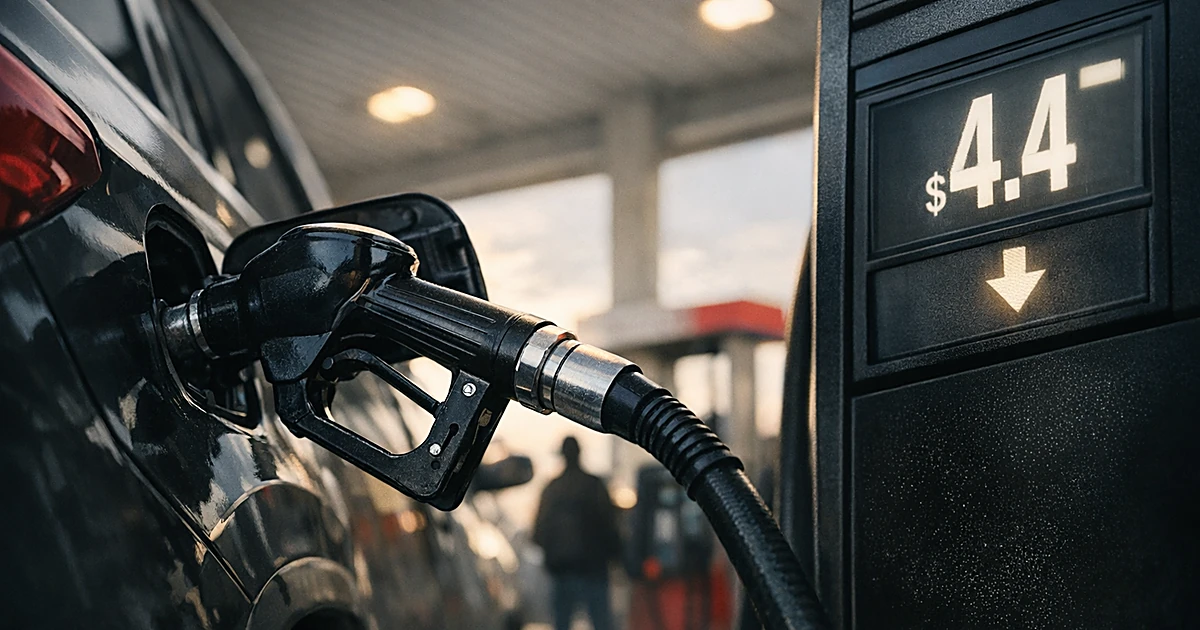
Gas prices slipped to $4.11 after five straight daily drops, but the relief is tiny compared with the steep climb drivers have endured this year and the policies that help explain why prices vary so much by state.
The national average for a gallon of regular gasoline fell to $4.11 on Wednesday, marking the fifth consecutive day of declines since Friday. That one-cent drop from Tuesday is real, but drivers are still paying nearly a dollar more per gallon than a year ago. Small daily dips do not erase a rapid, months-long increase.
A week ago regular gas averaged $4.16 nationwide, a month ago it was $3.70, and a year ago it sat at $3.17. Those numbers show the scale of the move: five days of penny-sized decreases cannot change the broader trajectory. Consumers feel that gap every time they pull into a station.
Two big drivers pushed prices up: winter refinery disruptions and a war with Iran that began in late February. Those are not issues that resolve overnight or on a convenient political timetable. Expect volatility until refineries fully recover and geopolitical risks ease.
On January 12 gas hit a five-year low of $2.79 per gallon, but winter storms and refinery outages disrupted supply through February. By the first week of March regular gas climbed to $2.98, and by March 31 the national average crossed $4.00, reaching $4.02. That is more than a $1.20 jump in roughly two and a half months.
A 15-gallon fill-up went from about $42 to nearly $62 in that span, a roughly $20 increase that hits hourly workers and retirees on fixed incomes the hardest. The Iran conflict accelerated the spike by adding geopolitical risk to already strained refinery operations. Those combined shocks pushed pump prices well beyond winter comfort levels.
Location matters a lot. The Midwest has the cheapest gas in the country: Oklahoma at $3.44, Kansas $3.51, North Dakota $3.62, Nebraska $3.63, and Iowa $3.65. Those averages reflect lighter regulatory burdens and proximity to domestic production, which keeps costs lower for drivers there.
On the opposite end, the Pacific coast faces much higher prices. California leads at $5.88 per gallon, Hawaii $5.65, Washington $5.39, Oregon just under $5.00, and Nevada $4.96. State taxes, special fuel blends, strict environmental mandates, and constrained refinery capacity add hundreds of dollars a year to the average household fuel bill.
A driver in Sacramento paying $5.88 is effectively subsidizing that state’s policy choices every time the nozzle clicks. A driver in Tulsa paying $3.44 is not. That gap is not accidental; it is the result of deliberate rules and taxes set by state leaders.
In the Washington, D.C., area gas edged down to $4.29 from $4.30 on Tuesday, holding essentially steady over the past week. A month ago D.C. drivers paid about $3.70, so the monthly increase still approaches 60 cents per gallon. Maryland dropped a penny to $4.10 Wednesday after a month at roughly $3.60, and Delaware and Virginia both registered $3.97 with month-ago averages in the mid-$3.40s.
Those mid-Atlantic increases—around 50 to 60 cents in thirty days—squeeze family budgets and small businesses alike. When shipping and grocery prices rise, the pain spreads beyond the gas tank. Wages have not matched this kind of spike, so ordinary households absorb most of the burden.
Five consecutive days of falling prices sound encouraging, but the total decline from Friday to Wednesday is measured in pennies. The national average moved from about $4.16 a week ago to $4.11, a nickel; a 15-gallon fill-up saves roughly 75 cents. That is not close to offsetting the $1.20-per-gallon surge since mid-January.
Year over year the picture looks worse: $4.11 today versus $3.17 a year ago is roughly a 30 percent increase. Higher fuel costs feed through to higher shipping, pricier groceries, and tighter margins for small businesses. Celebrating a five-day streak of penny drops asks Americans to be grateful for crumbs.
Political paralysis on energy policy makes the problem harder to fix. Internal divisions within the Democratic coalition over spending and foreign policy reduce the odds of coherent congressional action to bring prices down. When leaders are distracted by infighting, kitchen-table issues like fuel affordability get deprioritized.
The most expensive states—California, Hawaii, Washington, Oregon, and Nevada—share the same traits: high fuel taxes, strict environmental rules, boutique blends, and tight refinery capacity. The cheapest states—Oklahoma, Kansas, North Dakota, Nebraska, and Iowa—benefit from fewer regulatory costs and closer access to oil production. The gap from $3.44 to $5.88 is $2.44 per gallon, which adds up to well over a thousand dollars per household over a year of average driving.
Policy choices are measurable at the pump, and they matter most to the people who can least afford higher costs. Some political leaders prefer messaging and political theater to regulatory relief that would lower prices for families. That preference has real consequences in every state where drivers pay more.
Looking ahead, the Iran conflict shows no quick fix, winter-damaged refinery operations take time to restore, and the summer driving season typically raises demand. None of those factors point toward a durable drop in pump prices any time soon. A nickel off a $4.11 average is welcome, but it is not a lasting solution.

