

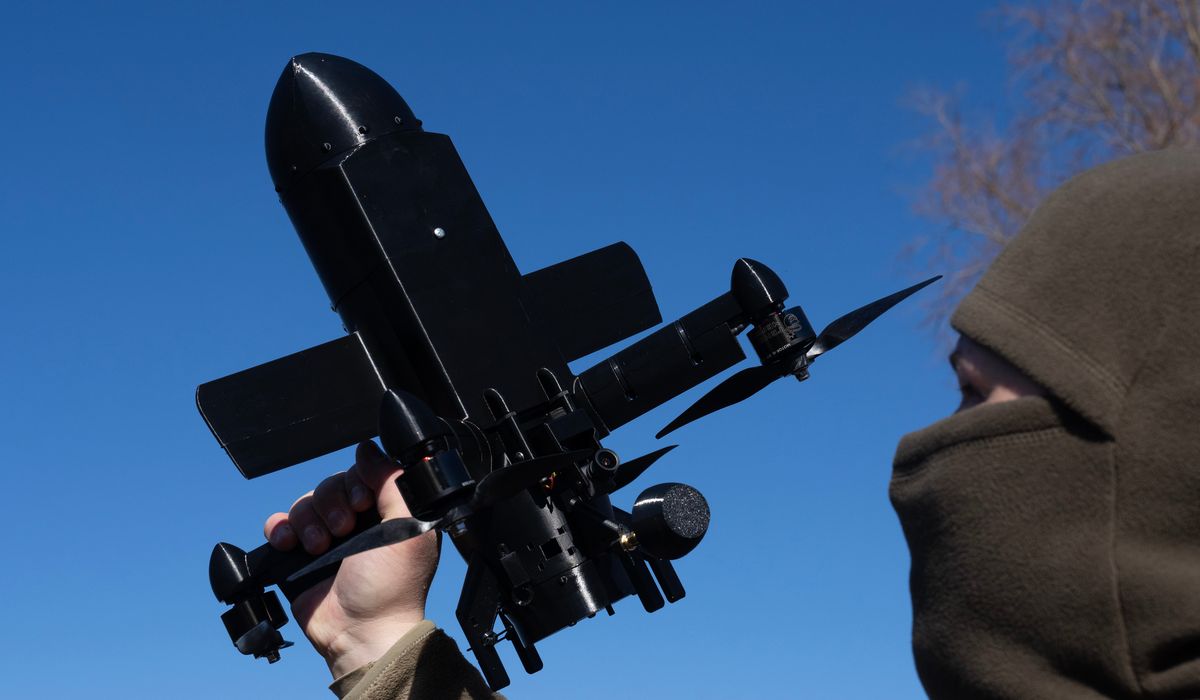
Ukraine shot down more than 33,000 Russian drones in March, a record monthly figure since Russia launched its full-scale invasion over four years ago, underscoring how drones have become the dominant battlefield tool and how costly and intense this phase of the war has become.
The sheer number — more than 33,000 drones in a single month — shows how the conflict has shifted into relentless, high-volume aerial attrition. These losses are not just statistics; they reflect nonstop pressure on air defenses, logistics, and the people running them. The scale is unprecedented in modern warfare.
This wave of drone activity is a mix of cheap, expendable systems and more capable platforms designed for surveillance and precise strikes. Russia has flooded the battlefield with different models, trying to overwhelm Ukrainian defenses with quantity and variety. Ukraine, for its part, has responded with a layered defense that combines guns, missiles, and electronic warfare.
Layered defenses are the key. Short-range interceptors and small arms handle low-flying threats while man-portable systems and medium-range missiles take on heavier drones. Electronic countermeasures disrupt guidance and cut missions short before munitions can be used. That multi-tiered approach is expensive and demands constant maintenance and resupply.
Operational tempo has skyrocketed, putting strain on personnel and spare parts. Operators must work long shifts analyzing signals, cueing interceptors, and repairing systems under fire. Training pipelines have had to accelerate so replacements can step into technical roles faster than usual.
There is an asymmetric cost dynamic at play. Drones can be cheap to build and launch, but effective air defenses are costly to buy, operate, and sustain. That imbalance forces defenders to be judicious with their most expensive interceptors while still denying the attacker free runs at critical targets. The math of attrition favors whoever can sustain production and supply lines longer.
Intelligence, surveillance, and reconnaissance feed the cycle. Detecting launches, tracking swarms, and coordinating responses require real-time data and secure communications. Western-supplied sensors and training have tightened that loop, but maintaining secure, resilient networks under cyber and electronic attack remains a daily challenge.
Tactically, the conflict has driven innovation in both offense and defense. Swarms and diversionary tactics aim to saturate screens and split responses, while defenders refine cueing algorithms and integrate low-cost interceptors to blunt mass attacks. Lessons learned here will influence how militaries worldwide think about contesting the skies in future conflicts.
From a Republican perspective, this moment proves that sustained, decisive support for allies who defend freedom is vital and that a strong defense posture matters. We see the difference a capable partner makes on the ground when backed by reliable supply chains and hardened systems. If the United States and partners prioritize readiness and robust aid, they reduce risk and deter escalation.
What matters going forward is endurance and adaptability. The drone barrage will continue to evolve, and defenders must keep pace with tactics, training, and hardware. Ukraine’s record month shows both resilience and the cost of standing firm, and it also signals how modern wars will be fought and resourced in the years ahead.

