

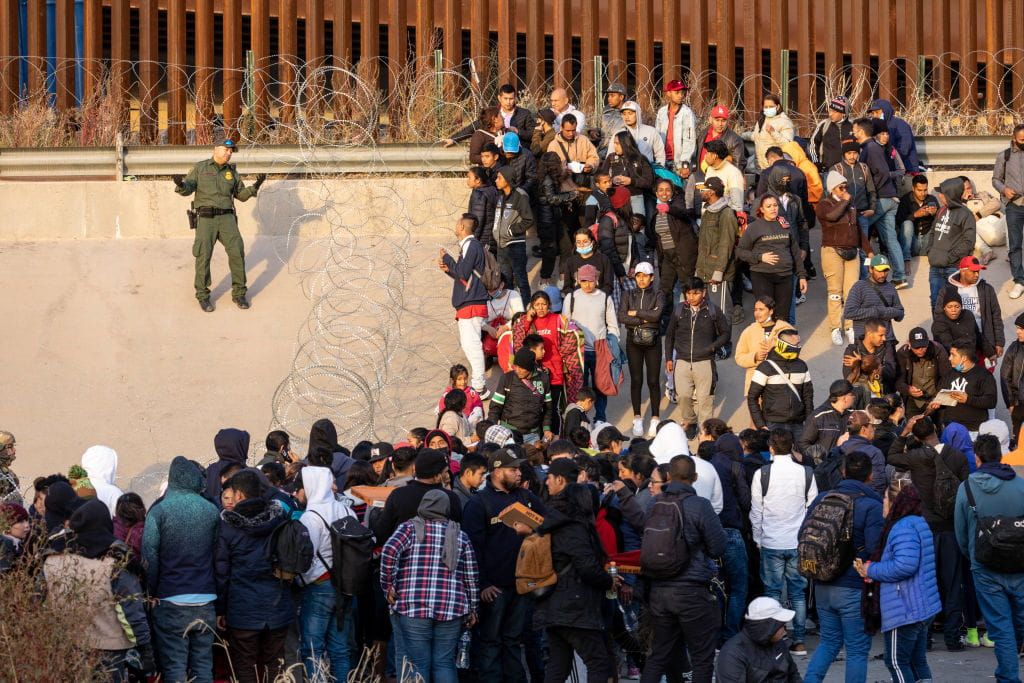
“Trump administration likely to prevail.” Apr 29, 2026 — The immigration battle has circled back to the US Supreme Court, testing the limits of executive authority, congressional intent, and practical enforcement at the border; this case will determine whether Washington can regain control of who enters the country and how swiftly officials can remove those who should not be here.
The nation is watching as justices prepare to weigh arguments that reach far beyond a single procedural dispute. At stake is the balance between a president’s duty to enforce the law and the courts’ role in policing administrative action, with clear consequences for border security and public order.
Conservative legal advocates argue the administration is simply asking for common-sense tools to enforce existing immigration statutes, not for new powers. Those tools, they say, are essential for restoring deterrence after years of porous enforcement and policy confusion.
Opponents frame the matter as a civil rights concern and insist on strict judicial oversight of deportation practices, but that perspective often ignores practical realities on the ground. Law enforcement officers and immigration officials must make swift, fact-based choices; tying their hands with excessive litigation has real human and economic costs.
The case also spotlights how lower courts have sometimes substituted their judgment for that of elected officials, creating a patchwork of inconsistent rulings that complicate national policy. From a conservative viewpoint, predictability matters: a uniform standard set by the Supreme Court would allow states and federal agencies to operate under one coherent rule.
Republicans pushing for secure borders see this decision as an opportunity to reinforce the separation of powers by affirming the executive branch’s core responsibilities. When Congress writes the laws, the president, through his agencies, must be able to implement them in ways that protect citizens and maintain the rule of law.
Practical considerations are also in play: unchecked migration strains local services, affects labor markets, and complicates law enforcement efforts in communities trying to keep residents safe. Conservative analysts point out that efficient removal processes, where warranted, help restore public confidence and free up resources for genuine humanitarian cases.
Legal precedent and statutory text will guide the Court, but the underlying political stakes are unmistakable. A ruling favorable to the administration would signal deference to elected officials’ judgments on national security and border control; a contrary ruling would empower courts to reshape enforcement priorities across the board.
Observers should expect sharp exchanges over the limits of discretion and the meaning of statutory directives, with justices probing whether the challenged policies exceed authority or reflect reasonable policy choices. Real-world impacts will follow—the decision could speed removals, slow them, or leave agencies with little clarity about permissible tactics.
Public reaction will be immediate and intense regardless of who wins, because immigration is a live issue in cities, towns, and state capitals across America. Republican leaders are already framing the dispute in plain terms: enforcing the law matters, and the federal government needs workable authority to do the job.
For the courts, this case is another test of restraint versus intervention, asking whether judges should defer when agencies act within statutory bounds. From a conservative angle, restraint preserves democratic accountability by keeping policy choices with those elected to make them.
No single ruling will end the larger debate over immigration policy, but the Supreme Court’s decision will set the rules of engagement for the next chapter. Whatever the outcome, expect renewed legislative efforts and state-level responses as political actors adjust to the new legal landscape and seek durable solutions to a problem that has defied easy fixes.

