

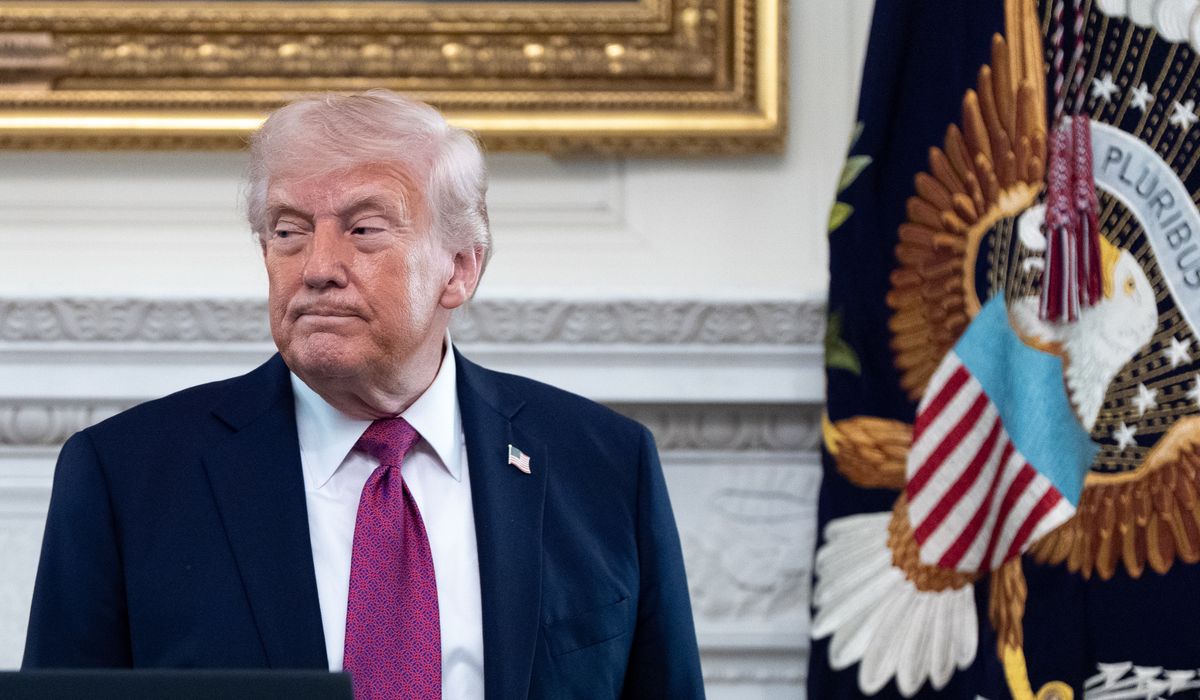
President Trump issued a forceful social media warning to Iran, telling them to “get smart soon” or face renewed military attacks, a message reflecting a hardline stance on deterrence and American strength.
President Trump used a blunt social media post this week to signal that the United States remains ready to respond decisively if Iran escalates threats or attacks. The tone was intentionally sharp to make clear that deterrence requires clarity and resolve. This kind of messaging aims to prevent miscalculation by adversaries who might interpret silence as weakness.
The phrase “get smart soon” or else face renewed military attacks was posted to cut through ambiguity and make a straightforward point about consequences. From a Republican perspective, projecting strength is a practical tool that keeps Americans safe by discouraging aggression. When our leaders communicate firm lines, it raises the price for hostile actions and supports deterrence across the region.
Those who favor a softer posture argue for patience and diplomacy, but history shows that restraint without credible capability can invite more danger. The administration’s approach pairs warning with the implied readiness to act, keeping options on the table. That combination is designed to protect U.S. interests and allies without rushing into unnecessary conflict.
Some critics label such statements as provocative, but public clarity can also stabilize a tense environment by setting predictable stakes. Clearing up uncertainty helps allies coordinate and adversaries calculate more cautiously. The alternative, ambiguous signals, risks misreading and faster escalation toward violence.
Operationally, military readiness and diplomatic pressure work together; the public message underscores that readiness. U.S. forces remain positioned and equipped to respond if required, and that posture supports broader strategic goals. The point is not to seek conflict but to ensure that deterrence is credible.
Republican messaging emphasizes that strength at the front end prevents larger wars later on, and clear warnings are part of that strategy. By signaling consequences, leaders aim to avoid drawn-out military engagements and costly ground commitments. Effective deterrence protects both American lives and long-term national interests.
On the political front, strong statements resonate with voters who prioritize security and predictability in foreign policy. They expect leaders to be straightforward about threats and firm about defending national sovereignty. Voters also value strategies that combine force posture with diplomatic tools to secure favorable outcomes.
International partners watch public statements closely, and a direct warning serves diplomatic purposes as well. Allies can align their messaging and posture when U.S. intent is unmistakable, improving coordination without immediate escalation. That kind of clarity supports collective defense and regional stability.
There’s also a legal and moral dimension: warning an adversary before using force relates to proportionality and restraint, and it provides a public record of intent. Clear communication can frame any necessary response as defensive and measured, not arbitrary. This transparency helps the U.S. maintain legitimacy in the eyes of the world and its own citizens.
Operational spoilers and actors who seek to exploit ambiguity are less likely to do so when consequences are spelled out in public. That is the practical logic behind firm statements from leaders who refuse to cede advantage by being vague. A visible stance reduces the chance of miscalculation that could drag the country into unnecessary danger.
At the same time, saying it publicly does not remove the need for careful planning and disciplined execution if action becomes necessary. Policymakers must still weigh intelligence, diplomatic fallout, and military options before moving forward. Saying you will act is only the first step; following through responsibly is what protects the nation.

