

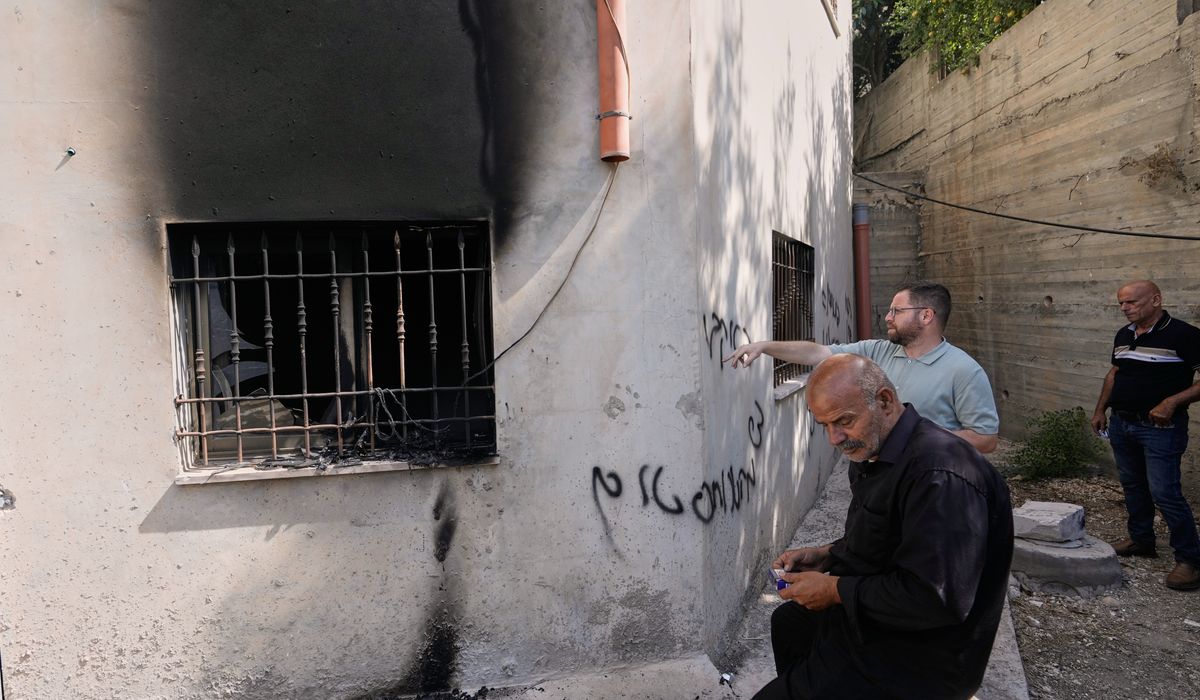
The United States ambassador to Israel condemned Israeli settler violence in the occupied West Bank, calling the behavior an “act of terror” while visiting with Palestinians, and the remarks have sparked debate about language, policy, and the responsibilities of both Washington and Jerusalem.
The ambassador’s public condemnation landed squarely on settler attacks, labeling them an “act of terror” in a moment that drew immediate attention across the region and in Washington. That phrase was repeated exactly and carried weight because it came from a senior American diplomat in Israel, and words from U.S. officials shape how events are seen by allies and opponents alike. The scene was simple in description but complex in consequence, and it reopened old debates about accountability in the West Bank.
From a Republican perspective, the problem is not that violence must not be called out; partisan critics and supporters of Israel agree that any attack on civilians is unacceptable. The concern is about balance and strategic clarity, because declaring one type of violence a terrorism act while overlooking others can feed narratives that hurt Israel’s security and U.S. credibility. Republicans want tough talk against lawlessness, but they also want any U.S. diplomat to frame things in a way that protects an ally fighting terrorism on multiple fronts.
There is no excuse for settlers who attack Palestinians, and those individuals should face the full force of the law inside Israel and the territories it controls. At the same time, broad labels can have political effects that go beyond legal consequences, shaping funding decisions, international law discussions, and the daily pressure Israeli security forces face. Republicans argue that if Washington uses charged terminology, it should do so with a clear proposal for how to translate words into enforceable, fair policies.
Optics matter in diplomacy, and the ambassador’s visit with Palestinians was meant to send a message of concern and solidarity with victims of violence. But optics also cut the other way for many Americans who see Israel as a frontline partner against extremist threats, including Hamas and Iran-backed groups that target civilians repeatedly. The risk, Republican critics say, is that unilateral public condemnations without parallel emphasis on Palestinian responsibility and extremist violence give cover to those who want to delegitimize Israel.
Language like “act of terror” has legal and political resonance, and Republicans warn that it can be weaponized in international forums or used to justify measures that erode Israel’s ability to defend itself. Definitions matter when sanctions, investigations, or aid decisions come up, and Washington should be careful before applying terms that carry legal implications. Republicans prefer sharp moral judgments against wrongdoing combined with a steady defense of allies and their right to maintain order.
Practical steps follow from those principles: hold perpetrators accountable, support lawful policing, and push for transparent investigations so that justice is seen to be done. At the same time, the United States should make clear that it stands with Israel against organized terror networks and will back measures that strengthen regional stability. This approach aims to reduce violence and protect civilians without undercutting the diplomatic or security tools Israel needs.
That balance is political and strategic, not just semantic, and the ambassador’s statement became a flashpoint because it forced a reckoning on where Washington draws distinctions. Republicans urge U.S. officials to call out brutality wherever it occurs while framing statements so they do not inadvertently weaken a key ally. The recent remarks are likely to reverberate through policy discussions, diplomatic interactions, and the courts that may be asked to sort out the facts on the ground.

