

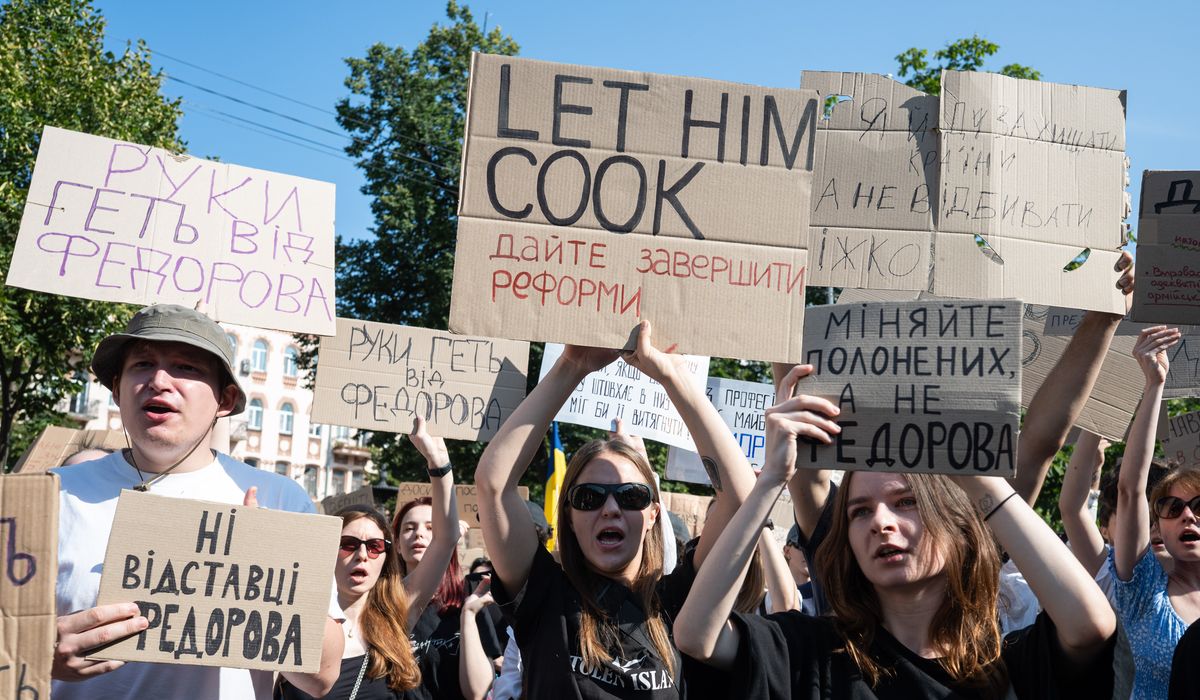
President Volodymyr Zelenskyy’s move to remove Defense Minister Mykhailo Fedorov after just six months has sparked an unusual and vocal backlash across Ukraine, with soldiers and civic groups openly criticizing the timing and implications for wartime leadership.
The decision to oust a defense minister in the middle of an active conflict looks abrupt and has unsettled many who expect steady leadership during war. Soldiers on the front lines and civil society activists have reacted with surprise, frustration, and concern about what comes next. The unusual public pushback suggests deeper worries about stability, accountability, and the chain of command.
Critics argue that removing a top defense official so quickly can damage morale among troops who need predictable leadership. When commanders and ministers change frequently, it complicates planning and makes long-term operations harder to execute. In a war where timing and trust matter, rapid turnover can undercut battlefield effectiveness and the confidence soldiers place in civilian oversight.
Supporters of the move say fresh leadership can bring new energy and fix persistent problems inside the defense ministry. They point to the need for reform and speed in modernizing forces, and they claim sometimes personnel shifts are necessary to adapt to changing threats. Even so, the optics of a six-month tenure raise questions about the criteria used for such decisions.
Civil society groups have also made their voices heard, framing the firing as a symptom of broader political instability. Volunteers and nongovernmental organizations that coordinate aid and logistics worry about disruption to channels they’ve built with defense officials. Those partnerships are often informal and personal, so sudden personnel changes can interrupt the flow of critical supplies and support to troops.
The controversy shines a light on how wartime governance balances political control with the military’s need for predictable, competent management. Some Republicans and skeptics watching from abroad see the episode as a reminder that democratic allies must keep governance steady while resisting quick fixes. From that perspective, a disciplined, rules-based approach to appointments matters as much as the personalities involved.
Questions about transparency have also surfaced, with calls for clearer explanations of why the minister was replaced. Voters and activists are asking whether the decision followed a clear performance review or was driven by political calculation. Without a detailed rationale, speculation fills the vacuum and undermines public trust.
International partners are likely watching closely, too, since continuity in defense leadership can affect cooperation on weapons, training, and intelligence sharing. Allies that supply equipment and logistical support prefer predictable interlocutors so programs don’t stall. Sudden changes can slow progress on joint efforts, from training cycles to arms deliveries.
The firing also highlights the challenge leaders face when juggling internal politics and external pressures during wartime. Presidents must weigh the need to assert control with the responsibility to maintain steady operations at the front. The backlash shows how sensitive that balance is and how quickly public sentiment can turn when perceived stability is at risk.
Looking ahead, how the government navigates this fallout will tell us whether the move was a one-off shakeup or the start of a pattern that could reshape civilian-military relations. Restoring confidence will require clear communication, swift steps to fill any operational gaps, and visible signs that the change improves defense management. Until then, soldiers and civic actors will keep watching and speaking up, unwilling to accept surprises in the middle of a fight.

