

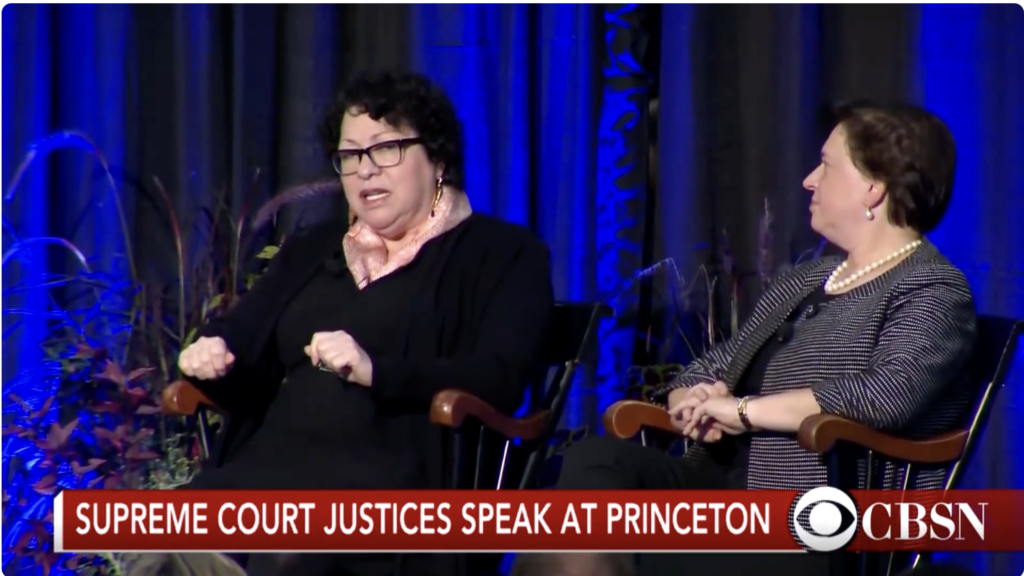
Mollie Hemingway’s new book flagged a dangerous delay around Dobbs, and now the liberal justices seem to be stalling again, raising concerns about timing, transparency, and the Court’s impact on conservative gains.
The timing of Supreme Court decisions matters, and conservatives are watching this one closely after Mollie Hemingway highlighted the delay tied to Dobbs. What looked like a long-overdue clarification is now clouded by procedural pauses that fuel suspicion. Those pauses matter because they shape public expectations and the credibility of the courts.
Republican readers will see this as more than courtroom theater; it’s a test of whether conservative legal wins will be meaningful on the ground. Delays give opponents breathing room to rally and shape narratives before final rulings land. That dynamic weakens confidence among voters who supported change through the political process.
There’s a difference between careful deliberation and strategic stalling, and that line is getting blurry in public view. When timing becomes part of the message, the Court’s neutrality looks less credible and more like a political actor. Conservatives worry that judicial inaction can have the same practical effect as a decision that goes against them.
The immediate practical harm is real: institutions and state governments need clear guidance to plan and act. Uncertainty stalls legislation, enforcement, and administrative steps that depend on firm legal footing. When the Supreme Court drifts into months of ambiguity, it shifts policymaking back to courts and bureaucrats rather than voters and legislatures.
Mollie Hemingway’s reporting brought attention to how these delays play into broader legal strategy and public perception. That scrutiny is useful because it forces questions about fairness and the norms that once governed the Court. Conservatives must insist on transparency when procedural games threaten substantive outcomes.
Political actors on the left have incentives to use delay as a tactic, and party-aligned justices can be tempted to let that tactic breathe longer. That tactic buys time for advocacy, fundraising, and legislative countermeasures that can blunt a Court ruling’s effect. From a Republican angle, the right response is to push for quicker, clearer resolution when the stakes are so high.
There are institutional ways to push back that don’t undermine judicial independence, like calling for better scheduling transparency and clearer opinions when decisions are finally issued. The goal is to restore predictability without crossing into politicization. Conservatives should champion reforms that preserve legitimacy while ensuring the Court does not become a vehicle for tactical delay.
Public confidence hinges on a perception of equal treatment under the law, not on which side benefits from slow-walking a ruling. When people see the Court pausing repeatedly, they infer bias regardless of the internal reasons. That erosion of confidence is dangerous because it transfers political disputes back into the streets and legislatures rather than keeping them at the neutral bench.
Advocates on the right also need to shape the narrative proactively rather than react after the fact. Clear messaging that explains why timing matters—and why certain delays are corrosive—helps voters understand the stakes. It also pressures institutions to explain their processes instead of hiding behind procedural opacity.
At the same time, conservatives should avoid hasty demands that could be framed as attacks on judicial independence. There’s a balance to strike between calling out gamesmanship and protecting the Court from partisan retaliation. Smart pressure focuses on transparency, reasoned timelines, and institutional reforms that benefit the rule of law overall.
What gets lost in the smoke of procedural maneuvering is the effect on everyday policy and governance. When courts pause on pivotal questions, businesses, hospitals, and local governments sit in limbo while citizens wait for clarity. That paralysis undermines the very stability the judicial branch is supposed to supply.
The core issue is simple: the Court’s actions must match its constitutional role, not political convenience. If delays tilt outcomes or blunt the impact of durable legal changes, then the Court risks becoming an instrument of partisanship. Conservatives seeking lasting legal wins should push for a judicial process that is timely, predictable, and accountable.

