

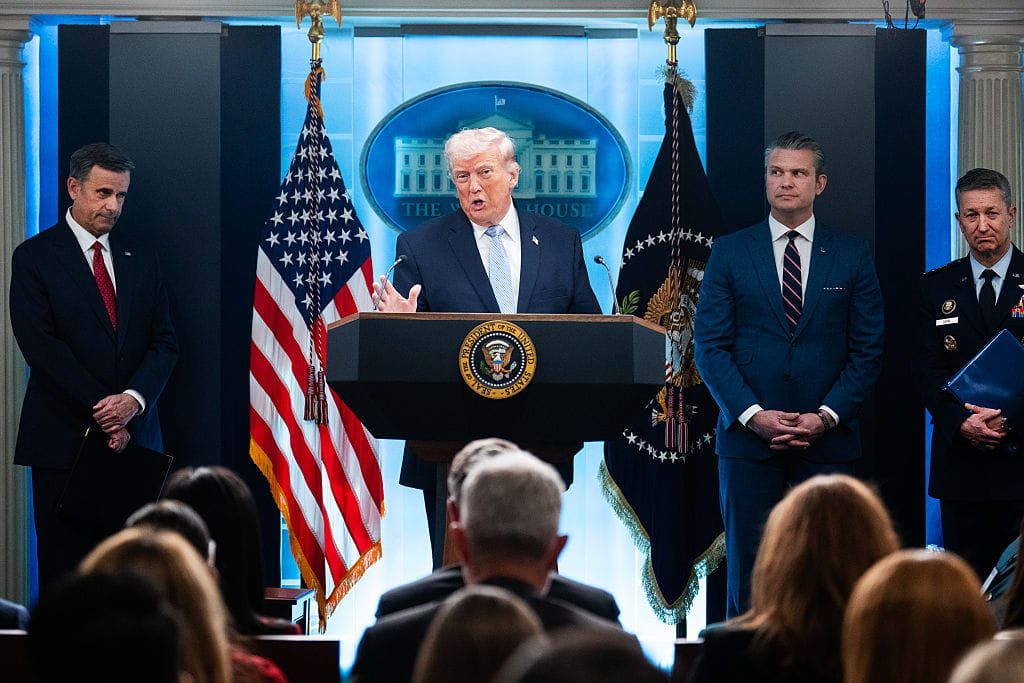
“Not War” situationship with Iran keeps dragging on as peace talks sputter and complaints about reparations collide with firm pushback from Washington.
The United States and Iran remain locked in a tense, low-intensity standoff that avoids outright war but also avoids meaningful resolution. Iran has doubled down on demands for reparations, while Washington has pushed back hard. The dynamic is increasingly familiar: brinkmanship without a breakthrough.
“Iran wants reparations – and Trump isn’t having it.” That short line captures the political reality shaping the talks as of May 11, 2026, where domestic politics and national security priorities collide. From a Republican perspective, backing down to a regime that bankrolls terrorism would be the wrong signal. The position taken in Washington reflects an insistence on accountability over appeasement.
On the ground, what passes for diplomacy has produced little more than stalled meetings and public statements. Negotiators circle each other, trade demands, and retreat when concessions are required. That pattern leaves everyone worse off: Americans see instability, allies see uncertainty, and Iran sees leverage in prolonging the negotiations.
The term “not war” fits because neither side wants a full-scale conflict, but neither side is willing to accept the other’s terms easily. Iran uses its proxies and regional pressure to extract bargaining chips, while the U.S. leverages sanctions and military readiness to keep Tehran contained. This calibrated pressure helps avoid catastrophe, but it also makes real progress harder to achieve.
Reparations are the flashpoint this cycle; Tehran insists on financial and political concessions as a condition for de-escalation. For many leaders in Washington, especially those aligned with conservative principles, paying reparations to a hostile regime is non-starter. The debate is less about legal technicalities and more about the message such a move would send to other adversaries.
Talks have floundered partly because each side views concessions through different prisms of legitimacy and leverage. Iran reads sanctions and international isolation as pressure points to exploit, while U.S. policymakers read Tehran’s demands as bargaining tactics rather than sincere steps toward reconciliation. That mismatch feeds mistrust and stalls negotiation cycles.
Republican lawmakers and commentators argue that strength and clarity beat vague assurances and cash settlements. The prevailing view among conservatives is to demand verifiable changes in behavior, not symbolic payments. In practice, that means insisting on guarantees regarding support for proxies, nuclear restraint, and verifiable transparency before any economic relief is on the table.
Meanwhile, regional partners are watching closely and adjusting their strategies in response to the U.S.-Iran stand-off. Countries across the Middle East seek stability but also hedge their bets, recognizing that a drawn-out “not war” posture leaves room for miscalculation by proxies and local actors. That volatility keeps security planners on edge and defense budgets in the conversation.
As negotiations stall, policymakers face practical choices: escalate militarily, concede politically, or continue the current uneasy stew of pressure and negotiations. The Republican perspective here favors pressure with clear red lines, not handing over resources that could be used to fund malign activity. For now, that stance means peace talks will probably keep floundering until Iran shows tangible, verifiable changes in behavior.

