

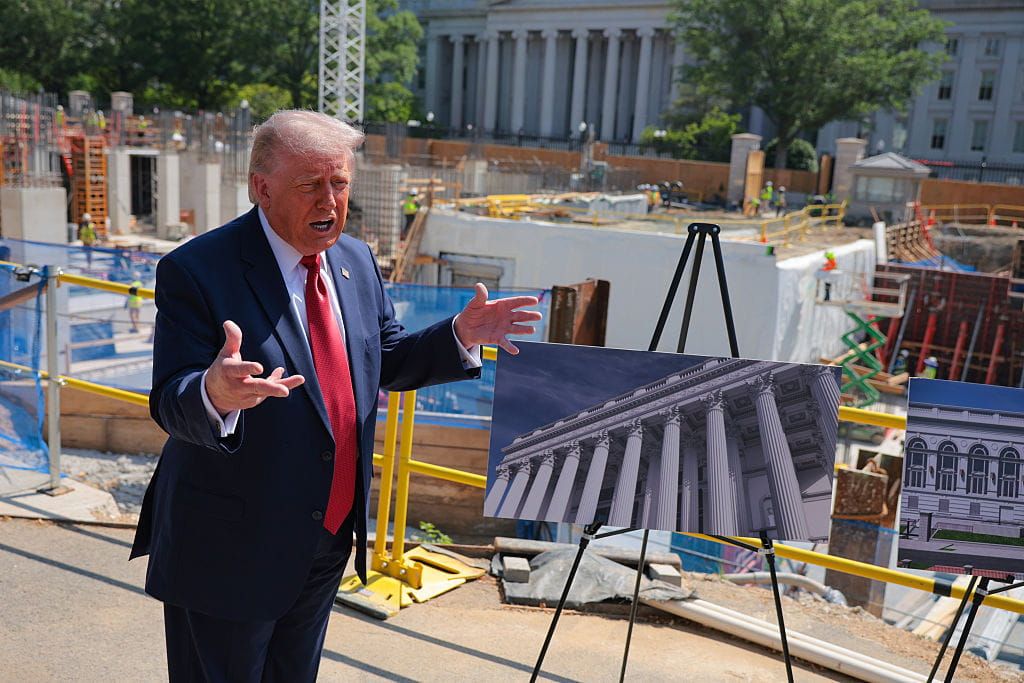
President Trump toured the construction site for the planned new White House ballroom, speaking with reporters and stressing that private donors, including himself, are funding the project and that it will be “the most beautiful building in the nation’s capital.”
He walked the site with a confident, hands-on tone, pointing out progress and details as crews worked nearby, and he reminded reporters that this effort leans on private generosity rather than more government spending. The message was simple: donors are stepping up, trimming the burden on taxpayers while renovating a key public space. That contrast is a point he made repeatedly during the visit.
The ballroom is being positioned as a return to formal, dignified spaces in the White House, with craftsmanship and tradition emphasized at every turn. Trump framed the fundraising as patriotic, a mix of pride in American workmanship and pragmatic financing that sidesteps fresh appropriations from Congress. Supporters see a clear virtue in using donor dollars to upgrade national venues without expanding the federal tab.
Reporters on the scene got a front-row glimpse of scaffolding, materials, and the layout that will define the ballroom once construction wraps, and Trump used those moments to underline donor involvement. He explained that donors, himself included, are paying for much of the work, which he argued keeps the project focused and free from bureaucratic delays. That practical spin resonated with the crowd of onlookers and staff.
The new space is being presented as both functional and iconic, suited for state events and for reinforcing the visual stature of the presidency. Trump repeatedly tied the idea of a grand room to American exceptionalism, saying a stately venue sends a national message that matters abroad and at home. For many conservative observers, restoring grandeur to key civic settings aligns with a broader preference for maintaining national symbols.
Onlookers and supporters noted the economic side as well, pointing to construction jobs created and to the network of contractors and artisans engaged on the project. Trump highlighted that those local jobs matter, and framed the work as supporting American businesses and skilled labor. That emphasis on practical economic benefit helped shift the conversation from mere aesthetics to tangible community impact.
Critics predictably raised questions about optics and donor influence, but Trump dismissed that framing in favor of a direct appeal to results and stewardship. He argued that private funding for public spaces is a smart compromise that keeps the White House updated while preserving taxpayer funds for other priorities. That line of reasoning fits with a Republican view that private initiative often delivers faster, cleaner results than expanded government programs.
As the tour wrapped, the tone was national and unapologetic, with Trump insisting the finished ballroom will be worth the attention and investment. He emphasized that donors helped make the project possible, and he returned to the claim that the outcome will be “the most beautiful building in the nation’s capital.” For supporters who prefer bold, visible upgrades paid for without new federal spending, the visit read like a straightforward success story rooted in private initiative and national pride.

