

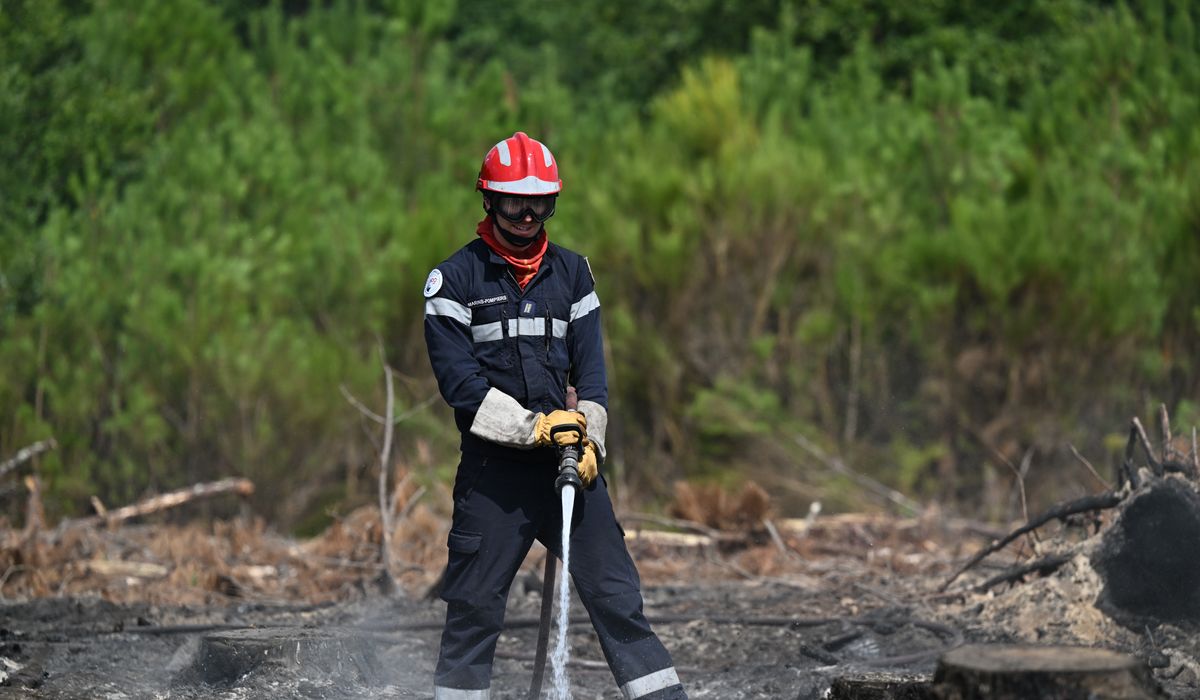
Fire crews in southwestern France battled persistent hot spots from a vast wildfire that scorched an area reported to be four times the size of Paris and forced thousands of residents to leave their homes.
Firefighters spent Friday focused on containing the final active zones of a blaze that grew into a massive threat across the region. Crews moved cautiously, working to prevent flare-ups while stabilizing perimeter lines and protecting nearby communities.
Officials described a landscape still smoldering in places even as cooler, more favorable conditions slowly reduced immediate danger. Teams used a mix of ground crews and aerial resources where possible, prioritizing areas with remaining heat and the highest risk of reignition.
The scale of the fire drew attention because it consumed a territory equal to four times the size of Paris, highlighting how quickly and destructively blazes can expand under the right conditions. That comparison helped convey the enormity of the incident to people unfamiliar with regional geography.
Thousands of residents were ordered to evacuate as a precaution or because their homes were directly threatened by advancing flames. Evacuation orders aimed to move people out of harm’s way early so emergency services could focus on suppressing the blaze and setting up safe perimeters.
Local authorities set up shelters and coordination points to assist those displaced, while emergency teams inventoried damage and assessed infrastructure needs. The priority remained keeping people safe and making sure essential services could be restored as soon as areas were secure.
Firefighters faced difficult terrain and pockets of remaining fuel that could spark new flare-ups if conditions shifted. Even with better weather, smoldering roots, peat, and deep litter can hold heat and lead to sudden resurgences unless crews locate and cool those hot spots effectively.
Community volunteers and neighboring departments pitched in where needed, supplying logistical support and relief for evacuees. Mutual aid played a role in extending resource capacity, allowing professional teams to rotate and maintain intensive suppression efforts over an extended period.
Authorities continued surveillance across the burned area to spot any signs of rekindling and to map damage for recovery planning. That monitoring helps determine when residents can safely return and what immediate repairs or clearances are required for roads and utilities.
Environmental and economic impacts will unfold in the weeks and months ahead, as officials inventory lost natural cover and any damage to farms, infrastructure, and private property. Restoring affected areas will involve coordinated work between emergency services, local government, and landowners to reduce future risk and begin rehabilitation.
The response emphasized a combination of rapid containment, careful monitoring, and community support to manage the aftermath of an exceptionally large fire. While the final hot spots were being addressed, the focus remained on stabilizing conditions and preventing further displacement of residents.

