

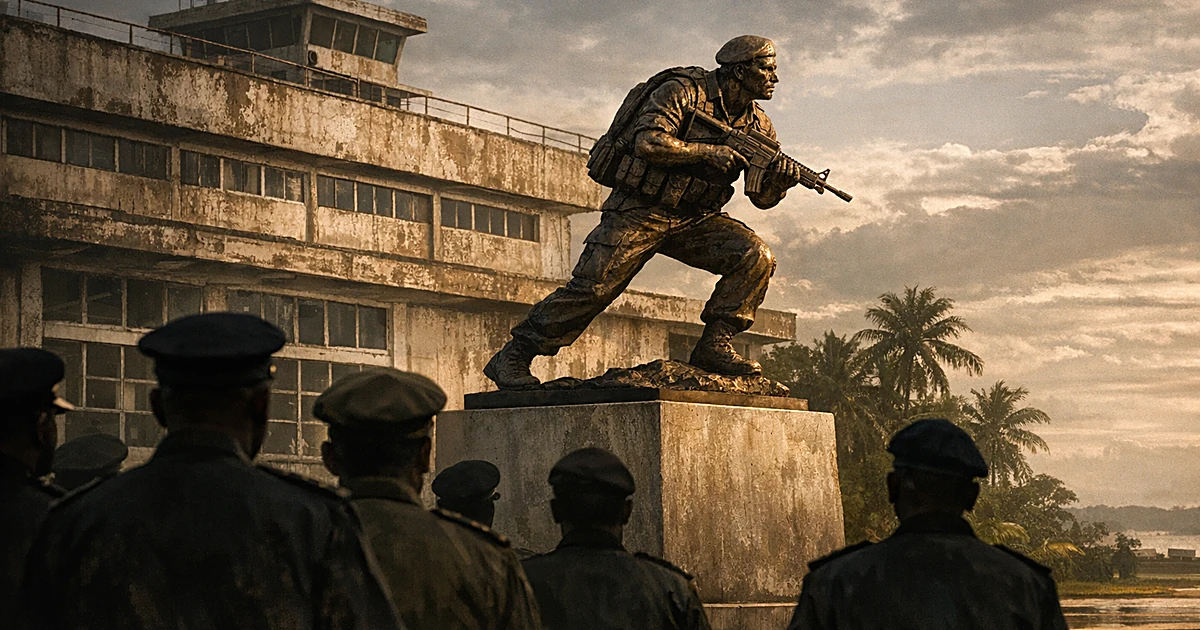
Uganda erected a bronze statue at the Old Entebbe Terminal honoring Lt. Col. Yonatan “Yoni” Netanyahu, the Israeli commando killed during the 1976 Entebbe rescue, a move that highlights a stark contrast with New York City Mayor Zohran Mamdani’s recent vows to arrest Benjamin Netanyahu and his complicated ties to Uganda.
On August 1, Ugandan military leaders dedicated the monument to Lt. Col. Yonatan “Yoni” Netanyahu at the exact spot where he fell during the raid. General Muhoozi Kainerugaba announced the tribute on X ahead of the ceremony and framed it as a bond between Uganda and Israel. Several senior military officials attended the dedication.
Yoni Netanyahu led the Israeli assault in Operation Thunderbolt and remains the most famous casualty from that operation. He was the older brother of Prime Minister Benjamin Netanyahu, whom New York City Mayor Zohran Mamdani has publicly called a “war criminal” and vowed to arrest if he sets foot in the city. That political posture now collides with the fact that Mamdani was born in Uganda, retains ties there, and still owns property in Jinja.
The hijacking that led to the raid began on June 27, 1976, when terrorists diverted Air France Flight 139 to Entebbe Airport with 246 passengers on board. The hijackers demanded $5 million and the release of imprisoned militants, and reports note that Uganda’s then-dictator allowed and even supported the operation. The situation set the stage for one of the most dramatic rescue missions of the modern era.
On July 4, 1976, Israeli commandos struck in a daring nighttime raid that freed most of the hostages. Netanyahu led the assault team into the terminal and his squad rescued 102 of the 106 hostages held inside. He was the only Israeli soldier killed, shot by a Ugandan sniper, and the raid quickly entered military lore and popular culture.
Uganda restored diplomatic relations with Israel in 1994, long after the fall of Idi Amin, and the statue now signals a clear shift in posture. Placing a permanent memorial at the airport where Amin’s forces once aided the hijackers underscored that change. The ceremony served as a symbolic reconciliation between the two countries.
“In order to strengthen our close blood relations with Israel, we shall soon unveil a statue to Yoni Netanyahu at the exact spot he was killed at Entebbe Airport. Yoni was the big brother of Prime Minister Benjamin Netanyahu. God bless Uganda and Israel.”
That explicit language from the defense chief left no doubt about intent: Uganda is publicly affirming ties with Israel. Local coverage described the event as testament to security cooperation and renewed trust. The monument marks a visible repudiation of past complicity with the hijackers.
Mamdani’s personal connection to Uganda sharpens the political irony. He emigrated to the United States as a child and keeps Ugandan citizenship and acreage in Jinja, yet he has used his official mayoral platform to label Israel’s leader a “war criminal” and to promise arrest. Those stances have produced pushback both abroad and at home.
Backlash has followed Mamdani in public settings, where he has been booed and faced rebukes at police and community events. His attempts to shape foreign-policy narratives are tied up with his family background and his father’s scholarly work. That book, titled Slow Poison: Idi Amin, Yoweri Museveni and the Making of the Ugandan State, argues an interpretation that blames Israeli influence for Amin’s rise.
“Despite accusing Israel of Idi Amin’s rise to power, Mamdani ignores how Amin allowed, and even supported, the hijacking and attack on Jewish and Israeli passengers on Air France Flight 139.”
Reviewers noted that omission and said it matters to how history is framed. Uganda’s decision to honor an Israeli soldier at Entebbe pushes back on narratives that cast Israel as the architect of Uganda’s darkest chapter. The statue stands where the events unfolded and tells a different story.
Dov Hikind, who named his son after Yoni Netanyahu, weighed in with blunt political commentary. He said the monument represents “poetic justice” and suggested the mayor would be unhappy about the public reminder. Hikind tied the 1976 raid’s legacy to modern fights against terrorism and political posturing.
“I think we call it poetic justice. I have no doubt this makes the mayor lose sleep, and he hates every moment of it. Too bad.”
“It’s very personal for me, he was a hero of the Jewish people and was ultimately dealing with what Israel is dealing with today: terrorism.”
“Look at how things changed: Amin, who supported the terrorists and enemies of Israel, and Mamdani, are very similar. No young person today knows who Amin is. The same will happen to Mamdani.”
Domestically, Mamdani’s policy agenda has hit legal and political snags, including a high-profile fight over a tax on secondary homes. A judge once blocked that pied-a-terre tax rollout, though an appeals court later lifted the restraining order, and opponents remain vocal. A resurfaced interview clip also drew criticism over his use of a mock Ugandan accent, adding fuel to skeptics’ claims about authenticity and political calculation.
The contrast is plain: the country that once hosted hijackers now honors the Israeli officer who stopped them, while a U.S. mayor with roots in that country celebrates a very different grievance. The bronze of Yoni Netanyahu now sits bolted into the floor of the Old Entebbe Terminal as a very public statement about where Uganda places its judgment on that history.

