

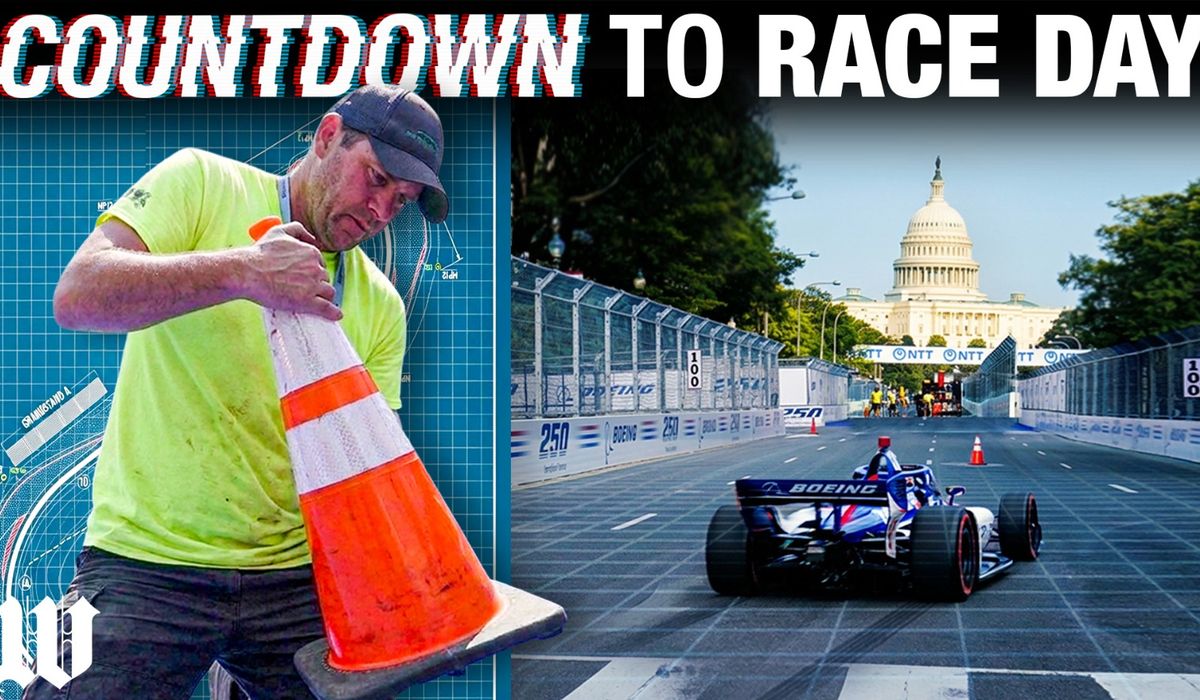
The story follows the National Mall’s conversion into a temporary street racetrack and the conversations with the organizers, competitors, and officials who shaped that transformation.
The National Mall is a place built for monuments and public gatherings, not for roaring engines, yet it was reshaped into a racetrack with careful planning and a lot of attention. Reporters Liam Griffin and Matt Delaney were on the ground as crews turned familiar lawns and walkways into barriers, stands, and pit areas. The project pulled together corporate teams, city agencies, and national preservation interests to make a high-profile motorsport event happen in the nation’s front yard.
Bud Denker, president of Penske Corporation, was one of the people they talked with, and he described the logistical playbook that made the conversion possible. The approach mixed temporary infrastructure with strict timelines, so the Mall could return to normal use quickly. At the same time, organizers had to balance spectacle with respect for monuments and the sensitivities of public space.
They also spoke with Jonathan Bailey, president of o, who contributed perspective on the urban and civic aspects of putting a racetrack on historic grounds. Conversations focused on crowd flow, emergency access, and protecting landscaping and memorials during intensive setup and teardown. People involved emphasized that every move needed to meet both regulatory standards and public expectations.
Designing a safe, functional circuit in a setting never intended for racing required creativity from engineers and event planners. Teams worked within tight constraints to place barriers, marshal posts, and grandstands without encroaching on protected sightlines or damaging irreplaceable surfaces. The result aimed to offer exciting sightlines for fans while keeping historic elements untouched and accessible.
Operational challenges went beyond barriers and seats; the organizers had to coordinate with multiple city departments for transportation, security, and sanitation. Transit plans were adjusted to handle surges, and authorities staged entry points to move crowds efficiently through the venue. The emphasis was on minimizing disruption to residents and visitors who still use the Mall for civic life and recreation.
Local businesses and vendors saw the event as an opportunity, with a noticeable boost in activity around the perimeter of the Mall. Promoters argued that a marquee event could drive tourism and spotlight the city in a different kind of national conversation. At the same time, community groups raised questions about access, noise, and the long-term implications of hosting commercial events on federal public land.
Environmental and preservation experts were part of the discussion as well, tasked with assessing possible impacts and proposing mitigation. Turf protection systems, careful routing of service vehicles, and post-event restoration plans were all part of the checklist used by planners. Organizers made public commitments to restore any affected areas to their previous condition, and independent inspectors monitored key phases of work.
For drivers and teams, the Mall circuit presented a fresh challenge: a temporary street course with tight corners, unforgiving curbs, and limited runoff. Competitors praised the novelty and spectacle, noting that temporary tracks demand different car setups and driving approaches. The venue’s proximity to iconic landmarks added a unique pressure and a rare TV-friendly backdrop for sponsors and broadcasters.
Spectators experienced the event as a blend of motorsport intensity and civic theater, with views framed by familiar monuments rather than traditional racetrack scenery. Organizers arranged fan zones and hospitality areas to keep people engaged between on-track sessions, and safety briefings were frequent to keep the crowd and teams aligned on protocols. The mix of pageantry and precision underscored how a high-profile race can be staged inside a sensitive national space.
In the end, the work to convert the National Mall into a racetrack tested the limits of temporary urban events and raised questions about how public spaces get used for large-scale entertainment. Those who built and ran the weekend pointed to careful planning, stringent protections, and coordinated logistics as the reasons it worked. Critics and supporters alike now have specific examples to cite as the conversation continues about how shared national spaces should be programmed in the future.

