

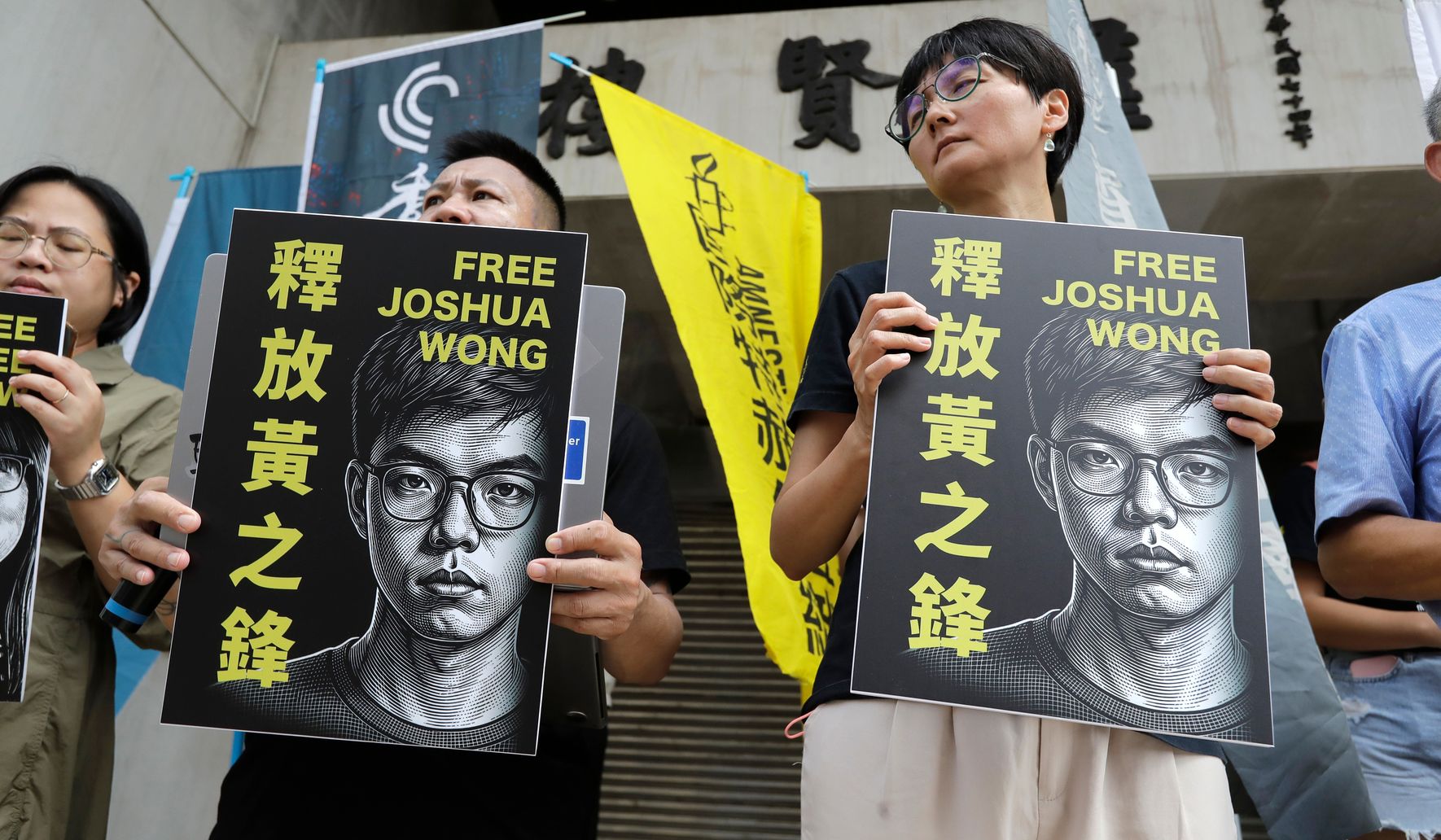
Joshua Wong, a high-profile Hong Kong pro-democracy figure, pleaded guilty Wednesday to conspiracy to collude with foreign forces under the Beijing-imposed national security law, a charge that shows how the law is being used to clamp down on dissent in the city. The case underscores a broader pattern where Beijing’s security framework replaces political debate with criminal risk, and it raises hard questions about what remains of Hong Kong’s promised freedoms. From a Republican perspective, this is another reminder that authoritarian governments will exploit legal tools to silence opponents and that U.S. policy should reflect that reality.
Wong’s guilty plea marks a significant moment in Hong Kong’s post-2019 landscape, where activists who once organized protests now face national security prosecutions instead of political pushback. The allegation centers on conspiracy to collude with foreign forces, a broadly worded offense under the Beijing-imposed law that critics say criminalizes standard political engagement. Over recent years the law has shifted the terrain, turning what used to be civil resistance into grounds for serious criminal charges.
For many observers, the legal charges against Wong are emblematic rather than exceptional, a signal that Beijing intends to control political space in Hong Kong at the source. The national security law gives authorities wide discretion to pursue cases that would previously have been treated as free expression or assembly. That discretion means the line between legitimate dissent and criminal conduct can be drawn by the state, not by civic debate or judicial balancing.
Republican commentary has framed this development in stark terms, arguing that Beijing is consolidating power through punitive legal measures while presenting an image of normalcy. From this view, the law is an instrument not merely of order but of political control, used to deter not only activists but anyone considering support or engagement with outside democratic institutions. The concern is that legal instruments are being repurposed to eliminate opposition, rather than to protect genuine security interests.
The broader diplomatic fallout is predictable: governments and human rights groups express concern, while Beijing insists its measures restore stability and respect sovereignty. That tension reflects competing priorities—security and regime preservation on one side, civil liberty and political pluralism on the other. The Republican perspective tends to emphasize the latter and urges a firmer posture toward states that weaponize legal systems against political rivals.
In practical terms, cases like Wong’s have chilling effects across civil society and media, influencing how citizens, journalists, and NGOs approach public life. When the risk of criminal prosecution for political ties or advocacy rises, public participation declines and healthy political competition fades. The long-term result is not just fewer protests but a retrenchment of political energy into safe, nonconfrontational channels that do not challenge the ruling order.
Legal observers note that the vagueness of national security statutes often leaves outcomes tied to political context more than to clear legal doctrine. That uncertainty gives prosecutors latitude to pursue a wide range of conduct under the banner of security, while defendants face steep hurdles in mounting conventional defenses. For those who care about the rule of law, that creates a fundamental problem: law should constrain power, not enable it without accountability.
Internationally, the case adds to a pattern that complicates relations with democratic partners who have traditionally championed Hong Kong’s autonomy. The Republican stance frame views this not just as a regional human rights issue but as part of a broader strategic competition with authoritarian states that use repression abroad and soft power at home. Policy debates therefore link the fate of activists to larger decisions about trade, investment, and security posture toward Beijing.
Whatever the courtroom outcome, the symbolism of Wong’s plea will reverberate through Hong Kong’s civil life and through global debates over how democracies respond to authoritarian pressure. The incident highlights a clash between political dissent and legal enforcement, and it forces policymakers to reckon with the reality that legal frameworks can be reshaped to serve political ends. Observers watching from Washington and other capitals will read the case as another data point in assessing how to defend democratic values against coercion.

