

President Trump said he was glad Prince Harry and Meghan Markle returned to Britain and made clear he would have kept the door closed, arguing their conduct disrespected the royal family and underscoring a broader administration stance that residency in the United States is a privilege, not a right.
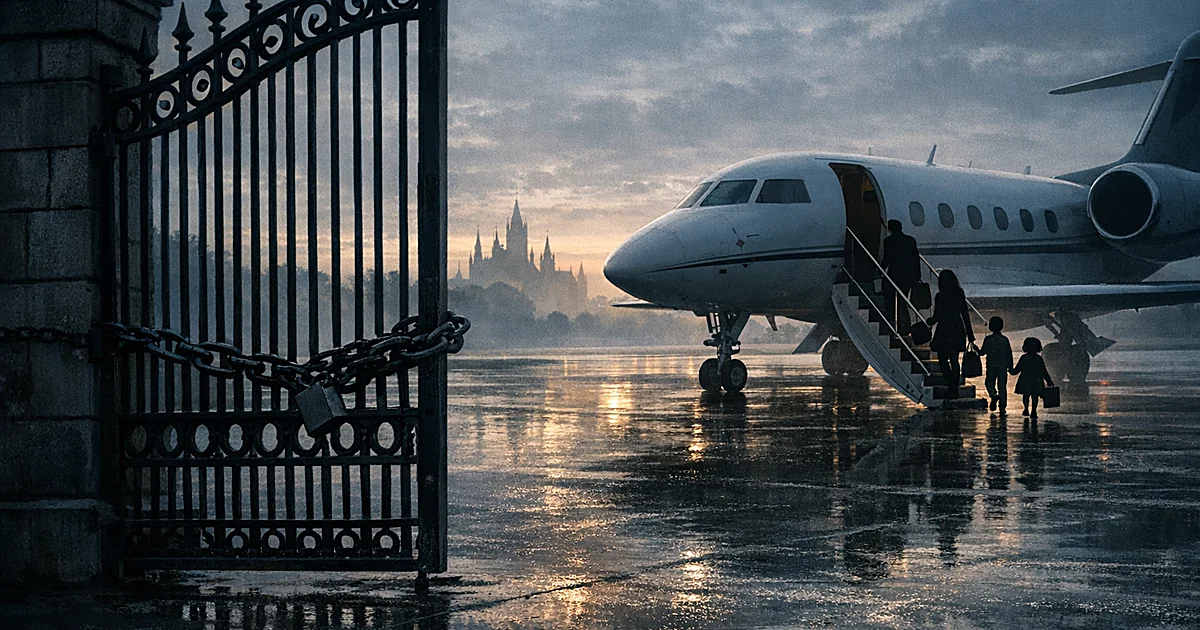
President Trump told reporters in the Oval Office that he was glad the Duke and Duchess of Sussex returned to England and that, if he were the royal family, he would have kept the door shut. The couple left Southern California after more than six years of American residency that began when they stepped back from royal duties. Flight tracking data showed their private charter touched down at approximately 11:56 a.m., and they arrived with their two children, Prince Archie, 7, and Princess Lilibet, 5. The move ended a high-profile chapter of celebrity, deals, and public feuds on U.S. soil.
Trump has cultivated warm ties with the British Crown through two state visits, which made his public critique of Harry and Meghan more pointed. He did not hold back about the couple’s conduct, especially toward the monarchy, and singled out Meghan by name during his remarks. The president framed his view in blunt terms, signaling that public behavior and respect for institutions matter to his administration. Those comments fit a tone of enforcement and clear public opinion from the White House.
“I thought they treated the royal family with great disrespect. I didn’t like it. I didn’t like the way she acted. I thought she was terribly disrespectful to the Queen, to King Charles.”
When asked whether the royal family should accept the couple’s return, Trump was equally direct in front of reporters. He offered an unmistakable judgment on whether hospitality should be extended after public fractures. The president’s answer left no room for ambiguity about his view of how institutions should respond to conduct that wounds them.
“If I were the royal family… I would not have taken them back.”
The Sussexes had reportedly prepared to leave California for weeks or months before their move became public, leaving behind a $14 million mansion in Montecito. Upon arrival they planned to settle at a private, non-royal residence outside London while their children enroll in British schools with classes beginning in September. Reports indicate they intend to house hunt for a permanent countryside home while continuing to own property in California.
Harry, 41, provided his own public reason for returning, citing family reconciliation and his father’s health as motivating factors. He said he wanted to mend ties with King Charles III, who is receiving treatment for an undisclosed form of cancer, and conveyed a sense of urgency about the timeline. The personal nature of that explanation adds pressure to a family already strained by years of very public disputes.
“I would love reconciliation with my family. There’s no point in continuing to fight anymore. I don’t know how much longer my father has.”
The couple is reported to be staying on the Cotswolds estate of Ian Wace, the CEO of hedge fund Marshall Wace LLP, whose net worth is estimated at $1.2 billion. Wace is said to have helped finance their return to the United Kingdom and offered temporary hospitality as they search for a permanent residence. That arrangement underscores how the Sussexes, labeled royal by title but private in practice, are relying on wealthy allies rather than institutional roles for support.
The administration’s readiness to comment on the departure of a high-profile foreign national reflects a consistent approach to borders and residency. Enforcement of immigration and removal policies has been a centerpiece for this White House, and public remarks about high-profile figures carry the same message that rules matter. The State Department has implemented continuous vetting measures that have led to the revocation of more than 175,000 visas as part of treating residency as a privilege, not a default.
Trump’s relationship with the British monarchy stands in stark contrast to the friction between the Sussexes and the rest of the royal family. The late Queen Elizabeth II hosted Trump for a state visit during his first term, and King Charles hosted him during his second term, producing a rare double state visit for an American president. In April, Trump hosted King Charles and Queen Camilla in Washington, and that diplomatic warmth makes his public dressing-down of the Sussexes more notable.
Royal commentators warn the couple’s return will create headaches for Buckingham Palace because of their ability to operate outside institutional controls. One observer called the situation a “nightmare” because the pair are hard to manage, while others point out that they are private citizens with no duty to clear public projects through the Palace. That reality complicates any effort by the institution to contain headlines or shape narratives about the family.
“They are private citizens and no longer working on behalf of the King, so Buckingham Palace isn’t approving Meghan’s interviews, appearances, Instagram posts or commercial projects.”
Harry and Meghan will not receive public security on return and are not expected to resume official royal duties, which places them in a peculiar limbo between title and independence. Their six years in California produced ventures in publishing, entertainment, political commentary, and lifestyle branding, including content deals and food-related projects, but none delivered a lasting foothold the couple seemed to seek. The move back to Britain could deepen Harry’s rapprochement with his father, and some analysts say it may force sibling dynamics into the open.
Whether reconciliation will succeed is unclear, complicated by a track record of airing private grievances in public and by the institutional stakes surrounding the monarchy. Courts have at times pushed back on the administration’s broader removal agenda, but on the question of Harry and Meghan there was no legal barrier—only a microphone and a presidential opinion. The Sussexes gave up a $14 million Montecito home for a billionaire’s guest quarters in the English countryside, and the president framed their departure as, in his view, an improvement for America.

