

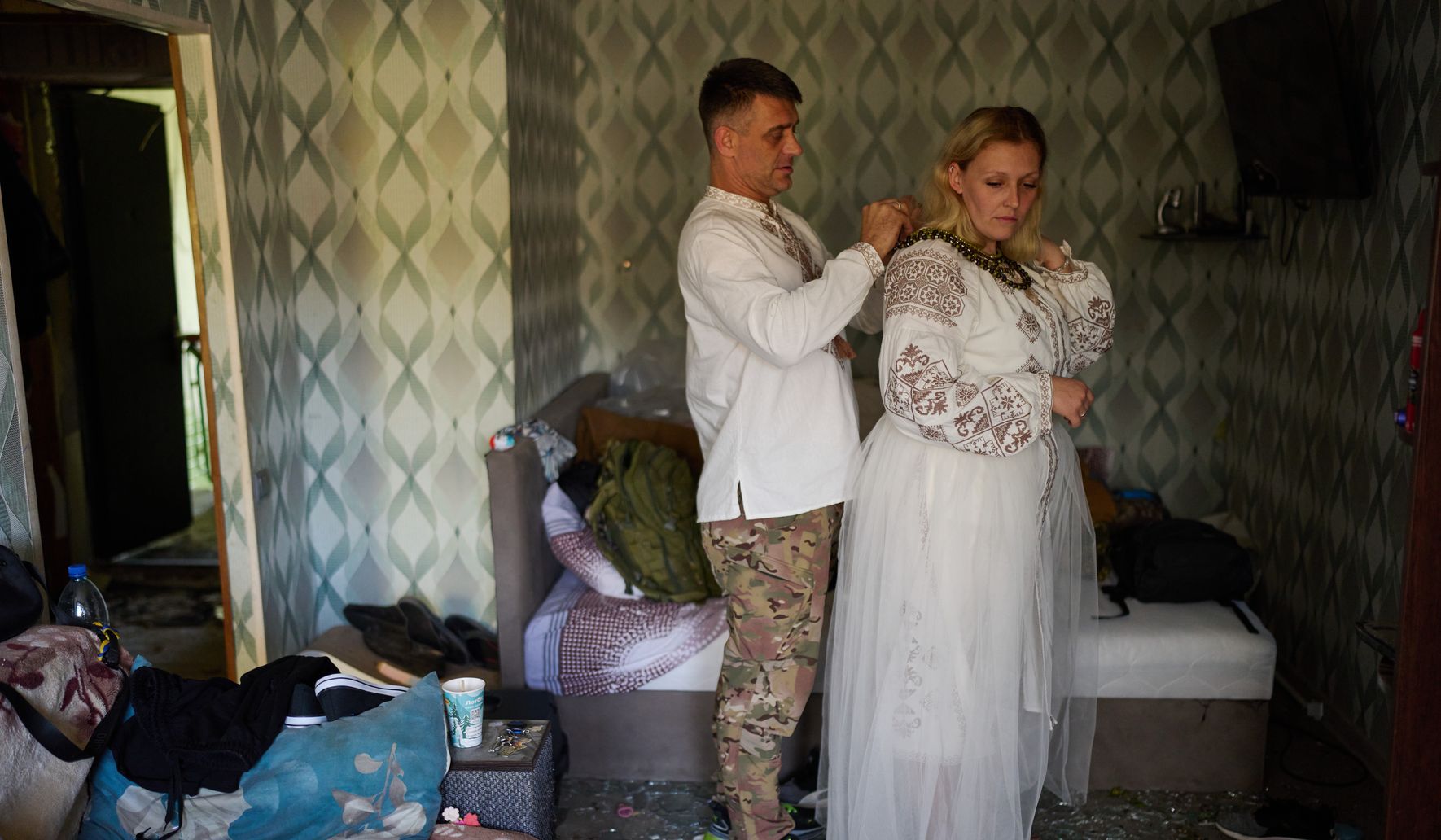
On the night before her wedding, Liudmyla Ryzhak carefully laid out the garments that mattered most, arranging an embroidered dress, a full white tulle skirt, and her soon-to-be husband’s traditionally patterned shirt with a calm, deliberate hand.
On the eve of her wedding, Liudmyla Ryzhak pressed her delicately embroidered dress, laid out a full white tulle skirt and her soon-to-be husband’s traditionally patterned shirt, then hung them on a line to keep them crisp for the morning. The small rituals of preparation felt heavy with meaning, each careful motion a quiet insistence on normalcy. Family photos and old textiles occupied the same space as practical decisions about pins, thread and timing.
The room around her was full of everyday details that suddenly mattered more than usual, from the placement of shoes to the way sunlight hit the window at dawn. She checked the garments once, twice, making tiny adjustments that only she would notice, the kind of small work that steadies the mind. There was a softness to the moment, an attempt to make the day more than a single set of images.
Friends and relatives moved through the house with a practical urgency, folding, tucking and offering last-minute help without fuss. Conversations kept to the essentials and the familiar: who would bring what, where to meet, which family heirlooms to include. In that brisk coordination, people managed both the logistical and emotional load that comes with any big life event.
The embroidered dress carried a history in its stitches, a pattern that connected generations and told more than one story. The full white tulle skirt suggested a traditional celebration, its layers promising motion and ceremony. Her partner’s patterned shirt offered its own cultural echo, a reminder that clothing can carry identity as plainly as words do.
Outside the room, ordinary routines continued and neighbors kept watch in their own quiet ways, ready to step in where needed. The air was a mix of domestic sounds: laughter, the clink of tea cups and the rustle of fabric. Those small noises held a reassuring normality that cut through any strain present in the day.
As evening settled, preparations shifted from practical to personal; vows and small promises were rehearsed in hushed tones. People smoothed hems and checked pins with the same care you give when you want something to hold together. There was a determination to preserve the ceremony’s dignity and warmth in the face of whatever could interrupt it.
Liudmyla’s actions emphasized one simple truth about big moments: they are built from a string of small, deliberate acts done by people who care. The pressing of a dress, the laying out of a skirt and the hanging of a shirt are all tiny rituals with outsized meaning. They say, without words, that a life will continue and that the people involved will find ways to mark it.
Behind each garment is a household of choices, and those choices reflect the priorities of the day—comfort, tradition and the wish that the moment be remembered kindly. The scene around Liudmyla was both intimate and communal, marked by hands that know how to fold, pin and encourage. Everyone present accepted the work and the tenderness it required.
The next morning would bring photos, guests and the choreography of a celebration, but the night before belonged to quieter things: careful folds, gentle adjustments and the hush of hope. Liudmyla tucked those details into the moment as if they were small anchors, practical gestures meant to steady a single day and the life that follows it. The garments, arranged and prepared, waited for the morning and the next step forward.

