

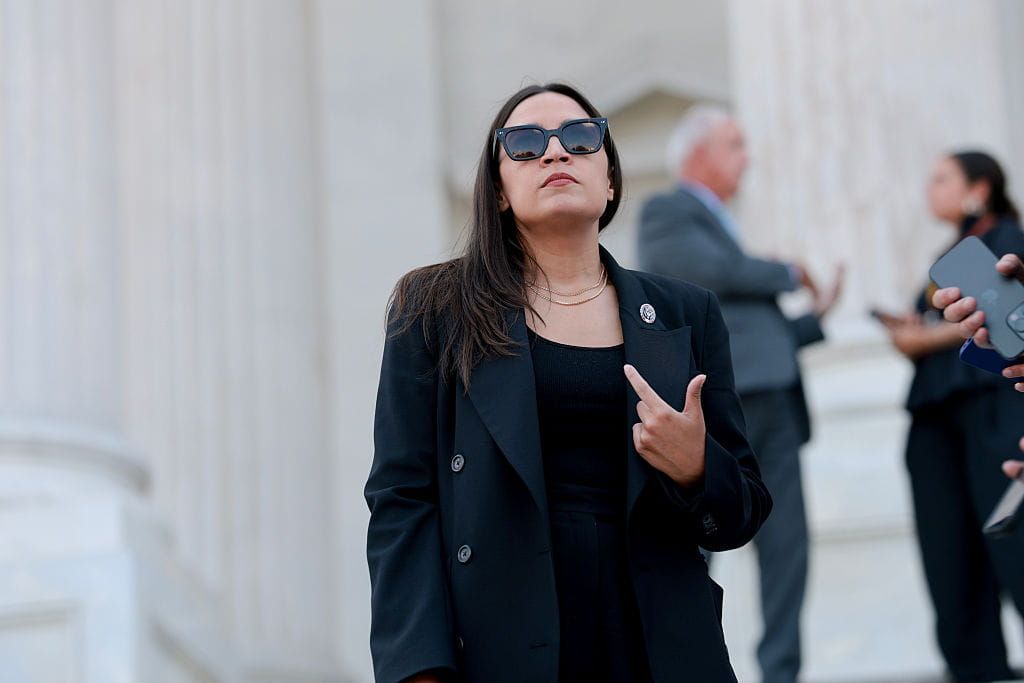
Alexandria Ocasio-Cortez quietly rejoined the Democratic Socialists of America in August 2026, a move that has reignited debate about her political future and exposed fissures inside the Democratic Party over socialism and electability.
AOC’s possible ambition for higher office keeps drawing headlines, and her recent DSA membership renewal fed the speculation. For critics on the right, the timing looks strategic rather than accidental, coinciding with a surge of socialist primary wins and renewed interest in high-profile progressive figures. The question isn’t just whether she’ll run, but whether Democrats will rally around a candidate so closely tied to the socialist wing.
“Democratic Socialists of America confirms Rep. Alexandria Ocasio-Cortez is a member in good standing of our organization, having recently rejoined in August 2026,” the DSA wrote in a press release. “Previously, the representative joined DSA in 2018 with a one-year membership, which DSA’s national leadership recently noticed had lapsed in 2019. She has since renewed her membership as of this month.”
The official explanation is that AOC simply let her dues lapse and then fixed it, but that seven-year gap raises eyebrows. How does a prominent figure and an organization that watches her so closely not notice a lapsed membership for so long? Skeptics see a calculated re-entry timed to maximize political optics ahead of a potential 2028 push.
There’s precedent for tactical party alignment. In 2016 and 2020, Bernie Sanders—long an independent—joined the Democratic Party for his presidential bids while otherwise remaining unaffiliated. Sanders’ moves showed how third-party or independent identities can be shelved when a path to the White House requires Democratic infrastructure and ballots. Voters and rivals alike read those switches as convenience, not conviction.
DSA’s past relationship with AOC has been rocky. In 2020 the group publicly hailed her as “DSA member @AOC” even if the paperwork said otherwise, and in 2024 the DSA National Political Committee issued a conditional endorsement that was later rescinded when she didn’t meet its demands. The organization even hosted a blog post called “I Miss the Old AOC,” revealing internal frustration with her choices after 2018.
AOC herself told Jonathan Karl of ABC’s This Week that she was a member of the NYC chapter, not the national organization, which undercuts the “mistake” narrative. That explanation sounds more like rebranding than oversight, especially given how often politicians court activist bases when convenient. For many conservatives and moderates, it confirms what they already suspected: political expediency drives these affiliations.
Betting markets reflect a sizable expectation that she’s aiming high. Under one market question, 62% of bettors said president, 36% said Senate, and 2% said neither. As of the morning of August 29, she led the list for most likely Democratic presidential nominee at 19%, with Jon Ossoff at 16% and Gavin Newsom at 14%, while Kamala Harris sat at 8%.
Those markets also show her grouped with other names under various outcome odds: she and Jon Ossoff and Marco Rubio each registered at 11% in a presidential-winner category that listed JD Vance at 24%. Numbers like these matter because they shape fundraising, media attention, and the kinds of opponents who will test her electability in 2028 preps.
The Democratic Party’s internal fight amplifies the uncertainty. After socialist victories in some primaries, centrists fired back with a blunt message: “We are capitalist, not socialist.” Rahm Emanuel accused the far-left base of sabotaging the party with “Bernie bros” and other democratic socialists, and he singled out local figures for public confrontation over Israel and policy rhetoric. That tension makes a unified nomination far from guaranteed.
Socialists aren’t monolithic either. Bernie Sanders pushed back by proposing a ban on super PACs in Democratic primaries, targeting the billionaire “donor class,” as he calls them, and highlighting the power battles inside the party. Between competing factions, conditional endorsements, and strategic membership moves, Democrats face a frenetic, high-stakes scramble for positioning ahead of 2028.
If the “big tent” label still applies, it’s a tent under strain. Rhetoric about unity and renewal collides with public spats over ideology and strategy, and that division will help decide whether a figure like AOC can consolidate support or whether her DSA ties will be a bridge too far for many Democrats heading into a decisive election cycle.

