

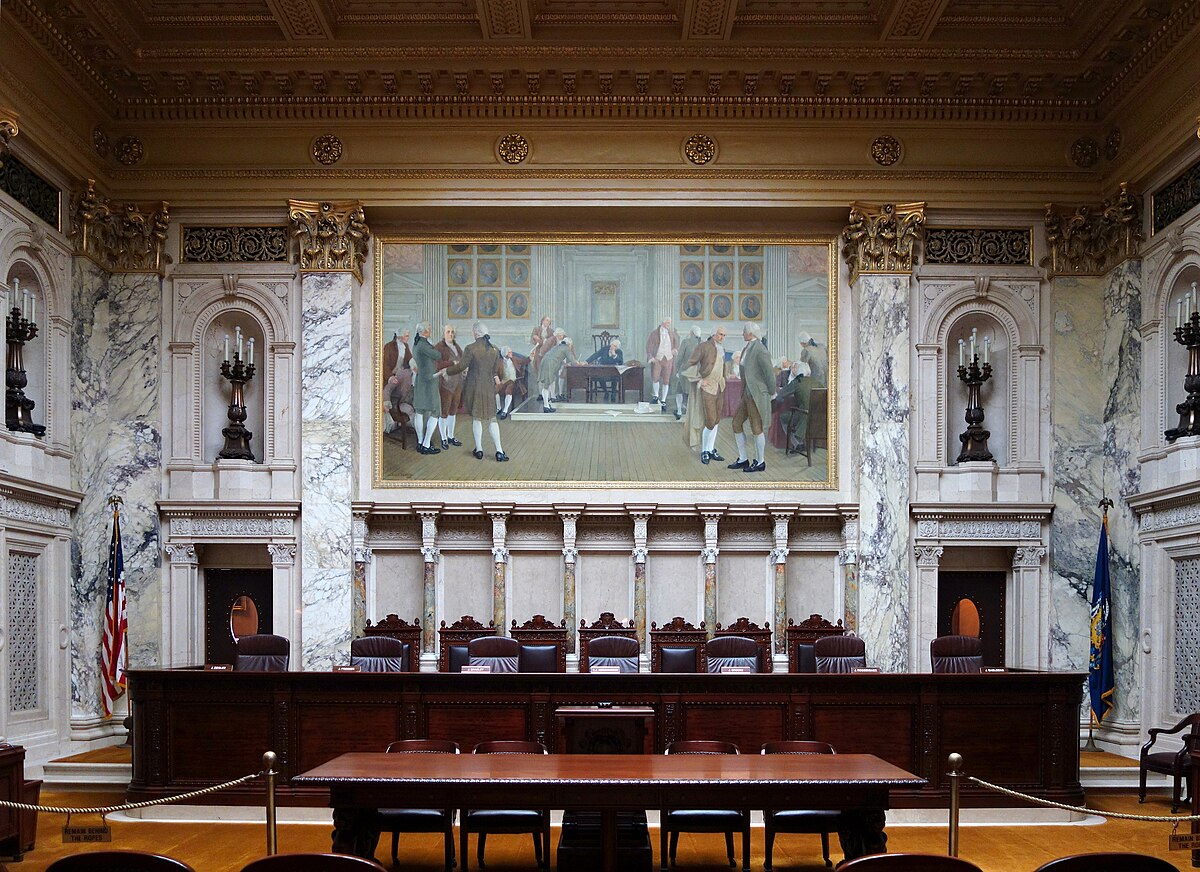
Wisconsin’s recent 9-0 Supreme Court defeat should have been a stop sign, not a detour, and the reaction since then tells you a lot about how politics and power play out in statehouses.
The clean ruling from the high court exposed a clear legal loss for those who pushed the case, and yet the state’s response so far looks like continuing to push on a closed door. That stubborn approach raises questions about respect for judicial authority and the limits of state action, and it matters to voters who expect government to follow the law. Republicans see this as a moment to insist on predictable, consistent rule-of-law behavior.
When an institution as consequential as the Supreme Court issues a unanimous decision, it is a strong signal that the law on the matter is settled and not open to partisan reinterpretation. Ignoring or trying to sidestep such a decision damages institutional trust and invites more costly litigation instead of practical fixes. For conservatives who value judicial restraint and the Constitution, compliance is not optional; it is the baseline of good governance.
Local officials who keep digging after a 9-0 loss send the message that winning at the ballot box allows bending legal outcomes to fit policy goals, and that undermines the separation of powers. That tactic puts taxpayers on the hook for more legal fees and distracts from real problems like jobs, education, and public safety. Republicans will argue that smart policy means accepting court rulings and changing laws or procedures through the legislature, not by extra-legal maneuvers.
Becket Fund attorney Eric Rassbach captured the obvious with a bit of dry sarcasm: “You’d think Wisconsin would take a 9-0 Supreme Court loss as a hint to stop digging,” said Becket Fund attorney Eric Rassbach. The line lands because it points out the absurdity of doubling down on a lost legal battle instead of pivoting to lawful, constructive solutions. In conservative circles that respect precedent, this kind of rhetoric resonates because it highlights wasted energy and poor judgment.
There’s a practical fallout to consider: agencies and officials who ignore clear court rulings invite tighter judicial oversight and potential sanctions, which only tightens the legal noose over future actions. That’s bad for governance and even worse for citizens who rely on predictable enforcement and stable rules. Republicans will push for clear statutory language and accountability mechanisms so elected officials can’t drift into lawless behavior under the cover of expediency.
Politically, the situation allows conservative leaders to make a straightforward case about institutional integrity and fiscal responsibility. Voters tend to punish erratic governance that wastes money and courts’ time, and a 9-0 ruling makes for a blunt talking point. The argument is simple: respect the court, fix the law through proper channels, and stop treating judicial defeat as a challenge to be met with more unilateral action.
On policy, the answer isn’t litigation-by-press-release; it’s policymaking by lawmakers who must craft statutory fixes that respect constitutional limits. That may require clearer statutes, better oversight, and tougher ethics rules for officials who read the ruling and proceed anyway. Conservatives will argue these aren’t partisan answers but common-sense steps to restore predictability and protect taxpayers from repeated legal fights.
There’s also a reputational cost that extends beyond the immediate case. A state that appears willing to ignore a unanimous high court decision looks less stable to businesses, investors, and families deciding where to live and work. Republicans can use that point to press for reforms that stop the spectacle and get government back to basic competence and lawfulness. The longer the defiance, the bigger the price in both dollars and civic trust.
Courts finally put an exclamation point on the legal record with a 9-0 decision, and the sensible course is to respond with compliance and legislative correction where needed. If officials choose otherwise, expect conservative leaders to demand accountability, push for statutory clarity, and remind voters that rule of law matters more than a fleeting political victory. The debate now is about whether government will learn the lesson or keep digging into a hole it should already have left behind.

