

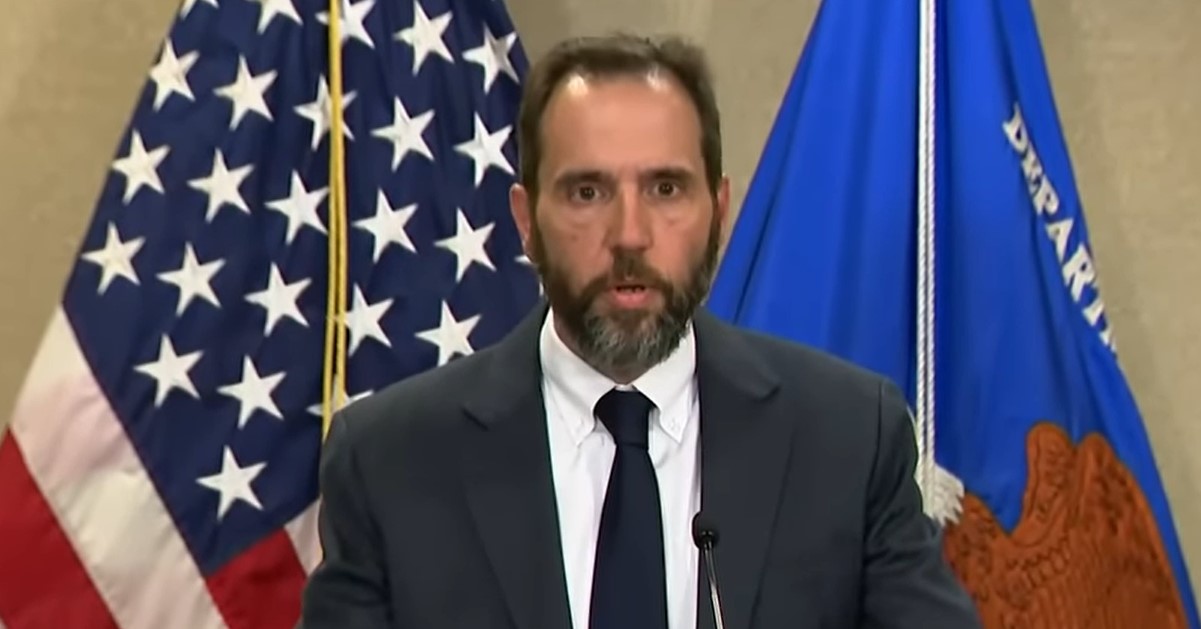
The released materials allege that members of Special Counsel Smith’s “Arctic Frost” team collected phone records from Republican lawmakers and that investigators subpoenaed both President Trump’s government device and his personal phone records, prompting public condemnation and calls for accountability from Republican officials.
The Senate Judiciary Committee released material last month showing that members of former Special Counsel Smith’s “Arctic Frost” team obtained phone records tied to multiple Republican lawmakers. Those documents also indicate Smith’s investigators subpoenaed records from President Donald Trump’s government-issued phone, a move that has stirred sharp criticism. This situation raises questions about how investigative tools were used and whether partisan lines were crossed. Conservative voices are framing these actions as a pattern of government overreach.
Attorney General Pam Bondi took to social media to set out the core allegation and to push for transparency from her side. “During the Arctic Frost Investigation, we found that Special Counsel seized President Trump’s government-issued phone,” Bondi wrote.
“This means the Biden Administration turned over President Trump’s phone to Special Counsel — an UNPRECEDENTED action,” she continued. That phrasing captured the outrage felt by many Republicans who view any surrender of a former president’s device to a special counsel as extraordinary. Conservatives argue this blurs the line between normal investigative authority and political targeting. The claim fed immediate demands for documents and explanations on Capitol Hill.
Bondi pushed further on the phone-record allegations and tied them to a wider concern about selective investigations. “In addition, Special Counsel subpoenaed all of President Trump’s PERSONAL phone records. We can never again allow this kind of government weaponization in America,” Bondi stressed. Her language framed the matter as more than a legal dispute, casting it as a test of institutional norms and basic fairness.
She did not stop with accusations; Bondi said she had taken steps to move the matter to lawmakers and credited investigatory partners. The attorney general concluded by stating, “I submitted these new documents to our partners on Capitol Hill. I commend our team at the FBI for working diligently to expose this.” Those words signal a calculated push to shift scrutiny onto the Justice Department and the special counsel team.
The disclosure came the same day that Texas Republican Rep. Brandon Gill introduced articles of impeachment against U.S. District Judge James Boasberg. Available materials note that Boasberg signed off on a slew of subpoena requests presented by members of the Arctic Frost teams, which Republicans cite as evidence of judicial cooperation in what they describe as overbroad investigative tactics.
Gill leveled direct accusations about the judge’s conduct and impartiality in a strongly worded statement. “Chief Judge Boasberg has compromised the impartiality of the judiciary and created a constitutional crisis,” Gill was quoted as saying in a statement. That charge reflects a broader Republican argument that judges who approve expansive subpoenas are enabling political prosecutions.
The congressman expanded his critique to include elected officials who were targeted by the subpoenas and the broader consequences he sees for representative government. “He is shamelessly weaponizing his power against his political opponents, including Republican members of Congress who are faithfully serving the American people within their jurisdiction,” the congressman asserted. Republicans pushing this narrative say such actions chill legislative oversight and threaten separation of powers.
Gill did not limit his remarks to criticism; he tied the judge’s decisions directly to the Arctic Frost probe itself and called for accountability. “Judge Boasberg was an accomplice in the egregious Arctic Frost scandal where he equipped the Biden DOJ to spy on Republican senators,” Gill declared. That claim frames the subpoenas as an operational partnership that enabled what Republicans view as politically motivated surveillance.
The Texas lawmaker concluded by announcing a concrete follow-up response intended to test those allegations in the political sphere. “His lack of integrity makes him clearly unfit for the gavel. I am proud to once again introduce articles of impeachment against Judge Boasberg to hold him accountable for his high crimes and misdemeanors,” the Texas lawmaker alleged. The move signals an escalation from public accusation to formal congressional action, underscoring how seriously Republican leaders are treating the documents and the questions they raise.

