

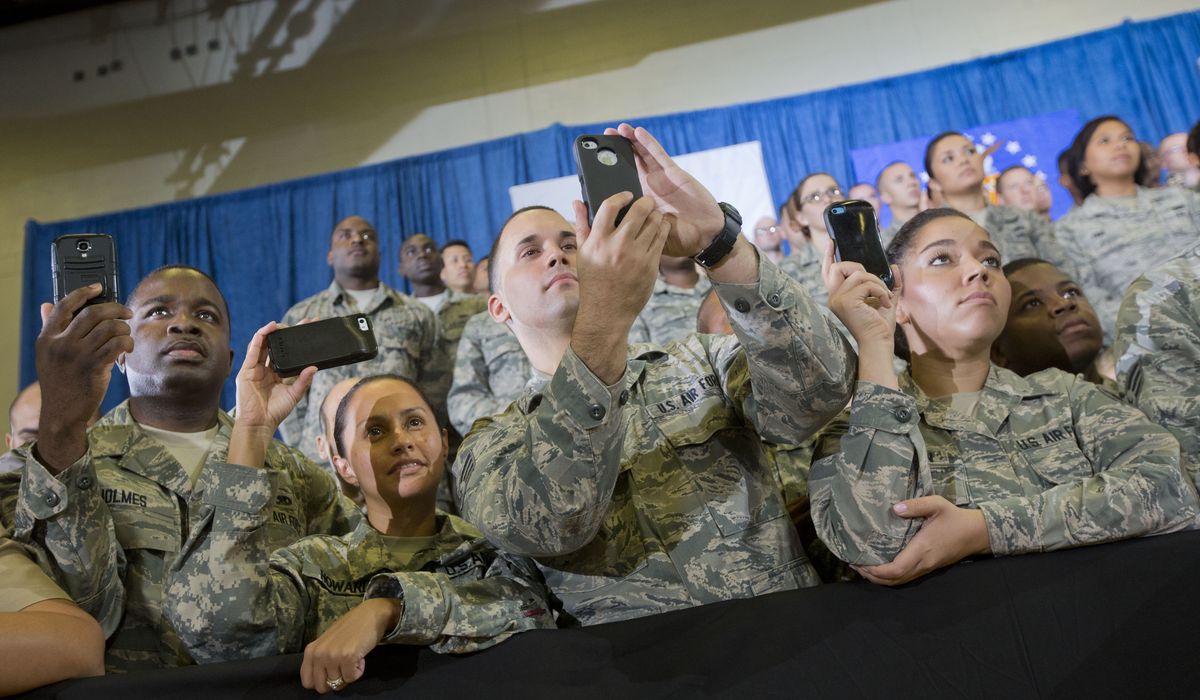
The flow of commercial smartphone location data is enabling foreign actors to identify and strike U.S. forces in the Middle East, and experts warn this is a “five-alarm fire” that requires swift, practical fixes to protect troops, harden operations, and hold data brokers and platforms accountable.
For years, smartphones and apps have harvested location data that ends up in the hands of commercial brokers and third parties, often without meaningful notice to users or consideration of national security consequences. That pipeline has become a tactical tool for adversaries who can map movements and positions of American personnel and partners in volatile regions. The result is an urgent operational threat to forces stationed abroad, and policymakers must treat it accordingly.
Military commanders depend on operational security and careful force protection measures, but those efforts are undermined if unclassified commercial data can be used to triangulate troop locations. Adversaries do not need classified leaks when aggregated cell-phone traces reveal patterns, supply routes, and habitual positions. This is particularly dangerous in the Middle East where non-state and state actors already target U.S. assets.
Calling the problem a “five-alarm fire” captures how immediate and severe the risk appears to national security professionals who study these flows. That kind of language should trigger action, not platitudes, and conservatives must be clear: safeguarding soldiers and sailors is not optional. The answer lies in tightening controls on how location data is collected, sold, and used, while keeping American technology companies competitive and innovation-friendly.
First, we need concrete limits on the commercial distribution of high-precision location data tied to devices operating in or near sensitive military sites and forward-deployed bases. Contracts, procurement rules, and oversight mechanisms can be used to restrict or ban the sale of datasets that reveal patterns of life in theaters of conflict. Doing so protects personnel without dismantling the broader data economy that powers legitimate services.
Second, Congress and the executive branch should require stronger transparency from data brokers and platforms about where their data comes from and how it is repackaged, and they should enforce penalties for recklessness that places lives at risk. Republicans can champion accountability measures that do not overregulate consumer apps but do make sure that companies do not treat sensitive location information as a mere commodity. Civil penalties and criminal referrals for willful endangerment must be tools on the table.
Third, the Department of Defense and allied forces need updated guidance on personal device use, geofencing, and data hygiene, paired with investments in counterintelligence and signal-denial capabilities. Leadership must balance morale and privacy with force protection—clear, enforceable rules about device use in operational areas are part of basic readiness. Training commanders and troops to understand how commercial data can be exploited is a necessary component of the response.
Fourth, international cooperation and diplomatic pressure can shut off markets for harvested location data and target entities that sell sensitive datasets to malign actors. Allies and partners should be encouraged to harmonize standards so that hostile actors cannot leapfrog protections by buying data abroad. At the same time, targeted sanctions and export controls can deter sellers who knowingly enable attacks on U.S. forces.
Finally, technology can help. Firms can be incentivized to build privacy-first models that blur or obfuscate precise coordinates in commercial datasets, and marketplaces can adopt provenance labels so buyers and regulators can trace how sensitive information was collected. Market-based approaches and smart regulation together reduce risk without banning beneficial applications of location services that businesses and consumers rely on every day.
None of these steps are easy, and they demand a mix of executive action, legislative clarity, industry cooperation, and frontline discipline. But the alternative is unacceptable: leaving troops exposed because commercial data flows operate in a regulatory blind spot. Conservatives should lead with a clear, forceful agenda that protects service members while preserving the freedoms that make our tech ecosystem strong.

