

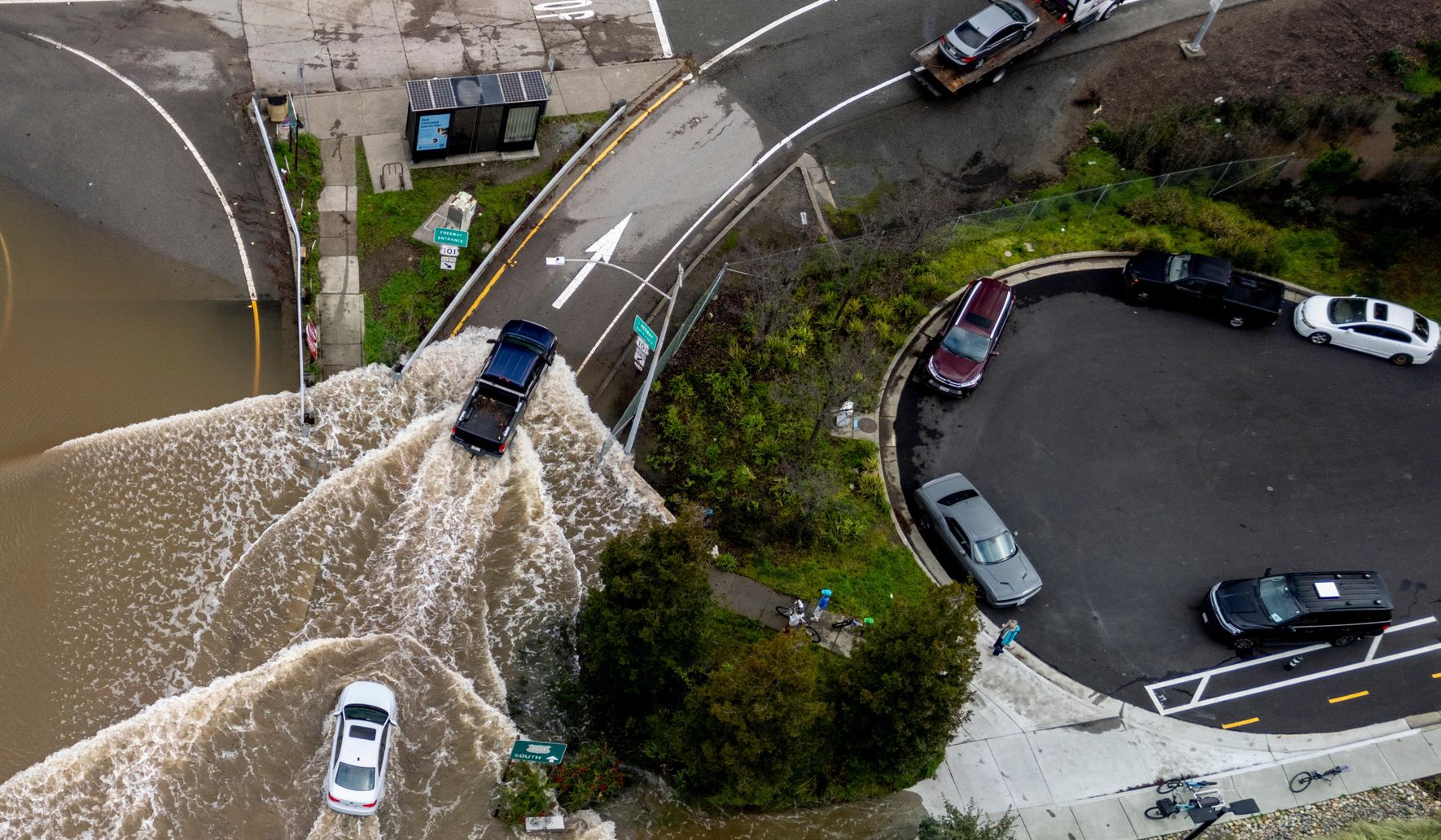
Crews cleared mud from major California highways as forecasters warned of more thunderstorms after heavy rain, high tides and flooding triggered road closures and rescue operations.
Crews spent the day removing mud and debris from key highways after storms left sections slick and unsafe for travel. Local authorities reported that downpours combined with high tides worsened flooding in coastal and low-lying areas. Road closures forced detours and stretched response teams thin as they worked to reopen routes.
Emergency workers responded to multiple incidents where vehicles were stranded or swept by rising water, and some residents needed assistance leaving flooded properties. Teams used heavy equipment to push mud and rocks off shoulders and to clear drainage channels clogged by runoff. The immediate goal was to restore safe travel lanes while keeping crews and motorists out of harm’s way.
Meteorologists issued warnings for more thunderstorms through Sunday, cautioning that additional rain could hamper cleanup efforts and cause new flash flooding. Forecasters stressed that saturated soil and swollen streams make even modest clouds capable of producing rapid runoff. Officials urged people to avoid driving through standing water, since hidden hazards can easily flip or stall vehicles.
High tides amplified the impact in coastal communities, pushing water onto roads that normally handle daily surf and storm surge without incident. When tides peak while heavy rain falls inland, stormwater has fewer places to drain and can back up into streets and neighborhoods. That combination has been the main factor behind the recent spate of closures and localized evacuations.
Transportation crews focused on priority corridors that connect large population centers and supply routes for services and deliveries. Clearing shoulders and repairing guardrails were part of the immediate work needed to keep traffic flowing. Where damage was more severe, officials left lanes closed until inspections and temporary repairs could be completed safely.
Public safety agencies coordinated with road crews to stage resources where the risk was highest, shifting personnel as conditions changed. Rescue teams remained on alert for calls from people trapped in vehicles or homes, and quick response helped prevent more serious outcomes in several situations. Coordination with local utilities also aimed to minimize outages caused by flood-damaged equipment and debris.
Residents in affected areas were reminded to prepare for intermittent outages and to expect periodic delays on the roads over the next few days. Simple steps like keeping emergency kits in vehicles and avoiding unnecessary travel can reduce strain on first responders. Community shelters and assistance centers stood ready where needed to support people displaced by severe weather.
Officials emphasized that even after roads are cleared, hazards can persist, including eroded shoulders, fallen trees and weakened pavement. Motorists were advised to slow down and use extra caution, especially during nighttime or heavy shower activity when visibility drops. Authorities also warned that debris carried from higher elevations can reappear downstream during subsequent storms.
Work crews planned to continue clearing and inspecting affected highways as forecasts evolve, prioritizing the most critical links first. With more cells expected to swing through, the focus remains on balancing rapid reopening with long-term safety. Residents and travelers were asked to stay informed through local alerts and to respect any posted closures until crews confirm conditions are safe.

