

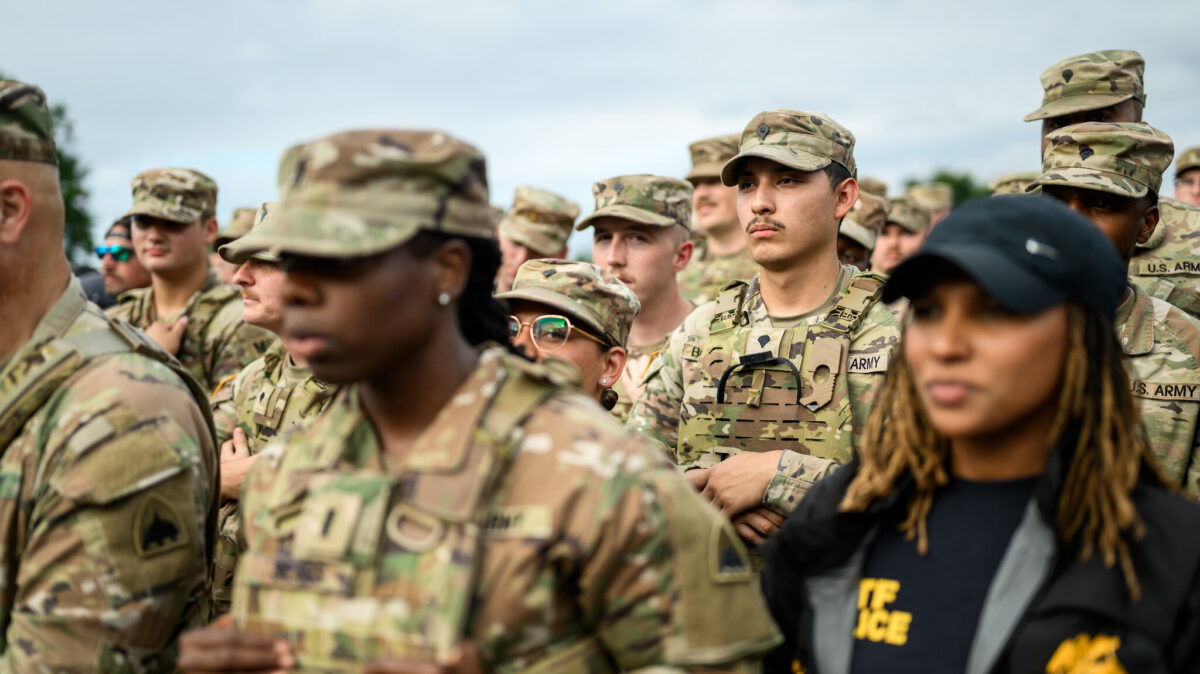
This piece argues from a Republican perspective that sustained political rhetoric has painted troops sent to assist with public safety in a negative light, explores the consequences for communities and servicemembers, and lays out practical expectations for how civil authorities should work with military and federal forces when violence spikes.
Democrats have relentlessly fomented fear and hatred of troops deployed to help reduce crime and violence, and that has real consequences for public order and the people who serve. When the left frames uniformed personnel as targets or tools of repression, it erodes trust at a time when neighborhoods need steady protection. That rhetoric filters into media coverage, courtroom decisions, and local politics, shaping how citizens and officials react to crises.
Troops and federal agents are not a political prop, they are trained professionals called in when local systems are overwhelmed, and dismissing their role out of hand ignores the practical goal of public safety. Communities that face surges of violent crime need resources and experienced personnel to stabilize streets and protect families, not partisan theater. The focus should be on measurable outcomes like reduced shootings, fewer carjackings, and safer commutes, not a PR battle that sidelines those outcomes.
When political leaders paint deployments as an attack on civil liberties or as a partisan stunt, it discourages cooperation between federal and local agencies, making coordinated responses harder to execute. That breakdown leaves law-abiding people exposed while protesters and agitators exploit gaps in authority. Republicans argue that backing the people who keep order—subject to the rule of law—is essential, because chaos favors nobody except criminals and radicals who want to make a point rather than solve a problem.
Morale among servicemembers and federal agents suffers when they are publicly vilified for doing difficult jobs under tight rules and scrutiny. Those workers put themselves in harm’s way to protect civilians and the rule of law, and constant political attacks send the message that their service can be weaponized for partisan advantage. That leads to fewer volunteers for surge missions, slower response times, and a reluctance to accept assignments that are necessary to restore calm.
There are clear, practical standards that should guide deployments: a defined, limited mission; close coordination with local law enforcement; transparent rules of engagement; and civilian oversight that keeps operations within constitutional bounds. Republicans can champion these guardrails while still insisting that the personnel carrying out the work be supported, not demonized. Accountability and backing are not mutually exclusive; both are needed to protect communities and the rights of citizens.
The stakes are not abstract. Families who live in neighborhoods where violence has spiked want action and results, and they notice when politics get in the way of safety. Too often the conversation gets stuck on symbolism while people suffer from theft, assaults, and disruptions to daily life. A practical approach respects civil liberties and the Constitution while acknowledging that restoring order sometimes requires federal support to back up local resources.
Critics will argue that any federal presence risks overreach, and that concern deserves a straight answer rather than reflexive attacks on personnel. The better response is to insist on a time-limited, metrics-driven mission with clear exit criteria and community input. That approach defangs political theater, focuses on outcomes, and protects both citizens and those sent to help maintain peace without turning public safety into a partisan weapon.

