

Florida’s new voter ID law has ignited a sharp debate over election integrity, access, and political theater across the state.
Left-leaning groups reacted loudly when the measure became law, calling it a harsh step that will shut people out of the process. “Governor DeSantis just signed one of the worst voter suppression laws in modern American history,” Abha Khanna, a partner with Elias Law Proup, said in a statement on Wednesday, April 1.
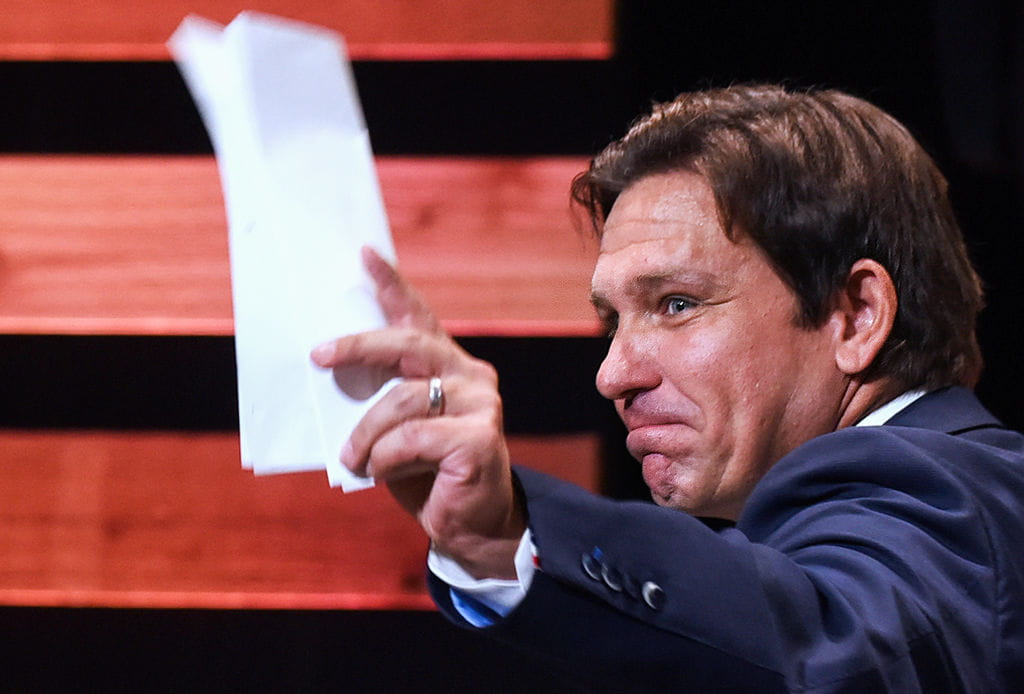
The governor presented the legislation as straightforward election protection, arguing it restores trust and sets clear rules voters must follow. Supporters say requiring identification at the polls and tightening certain procedures are common-sense moves to make results indisputable and to prevent the kind of confusion that breeds conspiracy theories.
Critics framed the change as a deliberate barrier, but the debate really comes down to competing views on balance: how do you secure elections while keeping access wide and practical? Republicans in Florida have been pushing the idea that simple requirements do more to protect democracy than complex exceptions that open the door to inconsistency.
From a Republican perspective, asking voters to show ID is no different than asking for ID to board a plane or to pick up a prescription. The argument is that the measure levels the playing field by applying the same basic rules to everyone and by reducing opportunities for fraud that can be exploited in tight contests.
Opponents argue the law will disproportionately affect certain populations and therefore suppress turnout, and those concerns deserve attention. But proponents counter that the solution is to make ID more available and to simplify the process for eligible citizens, not to leave the system vulnerable to manipulation because exceptions are easier than enforcement.
Expect legal challenges and heated court battles, since new election laws often end up in litigation before they are fully implemented. Republicans generally expect the judiciary to evaluate the law on its merits and the text, reasoning that procedures designed to verify eligibility are a legitimate, even necessary, function of government.
The conversation has practical consequences for voters and election officials alike, who now must adapt to the updated rules and communicate clearly about what is required. Voters should know the new standards, and clerks will be in the spotlight as they interpret and apply the rules while trying to keep polling places running smoothly.
This fight over voter rules in Florida reflects a larger national tug-of-war over how to make elections both secure and accessible, with each side accusing the other of putting partisan advantage ahead of principles. The outcome in Florida will be watched closely as a signal of how similar debates might play out in other states with razor-thin margins and high political stakes.

