

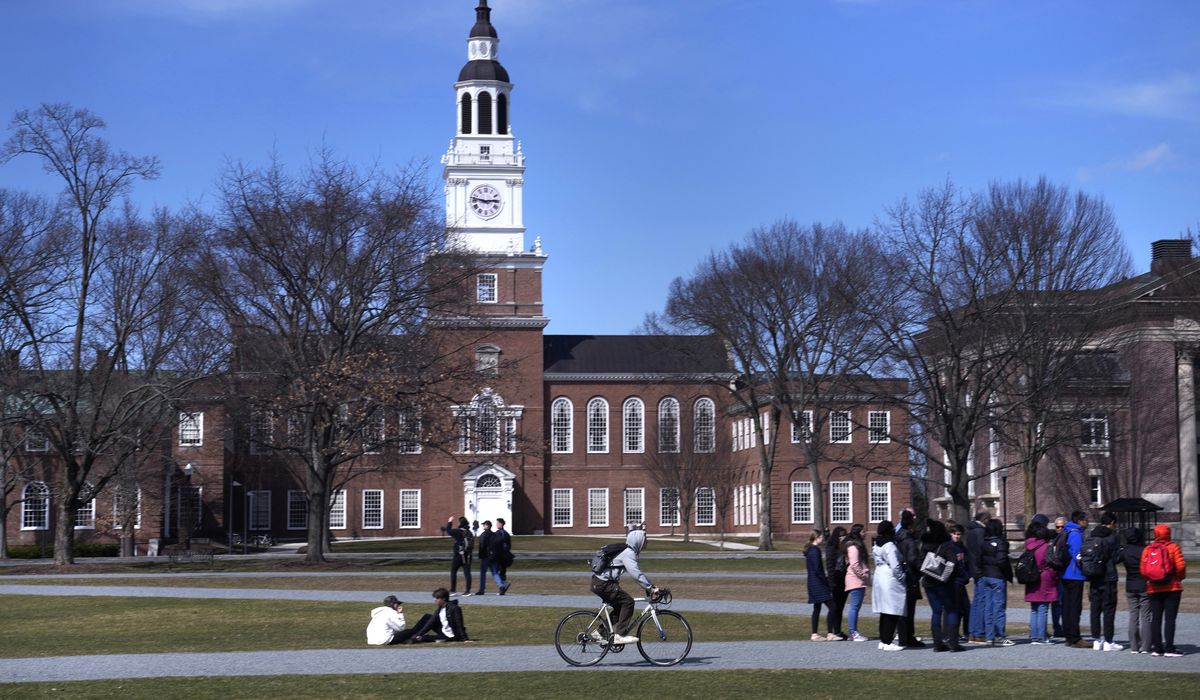
The Education Department has opened a probe into complaints alleging illegal favoritism toward minorities in medical school admissions at Dartmouth College, East Carolina University, Saint Louis University, Willia
The Education Department is investigating allegations that several medical schools gave illegal preference to minority applicants during admissions. The schools named in the complaint list include Dartmouth College, East Carolina University, Saint Louis University, and the fragmentary name “Willia” as originally reported. Federal attention on admissions practices signals a closer look at how race and other factors are weighed in selecting future doctors. This investigation could reshape how institutions defend their selection criteria.
The inquiry centers on whether admissions offices applied policies that crossed the line from lawful consideration of diversity to unlawful favoritism. Republicans and other critics have long argued that racial preferences can undercut merit and create unfair outcomes for other applicants. From that perspective, an Education Department probe is a necessary check to make sure federal civil rights rules are followed and that selection processes are transparent. Officials will likely request application files, admissions rubrics, and correspondence to evaluate the claims.
Medical schools say they consider a mix of academic records, test scores, personal statements, recommendations, and life experience when building a class. Supporters of diversity argue those measures help assemble doctors who can serve diverse communities effectively. Republican critics counter that the focus should remain squarely on academic achievement and qualifications, with any diversity aims achieved through race-neutral means. That debate frames the political backdrop of the current probe.
Investigations like this typically examine whether institutions violated federal civil rights statutes by discriminating against applicants because of their race. For Republicans who favor equal treatment under the law, the priority is ensuring every applicant gets evaluated on fair, consistent criteria. Enforcement of existing rules, rather than new preferences, is the playbook advocated by many conservative lawmakers and commentators. If the Education Department finds issues, institutions could face corrective actions or require changes in admissions practices.
Administrators at the implicated schools will be under pressure to show they balanced diversity goals with legal constraints. That means producing documentation that explains how subjective elements, like interviews or assessments of life experience, were used without creating unlawful advantage. Republican voices often push for stronger audits and external oversight to verify compliance. Transparency is a central demand from those skeptical of current diversity policies.
The public interest in medical admissions is more than academic. Medical schools train physicians who make life-and-death decisions, and the integrity of that training pipeline matters. Critics argue that admissions should reward demonstrated academic preparation and potential to thrive in intense clinical settings. This investigation will test whether schools are navigating those requirements properly while adhering to the law.
Legal experts watching the case expect the Education Department to scrutinize patterns in admissions outcomes alongside internal guidance. Statistical disparities alone do not prove illegal favoritism, but clear documentation of preferential scoring or quota-like practices could. Republicans often emphasize that remedying unfair advantages is not about excluding diversity, but about protecting fairness for every applicant. The department’s findings will set a precedent for how far institutions can go in pursuing diverse classes without breaking federal rules.
For the schools named, the immediate task is to cooperate with investigators and present a robust defense of their procedures. For policymakers, the episode renews questions about the role of race in higher education and how federal agencies should enforce civil rights laws. Those who favor tighter limits on race-based considerations see this as an opportunity to push for stricter, clearer standards. Whatever the outcome, the probe will likely influence admissions policies at medical programs nationwide.
The investigation also raises practical issues about how to recruit and retain a diverse medical workforce while staying within legal bounds. Republican viewpoints typically favor race-neutral strategies such as outreach, scholarships based on need, and support programs that lift academic preparation before students apply. These approaches aim to expand opportunity without turning to race-conscious preference systems that critics say invite legal risk. The final decisions by the Education Department may encourage schools to prioritize those kinds of alternatives.

