

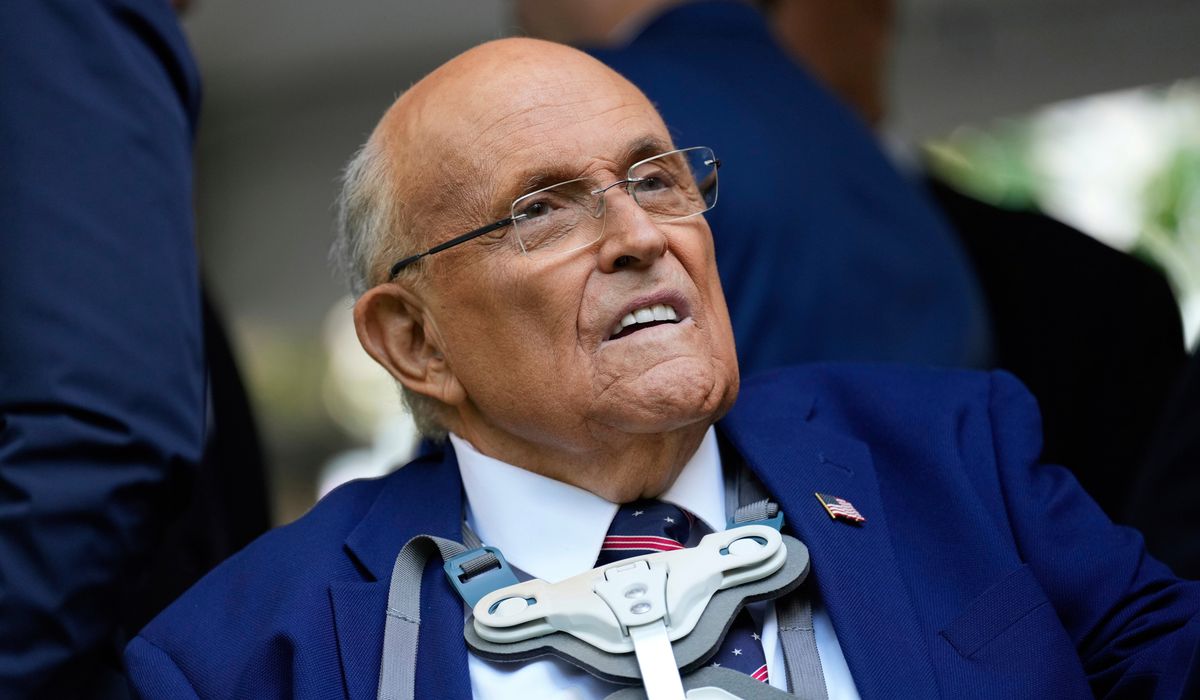
Rudolph Giuliani, the ex-mayor of New York City and a former adviser to President Donald Trump, “is in critical but stable condition at a hospital, his spokesman said Sunday,” and this report lays out the immediate facts, the public role that shaped his profile, and how his supporters and allies are reacting.
News that Rudolph Giuliani is hospitalized landed quickly across the media, and officials have described his condition as “critical but stable.” That phrasing signals serious concern while leaving room for cautious optimism, and it reflects the limited updates families and spokespeople often provide in high-profile cases. People who have followed Giuliani’s public work will watch for updates closely.
Giuliani’s career has been a long arc of public service and controversy, anchored by his time as New York City’s mayor and later as an adviser to President Donald Trump. For many conservatives, he has been a steadfast advocate who brought toughness and a willingness to confront political and legal challenges head-on. That reputation means his health news reverberates beyond the usual private circle and becomes part of a larger national conversation.
In situations like this, hospitals and spokespeople typically limit details to protect patient privacy while managing public concern. The use of a precise phrase such as “critical but stable” is standard: it acknowledges risk without declaring a final outcome. Supporters and colleagues often respond with prayers and calls for privacy during the early hours of a hospitalization.
Giuliani’s role in national politics, especially as a visible defender of President Trump, has given him a base of supporters who view his treatment through both human and political lenses. That dual perspective means reactions are often a mix of personal concern and political calculation. People on the right tend to emphasize his service record and insist on respecting the privacy of medical matters even while awaiting factual updates.
When a public figure faces a medical crisis, the immediate aftermath usually focuses on a few priorities: accurate information, respect for the patient’s family, and a steady flow of credible updates. Rumors and speculation can fill the gap when facts are scarce, which is why official statements from spokespeople matter so much. The spokesman’s line is the main reliable thread for reporters and supporters until further details are released.
For Republican readers and allies, the instinct is often to rally around those who have stood with the movement through difficult fights. Giuliani’s visibility in legal and political battles has made him a familiar face to many who want to see him recover. That solidarity can translate into practical support for his family and legal team while they navigate whatever comes next.
Medical updates in high-profile cases also raise questions about how institutions manage both care and communication, and they test the public’s patience for clear facts. Hospitals have obligations to their patients and legal limits on what they can disclose. Meanwhile, the media and public must balance legitimate curiosity with respect for privacy and accuracy.
As this story develops, the most responsible approach is to rely on official statements and avoid amplifying speculation. The initial report that Rudolph Giuliani “is in critical but stable condition at a hospital, his spokesman said Sunday” stands as the baseline fact. Supporters, critics, and neutral observers will all be watching for further medical bulletins and any statements from family or trusted representatives.

