

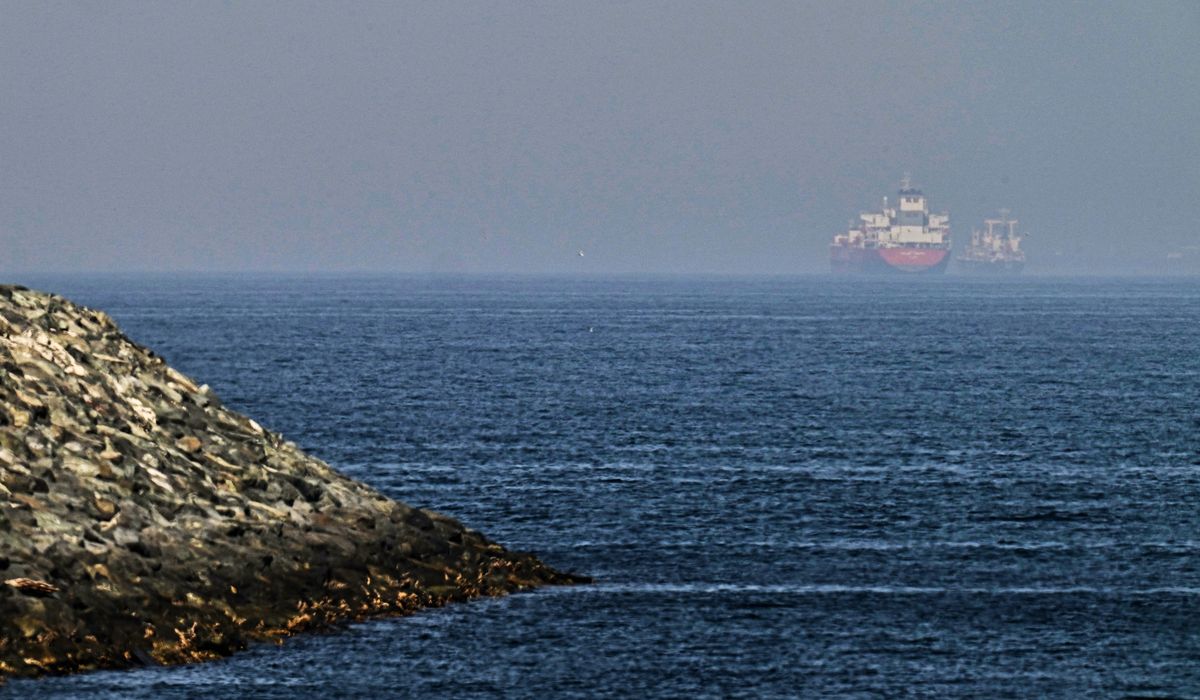
The Navy will send guided-missile destroyers, more than 100 land- and sea-based combat aircraft, and several sea and air drones to guide international commercial ships out of the Strait of Hormuz.
The move puts American power where it matters: protecting global commerce and keeping a vital chokepoint open. The presence of guided-missile destroyers, a large force of aircraft, and a suite of drones is meant to reassure shipping and deter bad actors from threatening passage. This is a clear, practical use of naval power to defend free navigation.
Sending destroyers and more than 100 combat aircraft signals seriousness without theatrics. Ships and aircraft working together create overlapping sensors and response options, which is exactly what merchant convoys need in a risky stretch of water. Drones add persistent surveillance and quicker reaction time, and that kind of layered capability reduces the chance of costly miscalculation.
The Strait of Hormuz is one of the world’s pressure points for energy and commerce, and muscle matters there. When hostile groups harass commercial traffic, the message must be firm and predictable: commercial vessels will be protected. That straightforward approach keeps insurers calm, trade routes open, and economies functioning.
This deployment is not about grandstanding or permanent occupation; it’s a focused mission to escort ships through a dangerous corridor. Guided-missile destroyers bring both defensive and offensive options, and the aircraft component gives the force reach along the coastlines that border the strait. Together with drones, those assets create a practical umbrella for safe passage.
Operationally, the mix of sea and air assets cuts reaction times and expands the view of the maritime environment. Aircraft can spot and track threats from afar while ships close in to provide protection or de-escalation. Sea drones supplement manned systems by investigating suspicious contacts without risking crew and by extending coverage between ships.
Politically, a robust escort mission sends a direct message to anyone considering aggression: we will not let important shipping lanes be weaponized. That posture defends more than commerce; it defends the principle that international waters remain open and safe for lawful trade. For allies and partners, American leadership in this mission is a stabilizing force at a fraught moment.
There are risks, of course, and commanders will need to manage escalation carefully while remaining uncompromising on protection. Rules of engagement, intelligence support, and coordination with commercial operators are all part of making the mission successful and low-risk. The goal is to prevent incidents, not to provoke them, by making hostile actions costly and futile.
Technology and tactics matter: guided missiles, carrier-capable aircraft, and unmanned systems all bring different strengths to the table. When used together, they force potential aggressors to think twice before targeting innocent shipping. That deterrence is the best way to avoid firefights while preserving the right of passage for the world’s merchant fleet.
Backing up ships and aircraft with clear diplomacy strengthens the effect of the military deployment. Working with regional partners to share intel and coordinate routes reduces friction and increases the odds of smooth transits. This kind of cooperation also signals to would-be disruptors that opposition would be broad and coordinated.
At the end of the day, the mission is simple: keep commercial ships moving and prevent a small spark from igniting a larger conflict. The blend of guided-missile destroyers, over a hundred combat aircraft, and multiple types of drones gives commanders flexible tools to do just that. That kind of measured, capable response is exactly what international waters need right now.

