

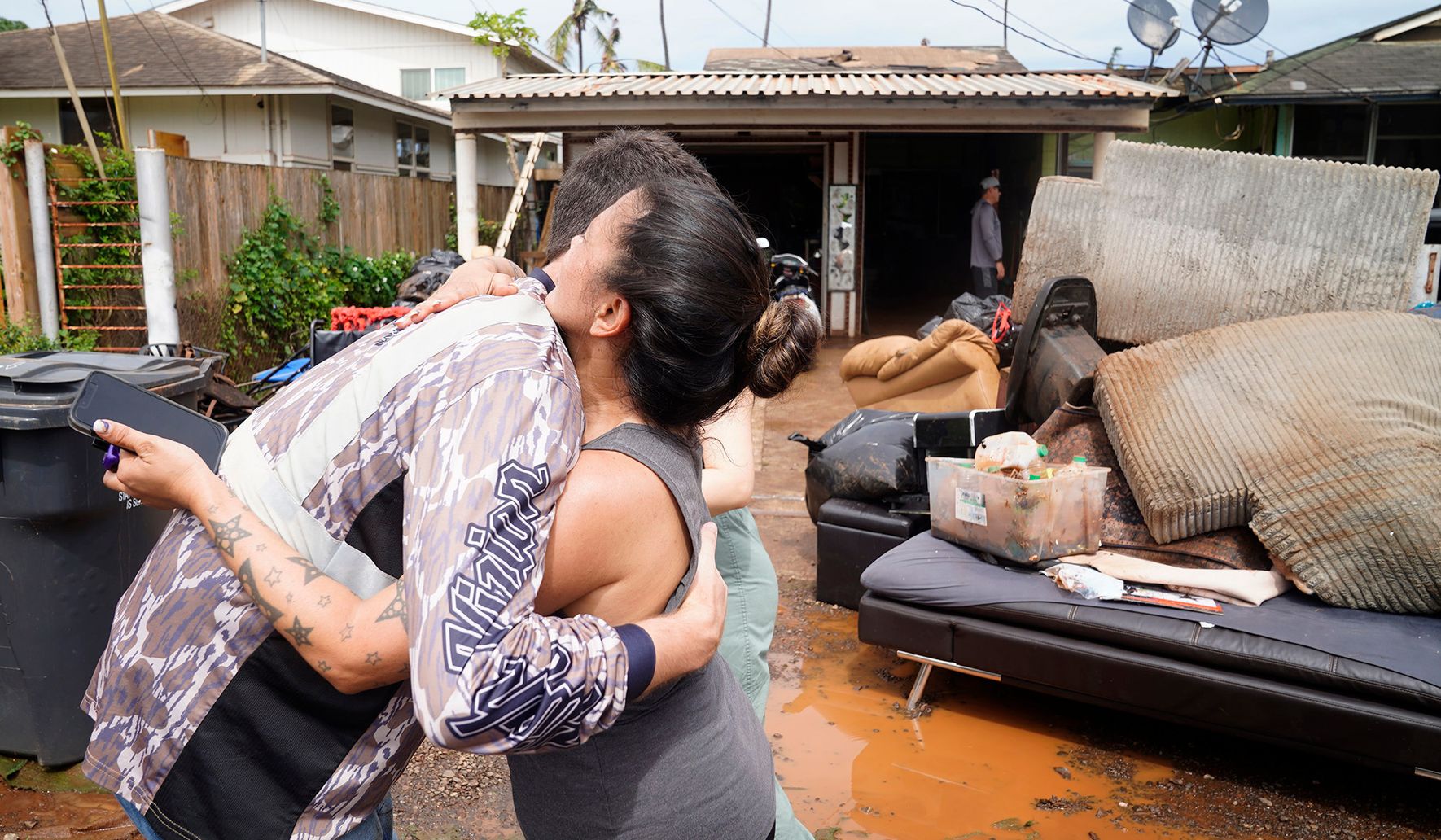
A powerful flood event struck Hawaii, the worst in roughly two decades, sweeping entire homes off foundations, nudging cars into streets and leaving interiors and surfaces caked in thick, reddish volcanic mud.
The storm dumped huge amounts of water in a short period, turning familiar streets into roaring channels and sending debris downstream with little warning. Many neighborhoods found their basements, living rooms and kitchens layered in the distinctive rust-colored mud that comes from volcanic soils. Emergency crews and neighbors moved quickly to rescue people trapped in rising water and to pull cars from current-swept driveways.
Several homes were ripped from their foundations and carried from their lots, a dramatic and dangerous outcome for any localized flooding event. Vehicles were buoyed by floodwaters and left miles from where owners parked them, complicating recovery efforts and insurance claims. The spread of volcanic mud added another layer of cleanup work, because it sticks to floors, walls and counters and can coat mechanical systems.
Power and water systems were disrupted in multiple communities, and roads that once connected neighborhoods became impassable or washed out entirely. Utility repairs will take time because crews must secure damaged lines and equipment before restorations can begin safely. Local officials urged caution around downed lines and urged residents not to enter standing water because of hidden hazards and contamination risks.
Cleanup is a long, physical process when volcanic mud is involved, and it will take more than a single day to make houses livable again. Walls and cabinets often need rinsing and sanitizing, and porous materials may require removal to avoid mold. Specialized equipment and drying techniques are necessary to prevent long-term structural and health problems in affected homes.
Community centers and temporary shelters opened to provide immediate relief, offering meals, dry clothing and a place to charge phones. Volunteers showed up in large numbers to move debris, distribute supplies and check on elderly neighbors. Coordination between local agencies and nonprofit groups is essential to direct resources where they are most needed and to avoid duplication of effort.
Insurance agents are preparing for a surge in claims that will include structural damage, vehicle losses and contents ruined by water and mud. Not every homeowner will have flood coverage, which could leave many facing bills for repairs and cleanup. Property owners are advised to document damage thoroughly with photos and to keep records of expenses as part of the claims process.
Environmental impacts are also a concern, as floodwaters redistribute sediment and pollutants downstream and into coastal waters. Beaches and marine habitats may see deposits of mud and debris that affect water quality and wildlife. Cleanup plans will need to balance quick removal with environmental safeguards to prevent further harm to fragile coastal ecosystems.
Officials say rebuilding will be measured and cautious, with inspections and permits required before repairs or reconstruction can move forward. In the meantime, residents are sorting through what remains and trying to salvage belongings that survived the surge. The scale of work ahead underscores the importance of improving preparedness and infrastructure to better handle heavy, sudden rainfall events in the future.

