

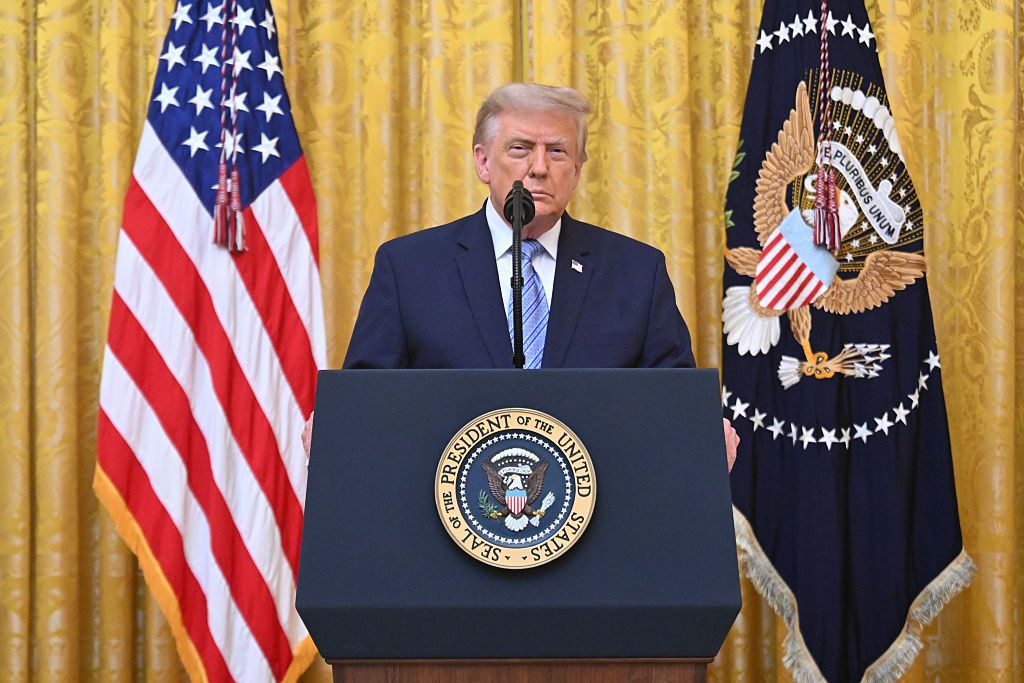
President Trump delivered a wide-ranging election integrity address on July 16 that he said included declassified intelligence and five areas of vulnerability, yet much of the mainstream press largely ignored or downplayed the presentation and its aftermath.
On July 16, President Donald Trump stood before the nation and announced the immediate declassification and release of intelligence he said exposed “shocking vulnerabilities” in the way American elections are run. He laid out five areas of concern and urged urgent fixes to make cheating and outside interference “virtually impossible.” The speech was framed as a national security issue and a call to action, not mere partisan rhetoric.
“For many years I’ve called for bold, swift, and decisive action to protect the integrity of America’s elections. Every American deserves to know that when they cast their vote, that vote will be counted accurately in a system, and that is to make that system secure, one where cheating, and interference are not just difficult but virtually impossible. Unfortunately, the system we have today falls catastrophically short of that standard. Tonight I’m announcing the immediate declassification, and release of critical intelligence revealing shocking vulnerabilities in our election infrastructure.”
Despite the gravity of those claims, the broadcast treatment varied sharply. ABC and NBC declined to carry the presentation at all, while CBS ran most of it but cut away about five minutes before the end. Fox News aired the full speech live, but then its morning lineup behaved as if the event had not taken place, creating a surreal disconnect between what viewers could have seen and what discussion actually followed.
The silence on Fox’s morning shows stung, especially after the network had committed to full coverage the night before. Programs such as Fox & Friends and America Reports reportedly made no mention of the address, which fed questions about editorial choices and fear of legal fallout. The recent costly Dominion lawsuit, which resulted in a $787.5 million settlement and an admission of false claims, looms large for any outlet weighing how to handle election-related broadcast content.
Watchdog groups noticed the pattern and called it out. David Bozell, president of the Media Research Center, said plainly: “The lack of coverage of Trump’s speech on Fox this morning is another reminder that the liberal media’s favorite claim, that Fox is just a Trump echo chamber, doesn’t hold up.” Beyond cable, aggregators and major news apps reportedly amplified mainstream takeaways instead of broadcasting or foregrounding Trump’s own release of documents and assertions.
Critics in the legacy press were quick to challenge the substance of the materials the president released. As one prominent national outlet put it: “But documents Mr. Trump released to support his claims — and previous assessments from the intelligence community — do not back up his most aggressive statements about election security.” That pushback matters, but it does not fully explain the near-uniform choice by several major networks to ignore or downplay an address the president called essential to national confidence in voting systems.
From a Republican perspective, this episode looks less like neutral editorial judgment and more like gatekeeping. When networks and platform curators decide which parts of a president’s national-security-themed remarks reach the public, they shape what citizens may debate or know. Media decisions to suppress or sideline such a speech undermine a healthy public square where evidence should be examined, questions asked, and reforms considered on their merits.
Whether one accepts every claim in the president’s speech or not, the basic obligation of a free press is to inform the public about significant official actions and documents, then let experts and voters sort the facts. The choice by major outlets to largely ignore President Trump’s detailed presentation on election vulnerabilities denied many Americans the chance to see the material firsthand and form their own conclusions. That failure is consequential for a republic that depends on open debate and transparency about how our elections are conducted.

