

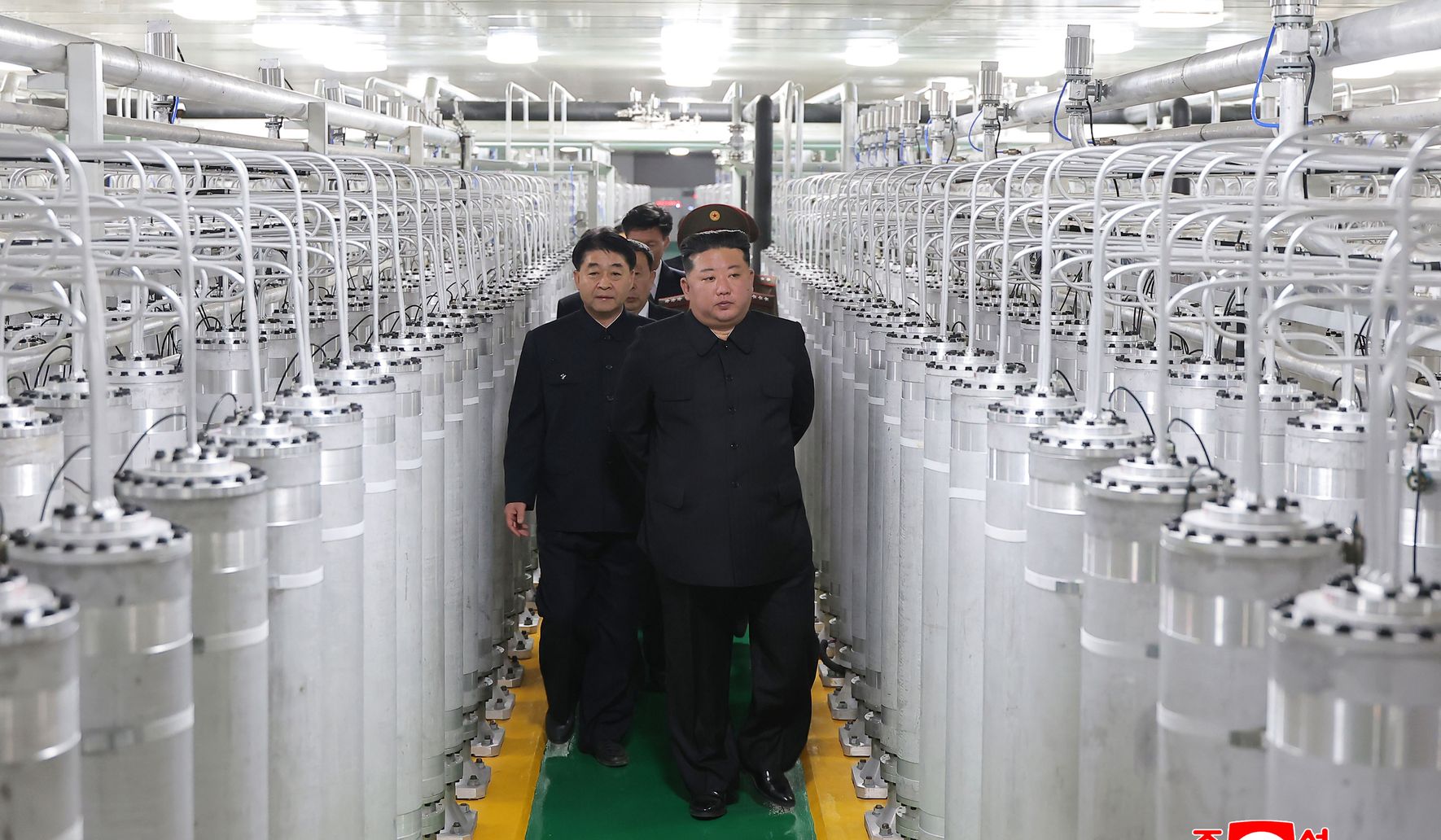
North Korea has revealed a new plant claimed to produce nuclear bomb fuel and its leader says the country will expand its arsenal “at an exponential rate.”
North Korea announced the opening of a new facility described as capable of producing nuclear bomb fuels, and leader Kim Jong-un framed the move as part of an aggressive push to expand military power. The declaration signals a clear escalation in Pyongyang’s long-running program and carries immediate strategic implications across East Asia and beyond. Officials and analysts say the development undermines years of sanctions and diplomatic pressure meant to constrain the regime’s weapons work.
The facility’s unveiling suggests a stepped-up capacity to generate fissile material, the core ingredient for nuclear warheads. While Pyongyang has long pursued both enriched uranium and plutonium routes, any new dedicated production site increases the pace at which devices can be built. That speed is exactly what Kim celebrated when he said the country would boost its forces “at an exponential rate.”
For neighbors like South Korea and Japan, the move raises the stakes for regional defense planning and joint deterrence. Those countries have repeatedly warned that an expanding North Korean arsenal forces them to consider tougher measures to protect citizens and infrastructure. The reality on the ground is that missile tests and nuclear deployments change threat calculations for militaries and policymakers in Seoul and Tokyo.
From a conservative American perspective, the announcement underscores the limits of appeasement and the need for credible power to deter aggression. Decades of intermittent diplomacy have failed to stop Pyongyang from advancing its capabilities, so critics argue that strength and reliable deterrence matter more than empty promises. That viewpoint stresses investments in American readiness, missile defenses, and allied interoperability.
Sanctions have been a primary tool to pressure North Korea, but enforcement has been inconsistent and leak points remain. New facilities can exploit gaps in surveillance and illicit procurement networks to keep production moving. This is precisely why some policymakers say the United States and partners must tighten enforcement and close loopholes that allow materials and technology to reach the regime.
Military planners will watch for follow-on signs: increased testing, expedited missile production, and new doctrines for weapon deployment. Each of those steps would change crisis dynamics, especially if Pyongyang pairs production with advances in delivery systems. Intelligence collection and analysis will be critical to track any shift from production to operational fielding.
Diplomacy still has a role, but in a framework that recognizes deterrence and accountability first. Any talks that ignore the basic fact of an expanding nuclear effort risk rewarding bad behavior and emboldening further steps. Conservative voices argue that credible diplomacy requires the backdrop of American strength and predictable consequences for violations.
The international community faces a hard truth: a new facility like this is not a minor technical milestone, it is a strategic challenge. It will force capitals to reassess defense postures, supply chain vulnerabilities, and the balance between negotiation and pressure. Whatever the next moves are, the announcement makes clear that North Korea intends to accelerate its nuclear trajectory and that governments must respond with clarity and resolve.

