

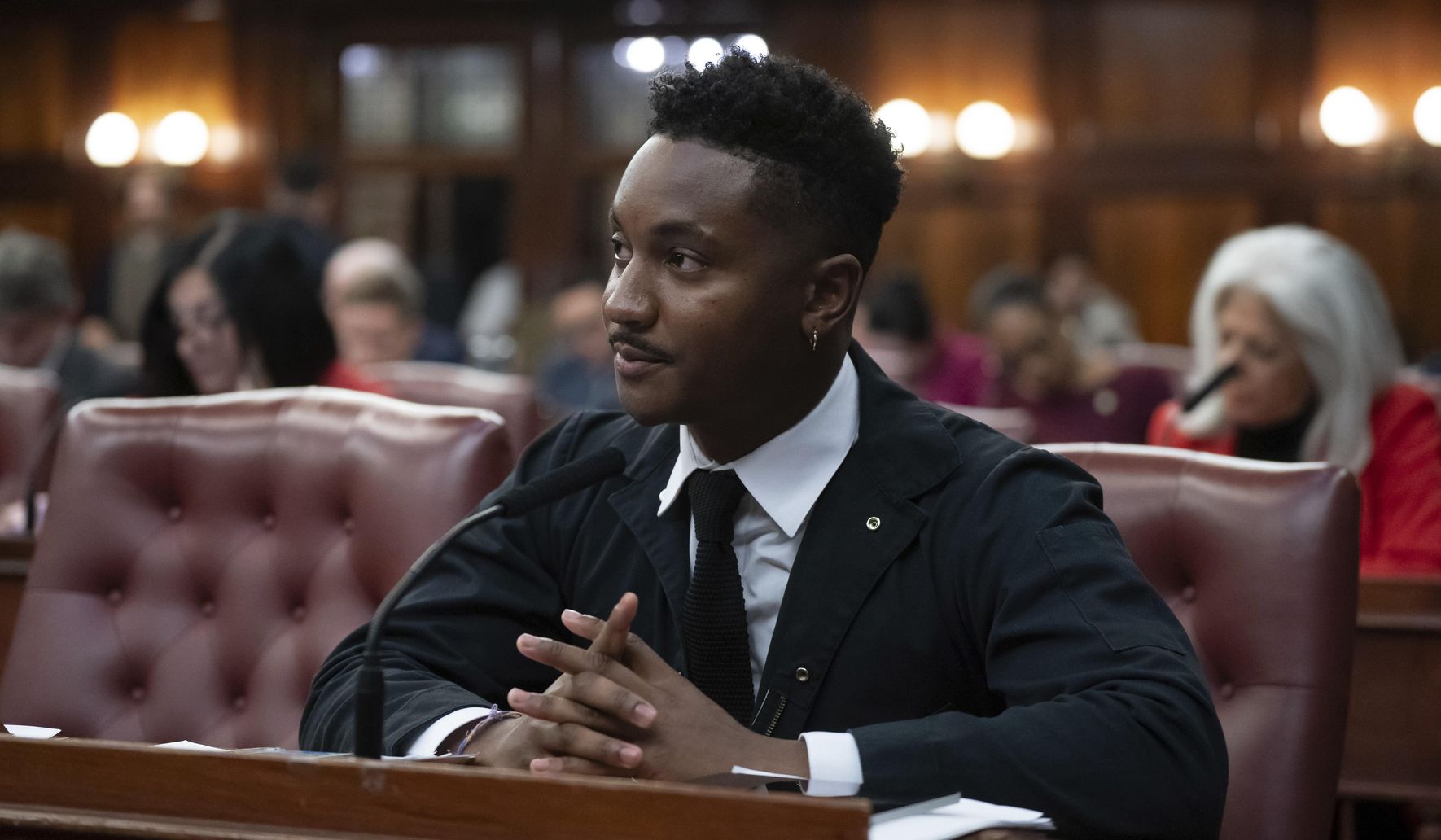
Chi Osse, a New York City Council member affiliated with the Democratic Socialists of America, is weighing a challenge to House Minority Leader Hakeem Jeffries for his New York congressional seat next year, setting up a contest that spotlights fractures inside the Democratic Party and creates potential openings for Republicans.
Chi Osse’s possible candidacy against Hakeem Jeffries is the kind of intra-party joust that tends to expose ideological splits more than settle them. Osse comes from a local government background and the DSA label signals a leftward challenge to an established Democratic leader. Jeffries, as House Minority Leader, carries national visibility and institutional clout that any challenger must confront quickly.
From a Republican viewpoint, the story is notable because Democratic infighting weakens their statewide and national standing. A primary between a DSA-aligned progressive and the party’s top House leader would force Democrats to spend time and money defending turf rather than campaigning on the general election. That distraction could hand organized Republicans a clearer path in a district Democrats normally consider secure.
Osse’s strengths are local ties and the ability to energize progressive voters who feel the national Democratic leadership has moved too close to the center. Grassroots energy can be potent in primary contests, and activists motivated by ideology often turn out more reliably in low-profile races. But energy alone rarely suffices when an incumbent holds leadership power and the attendant fundraising network.
Jeffries’ advantages are obvious: name recognition, donor networks, and a platform as a national party leader that brings visibility and endorsements. Incumbency also brings institutional relationships with key local players and unions, which can blunt insurgent campaigns. Those realities make a primary uphill for any challenger, even one tapping a fervent progressive base.
Another factor is money. Primary challengers need sustained fundraising to match media buys, field operations, and get-out-the-vote efforts. Republicans watching this potential matchup will be keen to see if the DSA-backed effort drains Jeffries’ resources or forces him to lock down donors early. Either outcome could reshape who is left standing for the general election.
The broader political implication is simple: when a party’s left flank tests its leadership, it exposes vulnerability. Republicans can exploit that by highlighting perceived chaos and positioning themselves as the stable alternative. In districts where Democratic unity is frayed, a disciplined Republican message about fiscal responsibility and public safety can gain traction with undecided voters.
Local voters will ultimately decide whether they prefer a high-profile national leader or a council member who promises to push bold progressive priorities. That choice will say as much about the district’s mood as it does about the two candidates. For Republicans, the immediate task is strategic: watch the Democratic joust, identify openings, and prepare targeted outreach without assuming victory.
Any primary campaign will also turn on issues that resonate in everyday life: housing, crime, schools, and taxes. Both candidates will be judged on concrete proposals and the credibility to deliver them. Republicans hoping to flip the seat will stress contrasts in governing philosophy while readying a candidate who can appeal to moderates disillusioned by partisan fights.
In the short term, Osse’s flirtation with a run is a story about intra-party tension and strategic calculations, with consequences that extend beyond New York politics. A progressive challenge to Jeffries would force Democrats to confront internal choices and give Republicans a scenario to exploit. The coming months should reveal whether this is a credible bid or a signal of deeper unrest among Democratic ranks.

