

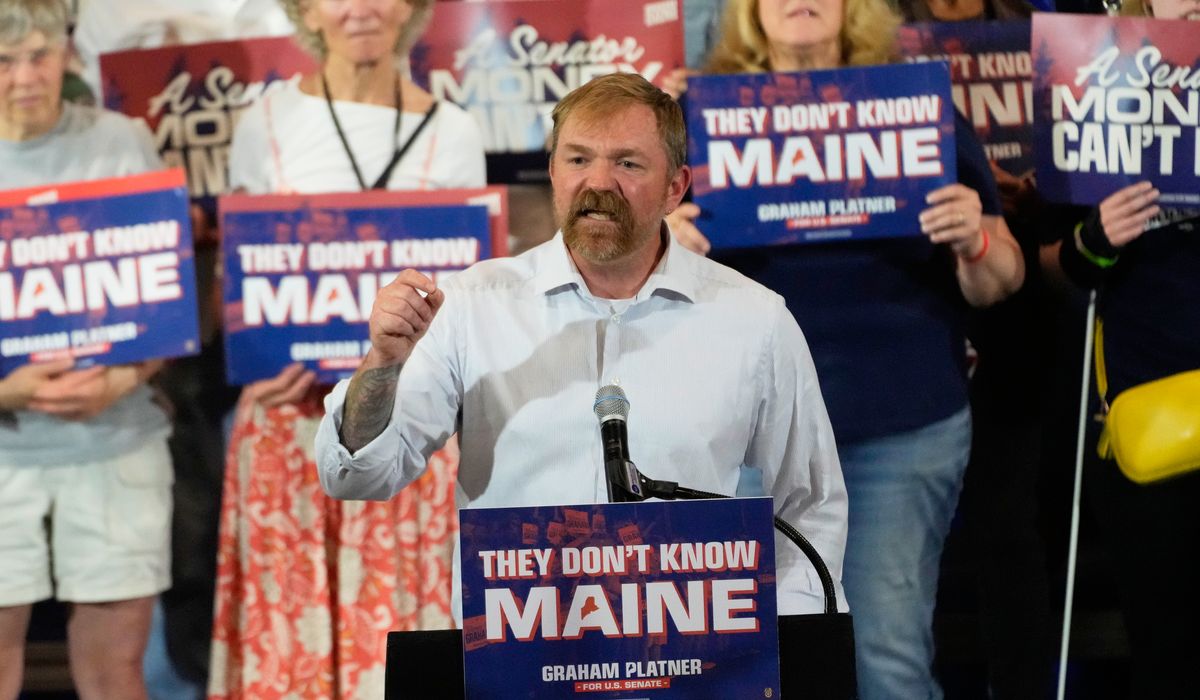
Graham Platner has withdrawn from the Maine Senate race, removing an early Democratic challenger and opening the path for party leaders to nominate a different candidate to take him on in a high-stakes contest against Sen. Susan Collins that could influence control of the Senate.
Graham Platner bowed out of the Maine Senate race, and that exit immediately reshuffles the map for both parties. Democrats can now pivot to a fresh nominee chosen by party insiders and activists, while Republicans are left to recalibrate their defense around Senator Susan Collins. The change matters because this contest is already seen as one of the marquee Senate races that could play a role in which party wins the majority.
From a Republican point of view, Collins remains the central figure in the contest and the candidate to watch. She has name recognition and incumbency advantages that force any Democratic choice to start from behind on day one. That dynamic shapes how national parties allocate money and talent, since both sides will weigh whether to treat Maine as a defensive hold or an offensive pickup opportunity.
Democrats choosing a replacement nominee gives them a chance to pick a candidate with a different profile than Platner, one who might appeal either to the party base or to more moderate Mainers. That flexibility can be a strength, but it also creates uncertainty for campaign planning, messaging, and fundraising. Republicans can exploit that uncertainty by highlighting Collins’ record and contrasting it with a new, less-tested Democratic face.
National control of the Senate is often decided by a handful of swing states and tight races, and Maine has repeatedly landed on that list whenever the political climate tightens. For Republicans, keeping Collins in office is a defensive priority that also serves as a test of whether conservative voters can hold ground in New England. Democrats, meanwhile, will likely pour resources into a high-profile challenger if they believe the math favors flipping the seat.
Practically speaking, Platner’s withdrawal compresses the Democratic timeline. Party operatives must move fast to organize a replacement nomination, recruit credible campaign staff, and begin the sustained voter contact that decides close races. Accelerated timelines sometimes produce rushed choices, and Republicans will be ready to frame any hastily hatched nominee as out of step with Maine’s independent streak and local concerns.
Fundraising and endorsements will be another battleground. A new Democratic nominee will need to demonstrate fundraising muscle quickly to attract national commitments. Republicans will push the narrative that Collins, as an established incumbent, already commands broader support among donors who prioritize stability and pragmatic governance over ideological shifts.
Messaging will center on contrasts: Democrats argue for change and national policy priorities, while Republicans argue for continuity, local responsiveness, and checks on Washington. For Collins specifically, the strategy will likely emphasize her independent label and record of constituent service. The GOP case will stress that keeping a seasoned senator in place helps maintain a steady hand during a period of tight margins in the chamber.
Media attention and narrative framing matter in these high-profile races, and the sudden candidate shuffle gives both sides new angles to push. Democrats can present a fresh option and try to generate momentum, while Republicans can frame the switch as evidence of Democratic disarray or opportunism. That tug-of-war will play out across earned media and paid communications as the campaign heats up.
Local issues in Maine will still shape voter decisions, even amid national headlines about control of the Senate. Infrastructure, fishing and maritime policy, healthcare access, and the cost of living are perennial concerns that Mainers expect their senator to address. Republicans pointing to Collins’ engagement on those issues will try to keep the focus on tangible results rather than purely national partisan battles.
Ultimately, Platner’s departure changes the immediate landscape but not the core stakes: this Senate seat remains important to both parties and to national calculations about majority control. With a new Democratic nominee likely to emerge, the coming months will test each side’s ability to organize quickly, define the opponent, and win over undecided voters in a state that prizes independence and pragmatic problem solving.

