

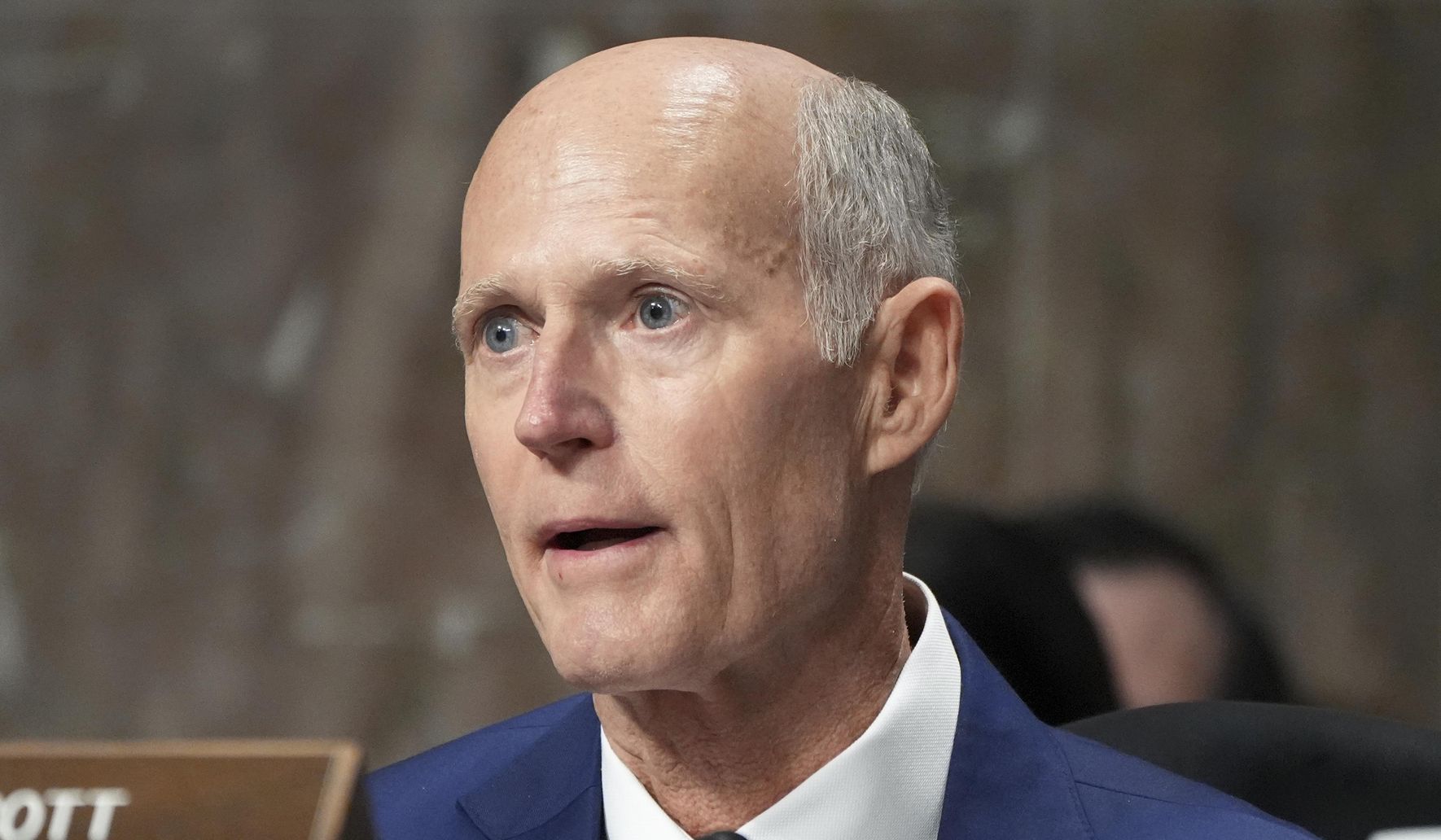
Sen. Rick Scott warns that foreign actors are exploiting the United States’ birthright citizenship to gain legal entry and long-term advantages, framing the issue as a national security and policy failure that demands clear thinking and decisive reforms.
Sen. Rick Scott says China has found a way to “weaponize” America’s birthright citizenship policy by arranging to have babies born in the U.S., earning automatic citizenship, then returning to their home country with a new legal foothold. He paints that pattern not as isolated incidents but as an organized tactic that leverages American law against American interests. From a Republican perspective, this is a direct challenge to sovereignty and to the integrity of our immigration system.
The concern from conservative lawmakers is twofold: one is national security, the other is the rule of law. If adversaries can secure U.S. citizenship for children through deliberate, state-influenced schemes, those citizens could be used later for intelligence, influence, travel, or legal cover. That possibility forces a hard look at whether current legal interpretations line up with modern threats and whether policy must catch up.
Opponents of unrestricted birthright citizenship argue that the policy, as applied today, invites exploitation and incentives for foreign governments or actors to game the system. They point out that the practical effects extend beyond paperwork, influencing where families settle, who gains access to benefits, and how loyalties might be split across borders. Critics say this undermines public trust in immigration law and strains resources that should serve citizens and lawful residents first.
Defenders of birthright citizenship counter with constitutional and humanitarian arguments, warning that changing course could harm genuine asylum seekers and families legally connected to the United States. That position emphasizes the historical intent behind the 14th Amendment and raises fears about unintended consequences if the policy is narrowed. Republicans respond that intent must be weighed against present-day realities, and that no constitutional principle should be a blind shield for foreign manipulation.
Practical policy conversations center on how to close loopholes without trampling rights. Options discussed by conservative lawmakers include clearer statutory definitions, tightened entry checks, and targeted measures aimed at schemes rather than broad populations. Those crafting proposals insist on surgical fixes: address the exploit, preserve the integrity of legitimate claims, and prioritize national security and rule-of-law outcomes.
Public opinion plays a key role in shaping what lawmakers feel they can pursue. Many voters view border control and immigration trustworthiness as linked to economic fairness and safety. Republican messaging frames the debate as protecting citizenship as a privilege tied to allegiance and contribution, not as an automatic benefit to be leveraged by foreign governments or criminal enterprises.
The language used by leaders matters because it sets the tone for policy and public debate. Calling the practice “weaponize” draws a stark line: this is not a technicality, it is an active threat. From a conservative perspective, blunt language energizes voters and clarifies what’s at stake, but it also raises the responsibility to propose workable legal fixes that courts will uphold and the public will accept.
Any pathway forward will need bipartisan legal work and an honest legal strategy that anticipates constitutional challenges. Republicans argue that a focused, well-drafted statute can identify and stop coordinated foreign efforts without broadly revoking rights for families who have followed the law. The debate will ultimately test whether America can adapt constitutional protections to defend itself against modern, organized exploitation while maintaining its founding principles.

