

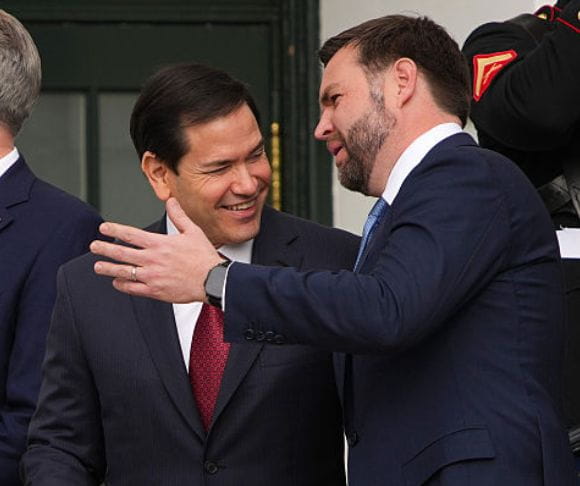
Secretary of State Marco Rubio’s Munich Security Conference speech drew a standing ovation from European leaders, signaling respect for American resolve while highlighting the need for firmer U.S. leadership on the world stage.
Secretary of State Marco Rubio’s remarks at the Munich Security Conference caught attention across the Atlantic. The standing ovation from European leaders was real and earned, but applause is not a policy. What matters now is how Washington turns that moment into lasting strategy and deterrence.
Rubio showed the kind of clarity and conviction voters expect from conservative leadership, pushing back against wishful thinking in international affairs. He made the case that allies need American resolve more than moral lectures. In a world of rising threats, a confident United States that stands by its friends is the best guarantee of stability.
The reaction in Munich reflected a hunger among European officials for clearer U.S. direction, not just rhetoric. Too often, transatlantic coordination has been hampered by mixed signals from Washington. Secretary of State Rubio’s speech provided a reset opportunity to align strategy with capability and to demand more of partners where necessary.
Real leadership means more than speaking well on a stage. It means funding defense, ensuring energy security, and leveraging economic power in ways that back up our commitments. Conservatives know that deterrence is built on capability, credibility, and the willingness to act when vital interests are threatened.
European applause should not obscure areas where allies must step up. For decades, the United States has shouldered a disproportionate share of the burden for global security. Rubio’s address highlighted the need for fairer burden sharing and stronger regional defenses so American taxpayers are not asked to carry everything alone.
On the diplomatic front, clarity is essential. Ambiguity invites aggression and creates confusion among allies and adversaries alike. Rubio’s clear messaging at Munich signaled that the United States will not hedge where vital interests are at stake, and that certainty in policy is the most persuasive tool in preventing conflict.
Economic tools are as important as military ones, and conservatives favor using sanctions and trade measures intelligently to shape behavior. The speech underscored that America must wield its economic strength to protect allies and punish bad actors while also safeguarding domestic prosperity. A strong economy funds a strong defense and underwrites credible foreign policy.
Energy independence emerged as a strategic priority in recent geopolitical debates, and Rubio’s tone reinforced that reality. Dependence on hostile or unstable sources undermines both security and bargaining power. The United States should pursue policies that boost domestic production and give allies alternatives, reducing leverage for adversaries.
Public posture matters, but policy must follow posture. The Munich standing ovation was meaningful, but it is a first step rather than an endpoint. Rubio pressed home the idea that respect earned on a world stage should be converted into concrete agreements, capabilities, and commitments that make the globe safer for American interests.
Ultimately, the speech demonstrated that Republican principles—strength, clarity, and realism—resonate with partners who want durable security arrangements. Marco Rubio’s Munich address was a reminder that leadership requires more than applause; it requires a plan, a balance of force and diplomacy, and the political will to follow through.

