

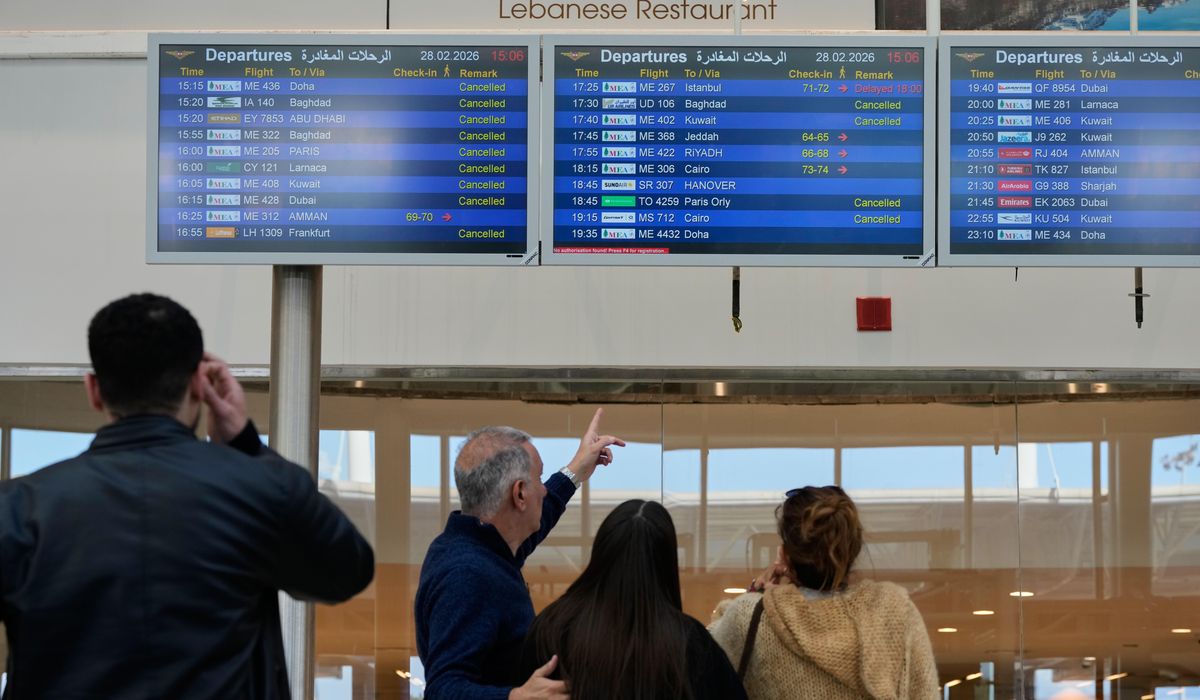
U.S. citizens trying to leave the Middle East ran into an unexpected roadblock when the State Department’s emergency hotline delivered an automated reply saying Washington could not help with evacuations during the unfolding conflict with Iran.
On Tuesday many Americans packing bags and checking flights got a blunt automated response instead of a human plan. “U.S. citizens hoping to evacuate the Middle East amid the war with Iran on Tuesday received an automated message on the State Department hotline saying that Washington could not assist them.” That single message landed like a reality check for families and businesses scrambling to get out.
The immediate practical fallout is simple and stark: official evacuation help is limited, and people are left to find their own way home. Commercial flights are patchy, routes can close fast, and visa or transit options are unpredictable. For those on the ground, uncertainty about who will help and how quickly is often as dangerous as the direct threats they face.
From a Republican perspective, this episode highlights a pattern of weak messaging and muddled preparation that leaves Americans exposed. When a government is perceived as unable or unwilling to act, adversaries win the credibility battle and allies worry. Voters who expect a strong foreign policy interpret a hotline message like this as a symptom of broader strategic drift.
There are real, immediate costs beyond headlines: lost time, stranded dependents, and companies forced to halt operations or abandon assets. Private evacuation firms and regional carriers step into the breach but charge premium rates and cannot guarantee safety through contested airspace. That shifts the burden onto households and employers who never planned to shoulder such risks alone.
Diplomatically, the inability to promise assistance complicates relationships with partners and with diaspora communities that rely on U.S. consular support. Regional allies take note when citizens are left without a clear safety net, and that can change calculations about basing, logistics, and cooperation in the months ahead. Damage to credibility is not just political theater; it alters on-the-ground coordination that saves lives.
Policy fixes that would earn bipartisan support in theory start with clear contingency planning and visible leadership from the Secretary of State and the White House. Republicans will push for faster prepositioning of assets, better use of allies for transit corridors, and clearer criteria for when to evacuate civilians. Those measures reduce panic, streamline logistics, and restore confidence that Americans and partners can rely on U.S. commitments.
At the operational level, clarity matters: transparent rules for consular assistance, better communication channels for Americans abroad, and contingency agreements with commercial carriers and neighboring countries. Private-sector partners are willing to help but need predictable policies and assurances to mobilize quickly. A confident posture makes it easier for companies and citizens to plan an orderly exit instead of a chaotic scramble.
Politically, expect this to become a moment of accountability. Elected officials will demand answers about how planning failed and what will change to protect citizens overseas. That pressure can be productive if it forces concrete improvements in evacuation protocols and force posture, rather than mere talking points or blame-shifting.
Meanwhile, families and employers must make hard choices without full official backing, and that reality will shape decisions for weeks. Swift, visible steps to correct the communication and logistical gaps would demonstrate seriousness and restore trust more effectively than vague assurances. The bottom line is straightforward: when lives are at stake, policy and preparedness have to match the rhetoric.

