

Summary: The Trump administration moved to use emergency funds to cover SNAP benefits during a shutdown, a Democrat-appointed judge ordered full payments using Section 32 child nutrition money, and the Supreme Court temporarily blocked that order while the appeals court reviews the case.
The White House pledged late last month to tap emergency funds so Supplemental Nutrition Assistance Program benefits would keep flowing during a federal shutdown. That move was intended as a stopgap to protect families relying on food assistance while Congress and the administration sorted out funding. The decision drew swift legal pushback and a rare courtroom showdown over how agencies can use existing accounts.
A Democrat-appointed judge, U.S. District Judge John McConnell, directed the administration to use money from the Section 32 Child Nutrition Fund to make the November SNAP payments. His order told the White House to combine Section 32 funds with contingency reserves to ensure full benefit distributions by Friday, November 7. That instruction forced the administration into a legal scramble because officials argued those funds were not meant to cover SNAP.
“Last weekend, SNAP benefits lapsed for the first time in our nation’s history, this is a problem that could have and should have been avoided,” McConnell wrote on Thursday. “Therefore, the court grants the plaintiff’s motion to enforce and consistent with its prior orders, orders the administration to make the full snap payment to the states by tomorrow, Friday, November 7, utilizing available Section 32 funds in combination with the contingency funds,” he continued. Those lines became the core of the dispute over agency authority and fiscal limits.
The Department of Justice, represented by attorney Tyler Becker, argued the Section 32 account was not designed to be a backstop for SNAP and raised the risk that Congress might not replenish any tapped funds. McConnell rejected that position and pointed to historical funding patterns and mechanisms that could, in his view, make states whole later. He framed the issue as one of immediate need versus technical restrictions on transfers between accounts.
“Considering that, one, Congress with bipartisan support, has always funded the child nutrition program, and two, once a new appropriation bill is passed, ‘amounts appropriated for SNAP could be transferred to the child nutrition program account to effectively reimburse her for the amounts that account covered,'” the judge declared. That assertion highlights a legal theory that short-term use of child nutrition funds could be retroactively addressed by future appropriations. Still, the idea of drawing down a finite nutrition account to cover millions in SNAP outlays alarmed many officials.
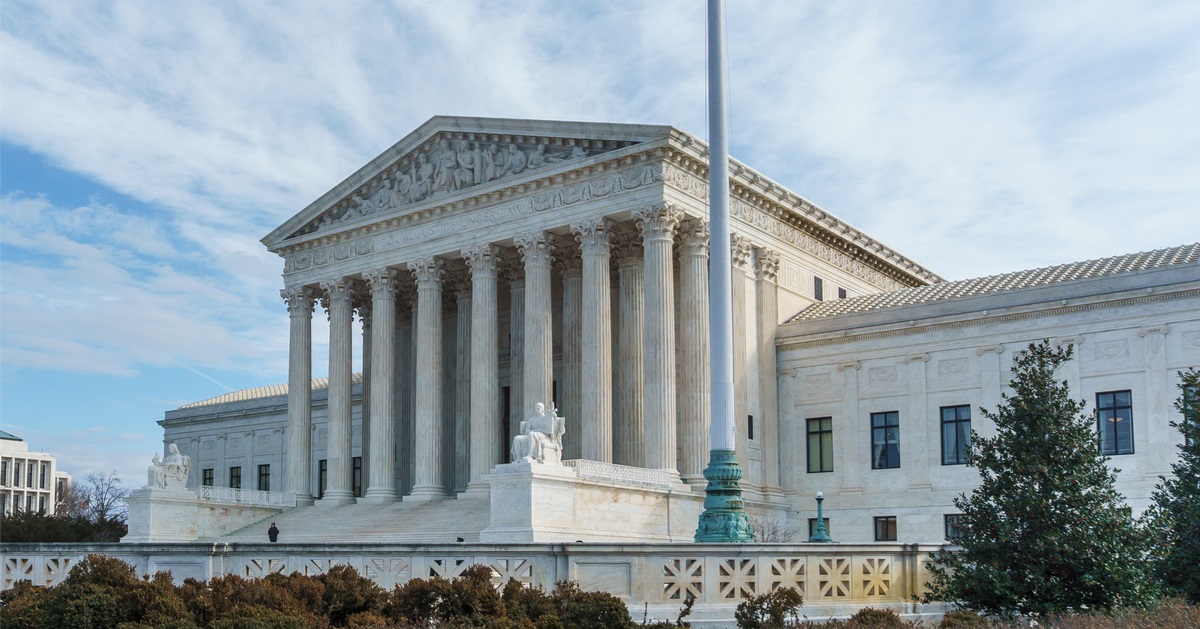
The Trump administration appealed to the United States Court of Appeals for the First Circuit, asking for a pause, but that court initially refused to halt the district court order. The matter then went up to the Supreme Court, where Justice Ketanji Brown temporarily put McConnell’s order on hold. Her emergency pause remains in effect until the First Circuit decides whether to issue a more durable stay, and if the appeals court upholds the district decision, the pause will last 48 hours after that ruling.
Reports noted that some states rushed to access available funds in the narrow window between McConnell’s order and the Supreme Court pause. That scramble underscored the Solicitor General’s worry that any rapid drawdown could deplete a limited pot of money needed for other programs or future needs. The timing turned a legal fight into an immediate scramble with real disbursement consequences.
Solicitor General D. John Sauer warned the high court that states were “trying to seize what they could of the agency’s finite set of remaining funds, before any appeal could even be filed, and to the detriment of other States’ allotments.” He added, “Once those billions are out the door, there is no ready mechanism for the government to recover those funds.” Those words frame the government’s central practical concern: once cash is spent, it is gone unless Congress acts later.
The dispute now hinges on how long courts will hold the pause and whether the appeals process will side with the district judge or accept the administration’s limits on reallocating nutrition accounts. In the meantime, families and state agencies face uncertainty about benefit timing and the durability of any agency-level stopgap measures. The legal fight will determine whether emergency accounting fixes can substitute for congressional appropriations during a shutdown.

