

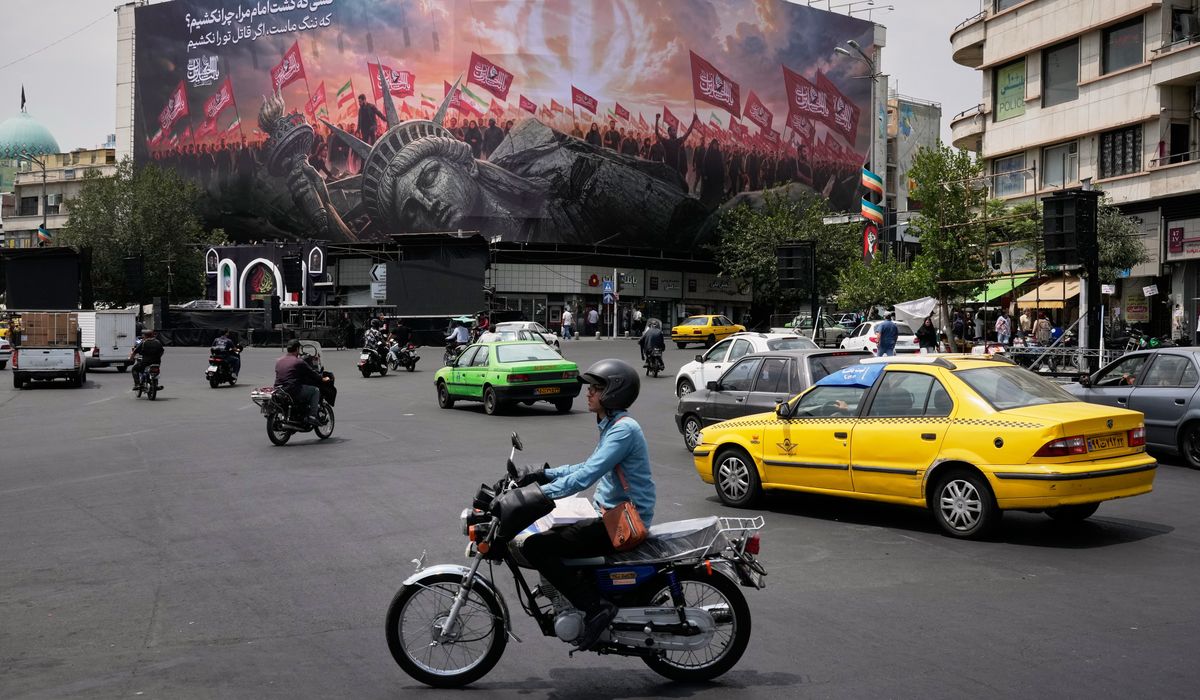
President Trump accused Tehran of being “duplicitous” on Monday and said peace talks were happening quietly through intermediaries, whether Iranian officials wanted to admit it or not.
President Trump called out Iran for inconsistent behavior and suggested negotiations were in motion behind the scenes. His comment that Tehran was “duplicitous” drew a sharp line between public rhetoric and private channels. That phrasing captured a Republican impatience with adversaries who say one thing and do another.
The president’s point was simple: Iran often talks tough while negotiating softly. From this perspective, calling out the double-talk matters because it exposes a gap between threats and real policy moves. Republicans will argue that naming the gap pressures Tehran to choose a clear path.
Trump also highlighted the role of mediators, saying talks were underway even if officials in Tehran denied them. This is a common diplomatic pattern where back-channel conversations happen before any public breakthrough. For those who favor firm diplomacy, quiet negotiations can be a pragmatic way to test options while maintaining leverage.
There’s a practical case for not broadcasting every move. Public declarations can lock in positions that make compromises politically costly, while discreet engagement gives negotiators room to explore solutions. Republicans stress that such caution should be paired with consistent strength so that concessions are earned, not handed over.
Critics on the left might call quiet diplomacy secretive, but the Republican stance is tougher on transparency when it comes to adversaries that pose real threats. The argument goes that talking without weakening deterrence is how to protect national interests. That means keeping military, economic, and diplomatic pressure ready while conversations proceed.
Trump’s use of the word “duplicitous” also signals impatience with Iran’s history of mixed messages on weapons programs and regional behavior. Republicans point to a pattern of denials followed by evidence that undermines trust. This pattern strengthens the case for a hard-nosed approach that mixes negotiation with clear consequences.
At the same time, mediators can play a useful role in defusing tension without immediate concessions. Trusted third parties let each side test ideas in a way that preserves face and options. From a Republican viewpoint, intermediaries should be used to strengthen bargaining positions, not replace them.
There’s a second practical reason for private talks: timing. Diplomacy rarely moves in neat news cycles, and elections or regional crises can make public diplomacy fragile. The president’s acknowledgment that talks were happening signals that strategy can be flexible without abandoning core objectives.
Meanwhile, the administration’s posture remains to keep sanctions and military readiness as levers during any negotiation. Republicans argue that these levers produce results because they create costs for bad behavior. Maintaining a credible threat while talking is the approach favored by those who prioritize national security.
Public messaging also matters, and calling out duplicity serves a purpose beyond rhetoric. Labeling inconsistent actions exposes the reality to allies and domestic audiences, shaping expectations and coalition building. Republicans believe clear communication backed by action prevents misunderstandings that can lead to escalation.
Ultimately, the mix of private channels and public pressure reflects a strategic choice rather than a contradiction. In Republican hands, that choice is presented as deliberate: keep the door open for negotiation while ensuring any deal preserves security and deterrence. That balance is what the administration aims to defend as talks, mediated away from headlines, quietly continue.

