

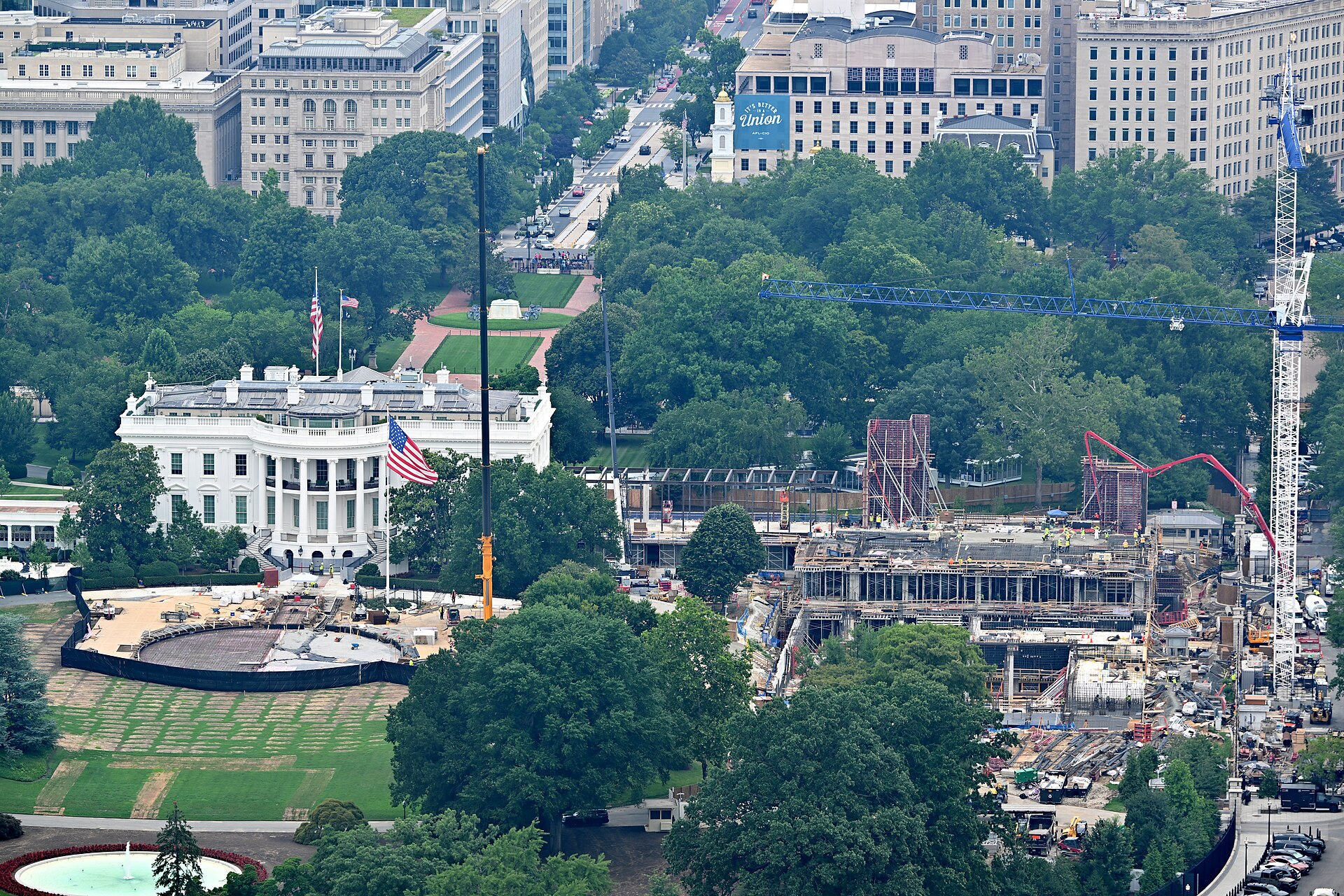
The Trump Justice Department asked the U.S. Supreme Court on Friday to lift a lower court blockade on construction of the new White House ballroom, filing an emergency application for stay to pause a preliminary injunction by D.C. District Senior Judge Richard Leon.
The move asks the high court to temporarily unwind a judge’s block that has halted work on a key renovation project at the White House. The emergency application for stay argues the injunction is short-circuiting the executive branch’s authority to maintain and upgrade presidential facilities. From a Republican viewpoint, the request is straightforward: let the administration complete necessary work without prolonged legal limbo.
This legal fight has practical consequences beyond lawyers and courtrooms. Construction delays can drive up costs, disrupt schedules for events, and complicate security logistics for the president and visiting dignitaries. The argument for lifting the blockade frames the project as routine maintenance and improvement that should not be stopped by what the administration describes as overreaching judicial intervention.
The administration’s filing describes the injunction as a temporary but harmful barrier to the executive’s ability to manage the White House grounds. For Republicans, the case raises familiar themes about separation of powers and respect for presidential prerogatives. The Justice Department says the court’s order interrupts duties that fall squarely within the executive branch’s responsibilities.
Opponents who sought the preliminary injunction argued that the renovations could harm historical elements or violate preservation rules. Those arguments landed before D.C. District Senior Judge Richard Leon, who issued the preliminary injunction that now stands in the way of construction. The administration counters that existing regulations and review processes were followed and that the project does not warrant halting work entirely.
In its emergency application for stay, the Trump administration emphasized the need for a prompt decision to prevent irreparable harm tied to delay. The filings ask the Supreme Court to weigh in quickly and put the injunction on hold while lower courts work through the broader disputes. Republicans see this as a sensible, limited use of the high court to protect time-sensitive executive functions.
Legal observers will watch whether the Supreme Court takes up the application and whether it grants the requested temporary relief. If the high court steps in, construction could resume while the underlying claims play out in the lower courts. If the court declines, the administration will face extended delays and potentially higher costs to complete the ballroom project.
The broader political tone of the dispute is unmistakable. From a conservative perspective, government should be efficient and practical when dealing with the president’s residence and workplace. Courts do have a role in checking executive action, but so does the executive when it comes to maintaining critical facilities and ensuring the president can perform official duties.
Those who back the injunction argue their concerns deserve full judicial review and that temporary stops are sometimes necessary to prevent irreversible changes. Meanwhile, the Justice Department frames its appeal as a narrow, urgent request to protect the government’s ability to manage its own property. The dispute blends legal technicalities with questions about institutional authority and governance.
Whatever the outcome, the case underscores how even seemingly local construction projects can become constitutional flashpoints. Republicans will likely emphasize executive prerogative and the practical harms of delay, while challengers will stress legal protections and preservation standards. The Supreme Court’s handling of the emergency application will shape whether the ballroom work proceeds on schedule.
The stakes are not just about a room; they are about who decides when the government can move forward on urgent maintenance and when judges should step in. The Justice Department’s emergency application seeks a quick check from the high court to clear the way for construction to continue. How the court responds will set a precedent for similar disputes between the branches going forward.

