

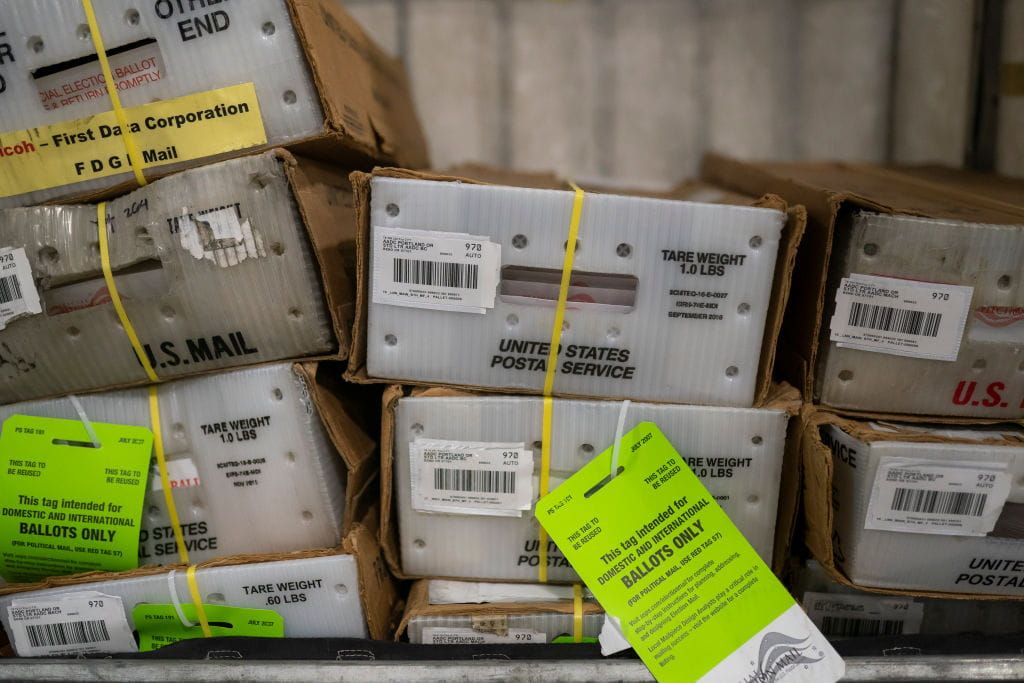
The legal fight over the Trump administration’s USPS rule limiting mail delivery of absentee ballots to verified voters has reached an urgent phase as ballots start going out and the Supreme Court must act fast.
The administration has twice rushed to the Supreme Court this month to pause a lower court order that blocks the policy requiring states to submit voter verification lists before the Postal Service delivers absentee ballots. It’s the president’s third appeal overall and the situation is unusually time sensitive because states are already mailing ballots. Mail-in voting has already begun in North Carolina, where ballots were sent out Friday.
The policy traces back to an executive order signed in March directing the USPS and DHS to impose stricter rules for handling mail-in ballots, including requiring lists of qualified voters. Judge Indira Talwani, a Boston-based jurist appointed by Barack Obama, first issued a preliminary injunction in June that stopped the order while litigation moved forward. The administration appealed to the First Circuit and then turned directly to the Supreme Court when the appeals court denied emergency relief.
On August 24 the Supreme Court initially ruled 6-3 that Judge Talwani’s injunction was premature because the Postal Service had not finalized its rule, signaling willingness to let the rule go forward. That window closed quickly when USPS posted its final rule on August 27 and Talwani responded that same day with a 14-day temporary restraining order. The back-and-forth has become a race against calendars and printing presses.
On September 3 the administration filed an emergency petition asking the justices to stay Talwani’s restraining order, but the judge replaced her temporary pause with an indefinite injunction on September 4, rendering the first petition moot. The government withdrew that filing and submitted a fresh emergency appeal on September 6. The Supreme Court set a tight schedule, instructing states to file responses by 10 a.m. Eastern on Tuesday and indicating a decision could come as soon as Wednesday.
>The timing issue is concrete and immediate. North Carolina mailed envelopes and ballots over the weekend, Alabama is set to send ballots on September 9, Minnesota and South Dakota plan mailings for September 18, and Michigan follows on September 19. In Wisconsin some local clerks have already begun mailing ballots in anticipation of postal delays, which highlights how logistics can outpace litigation.
Seventeen states plus Washington, DC, will begin mail-in voting in September, and many other states start in October. Eight states and the District automatically send ballots to all registered voters: California, Colorado, Hawaii, Nevada, Oregon, Utah, Vermont, and Washington. In several of those places ballots and envelopes are already approved and printed, so a last-minute legal change may not alter the process for this cycle even if the Court sides with the administration.
As Liberty Nation News recently reported, one practical hurdle remains that undercuts immediate enforcement: the portal states are supposed to use to transmit voter verification lists to USPS still was not operational as of the weekend. Officials say it should be available this week, but with ballots going out now the window to implement any new process this cycle is closing fast.
From a Republican perspective the rule is a straightforward attempt to protect ballot integrity by ensuring the Postal Service only delivers absentee ballots to verified voters. The administration frames the measure as common-sense verification, not a ban on mail voting, and argues the courts should allow it to take effect to guard against fraud and confusion. That line of argument has appeal among voters who want transparent, auditable elections and reliable lists of eligible participants.
Practically speaking, even a favorable Supreme Court ruling might come too late to matter for many states this year. Printing schedules, envelope runs, and election offices working under hard deadlines mean that in several jurisdictions the status quo will prevail through Election Day. Still, the legal outcome will shape how similar policies are handled in future cycles and set important precedent about federal power, postal procedures, and state cooperation.
The case now rests with the justices on an expedited timeline, and their decision will determine whether the USPS rule can be implemented in time or whether the fight moves into a longer legal phase after the election. Either way, this dispute highlights how tight calendars and court orders can collide with the mechanics of running an election, leaving voters and officials to navigate uncertainty while ballots are already in the mail.

